LAUNDRY DETERGENT IBM · ALKALINE HDPE ESCR · FABRIC SOFTENER · KOREA EVER-POWER
Detergent IBM:
Laundry Bottle Injection Blow Molding Guide
Korean laundry detergent and fabric softener IBM covers the 300–800 ml concentrated and premium bottle format where IBM’s precision pour neck, alkaline-grade HDPE ESCR and zero body parting line satisfy Korean national laundry brand packaging specifications. This guide covers HDPE alkaline ESCR selection, Korean detergent neck standards, fabric softener and baby laundry IBM specifications, and ZQ series selection for Korean laundry IBM production.
38/400 Pour Neck ±0.05 mm
300–800 ml IBM Optimum
KOREA EVER-POWER · ANSAN-SI, GYEONGGI-DO · JULY 2026
PROCESS REFERENCE · KOREAN LAUNDRY DETERGENT IBM KEY PARAMETERS
ALKALINE pH RANGE
8.5–10.5
Korean liquid laundry detergent pH — more alkaline than dish soap, different ESCR mechanism
HDPE DENSITY TARGET
0.955–0.962
g/cm³ for alkaline laundry detergent IBM — higher density range than dish soap ESCR grade
ZQ110 OUTPUT @ 500ml
~9,600/hr
8 cavities · 5.0 s · ~33.6M units/year Korean 2-shift laundry detergent production
IBM VOLUME OPTIMUM
300–800 ml
Concentrated Korean laundry format IBM range — above 800ml with handle is EBM territory
SECTION 01
Korean Laundry Detergent IBM Market Overview
Korean laundry detergent and fabric care IBM occupies a distinct segment of the Korean household IBM container market — concentrated liquid detergent in 300–800 ml handleless bottles, fabric softener in 300–600 ml pump or flip-top bottles, and baby laundry hypoallergenic liquid in 500–700 ml. These formats sit at the boundary of IBM’s practical size range and benefit specifically from IBM’s precise pour neck, zero body parting line and alkaline ESCR-grade HDPE — characteristics that Korean national laundry brands (LG H&H, Aekyung, P&G Korea, Henkel Korea) specify in their Korean contract packaging requirements. The broader Korean household chemical IBM context is covered in the household chemical IBM guide.
KOREAN LAUNDRY IBM MARKET SEGMENTS — VOLUME, FORMAT AND APPLICATION
Concentrated Detergent
300–600 ml · 38/400 pour neck
Korean premium concentrated laundry (3× to 5× formula). Smaller format IBM — 1 bottle replaces 1–1.5 L standard. Korean convenience + premium positioning. Fast-growing Korean urban apartment segment.
Standard Liquid Detergent
500–800 ml · 38/400 or 38/410
Korean mid-range liquid laundry at Korean hypermarket. IBM covers this range at ZQ110 4–8 cavities. Above 800 ml with handle: EBM. Handleless IBM 800 ml feasible at ZQ110 at 4 cavities.
Fabric Softener
300–600 ml · 28/410 pump
Korean premium fabric conditioner with pump. Acidic formulation (pH 3–5) — different ESCR consideration from alkaline detergent. IBM precision pump neck critical for Korean 28/410 pump fitment at automated Korean filling line.
Baby Laundry
500–700 ml · 38/400 pour or pump
Korean hypoallergenic baby laundry liquid — highest appearance and purity requirements. Zero flash IBM base mandatory (no trim HDPE particle contamination risk). Korean Eco-mark and Korean MSDS-free ingredient certification packaging.
IBM’s position in the Korean laundry detergent bottle market is centred on the 300–800 ml range where pump precision, body appearance and alkaline ESCR combine as selection criteria. The adjacent dish soap IBM guide covers the related 200–500 ml format, and many Korean household IBM producers run both laundry and dish soap mould sets on the same ZQ machine across the annual production calendar.
SECTION 02
HDPE Grade Selection for Alkaline Detergent ESCR
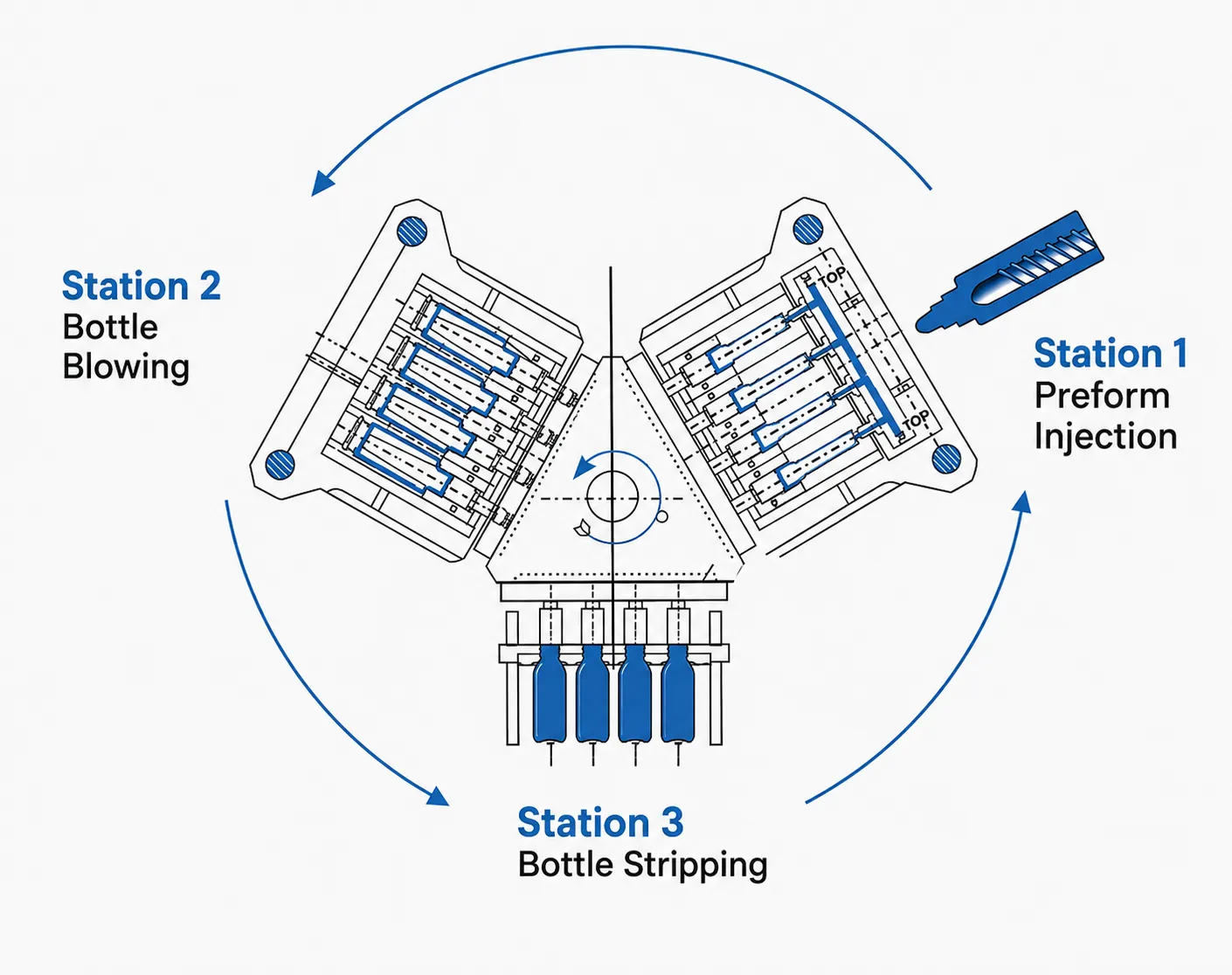
Korean laundry detergent HDPE ESCR selection requires understanding two distinct failure mechanisms that do not both apply to dish soap IBM containers. The first mechanism — surfactant ESCR (same as dish soap) — is driven by the anionic surfactants (LAS, SLES at 10–25%) in laundry detergent penetrating HDPE crystalline interfaces and producing stress crack nucleation at high-stress zones. The second mechanism — alkaline antioxidant saponification — is specific to laundry detergent and absent in dish soap: at pH 8.5–10.5, alkaline laundry formulations hydrolyse (saponify) HDPE antioxidant packages based on fatty acid esters, producing surface embrittlement at container wall contact zones that manifests as surface whitening and microcracking independent of mechanical stress.
Mechanism 1 — Surfactant ESCR (dish soap AND detergent)
Anionic surfactants in laundry detergent (LAS 15–20%, SLES 10–15%) penetrate HDPE crystal boundary zones and reduce the surface energy barrier to crack propagation under residual moulding stress and fill content head pressure. This is the same mechanism as dish soap ESCR and is addressed by selecting low-MI high-molecular-weight HDPE (MI 0.5–1.0, density 0.955–0.960 g/cm³) with high tie molecule density. ASTM D1693 F50 in 10% Igepal ≥ 200 h at 23°C: required for Korean laundry detergent at standard surfactant concentration.
Mechanism 2 — Alkaline Antioxidant Saponification (detergent specific)
At pH 8.5–10.5, the alkaline laundry formulation progressively saponifies (hydrolyses) HDPE antioxidant molecules based on fatty acid ester chemistry (e.g., Irganox 1010 at high alkaline exposure). Loss of antioxidant protection allows HDPE chain scission oxidation at the container wall surface — producing surface embrittlement and microcracking visible as surface whitening at the container shoulder and body after 12–18 months Korean ambient storage. This mechanism is absent at dish soap pH 7–9 — it activates above pH 8.0 and accelerates above pH 9.0.
HDPE GRADE REQUIREMENTS — KOREAN LAUNDRY DETERGENT IBM APPLICATIONS
MI Range
0.5–1.0
Same as dish soap ESCR grade — high MW for surfactant ESCR resistance
Density
0.955–0.962
g/cm³ — slightly higher than dish soap range for stiffness at larger laundry bottle formats
Antioxidant Type
Hindered phenol
Hydrolysis-stable antioxidant for pH > 9.0 Korean laundry detergent — verify with Korean HDPE supplier
ESCR F50 Target
≥ 200 h
ASTM D1693 in 10% Igepal at 23°C — minimum for 24-month Korean laundry retail shelf life
SECTION 03
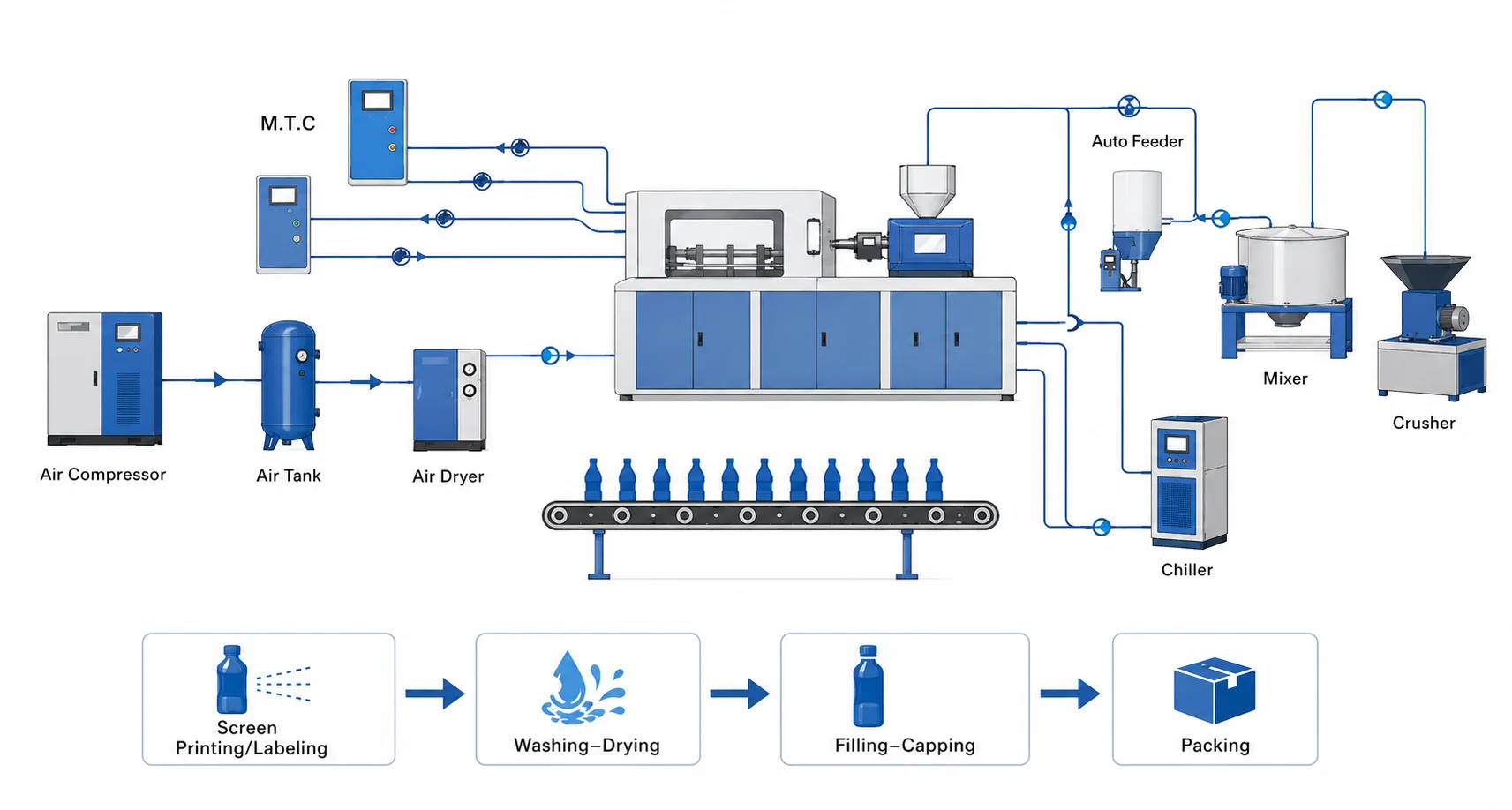
Korean Detergent Container Formats and Neck Standards
| FORMAT / PRODUCT | NECK | CLOSURE | BODY WIDTH | ZQ REC. | NOTES |
|---|---|---|---|---|---|
| 300 ml conc. detergent | 38/400 | Flip-top pour cap | ~62 mm | ZQ80 | Korean concentrated 5× formula. 8–10 cavities ZQ80. Korean pharmacy and online premium channel. |
| 500 ml fabric softener | 28/410 | Pump dispenser | ~68 mm | ZQ80–ZQ110 | Pump neck — same 28/410 IBM precision requirement as dish soap. Acidic pH formulation. |
| 500–600 ml liquid detergent ★ | 38/400 | Measure pour cap | ~70–75 mm | ZQ110 | Highest volume Korean laundry IBM format. ZQ110 at 6–8 cavities. Korean hypermarket standard SKU. |
| 500–700 ml baby laundry | 38/400 | Pour cap or pump | ~68–75 mm | ZQ110 | Korean hypoallergenic. Zero flash mandatory. Korean Eco-mark packaging certification compatible. |
| 700–800 ml standard detergent | 38/400 | Measure pour cap | ~78–82 mm | ZQ110–ZQ135 | Upper IBM volume limit for handleless design. Above 800 ml with handle: EBM territory. |
★ 500–600 ml liquid laundry detergent with 38/400 pour neck at ZQ110 is the core Korean laundry IBM application. The 38/400 pour neck (OD 38.0 mm, ±0.05 mm from IBM injection moulding) allows a precision-fit Korean measure pour cap — the cap’s built-in measuring chamber requires the bottle neck OD to be within ±0.08 mm for leak-free cap sealing. IBM achieves this; EBM neck OD variability of ±0.20–0.30 mm produces Korean measure-pour cap leakage events at Korean laundry filling lines.
SECTION 04
IBM vs EBM for Korean Laundry Detergent Bottles
The IBM vs EBM decision for Korean laundry detergent containers follows the same logic as dish soap — IBM for handleless 300–800 ml precision neck formats, EBM for 1 L+ handled family size. The Korean laundry category has two specific IBM drivers not present in dish soap: measure-pour cap leak-free sealing (requires IBM neck precision) and Korean baby laundry zero flash requirement (no trim particle contamination in hypoallergenic baby product containers).
IBM Advantages for Korean Detergent
- ▸Measure-pour cap sealing: Korean liquid detergent measure-pour caps (integrated measuring chamber) require 38/400 neck OD within ±0.08 mm for leak-free performance. IBM delivers ±0.05 mm — EBM’s ±0.20–0.30 mm variability causes Korean detergent cap leak events at the filling line and during Korean consumer use.
- ▸Zero body parting line: Korean laundry brand sleeve labels (full-body 360° heat-shrink for Korean detergent design) conform perfectly to IBM’s parting-line-free body. EBM’s longitudinal body parting line creates a visible line under Korean laundry sleeve labels at Korean retail lighting.
- ▸Baby laundry zero flash: Korean baby laundry hypoallergenic formulation containers must have zero potential contamination from production process — IBM zero trim architecture eliminates HDPE particle risk that EBM trim generates at every production cycle.
EBM Remains Correct for Korean Laundry When:
- ▸Handle required: Korean family-size laundry detergent 1.5 L+ with ergonomic side handle is structurally an EBM design — IBM cannot form integral hollow handles. Korean value family-size at Korean hypermarket Emart/Homeplus typically specifies EBM for this format.
- ▸Volume above 800 ml: Korean standard liquid laundry 1–2 L at the Korean hypermarket commodity channel — EBM production cost advantage over IBM is significant at this volume, and the handle convenience feature justifies EBM for Korean value segment.
- ▸Very high annual volume at low margin: Korean private-label supermarket laundry at 100M+ units/year commodity pricing — EBM’s lower machine cost per cavity may outweigh IBM’s quality advantages for lowest-price Korean private-label channel.
SECTION 05
IBM Process Parameters for Detergent HDPE Containers
Laundry detergent IBM containers at 500–800 ml operate at the upper end of the IBM volume range — the larger body volume, wider OD and heavier preform all extend cycle time compared to dish soap at 300–500 ml. Process optimisation for Korean laundry detergent IBM focuses on minimising blow dwell time through controlled blow mould water temperature while maintaining base zone dimensional stability.
Larger Preform Shot Weight — ZQ110 Required
A 600 ml HDPE laundry detergent container at 0.75 mm average wall weighs approximately 24–28 g. At 6 cavities on ZQ110: 6 × 26g = 156g shot weight — within ZQ110’s 500g rated shot weight with comfortable headroom. The same 6-cavity 600 ml mould on ZQ80 (250g shot weight limit): 156g = 62% of ZQ80 limit — feasible but leaves limited margin for larger format or heavier wall targets. Korea Ever-Power recommends ZQ110 for 6-cavity 600 ml detergent to preserve shot weight headroom for future wall thickness adjustments without machine change.
Longer Blow Dwell — Wide Body Diameter at 600–800 ml
Blow dwell time for Korean laundry IBM at 600 ml (body OD ~75 mm) is 2.0–2.8 s versus 1.4–2.0 s for dish soap at 300 ml (body OD ~62 mm). The wider body has greater total wall surface area in contact with the blow mould — the container takes longer to solidify adequately for distortion-free stripping at Station 3. Reducing blow mould cooling water temperature from 22°C to 14°C reduces blow dwell by approximately 0.3–0.4 s at 600 ml — a useful optimisation that requires verifying base flatness (colder mould = faster but less even solidification at the base zone) against the ±0.3 mm flatness criterion.
38/400 Neck Injection Gate Balance — Wider Gate vs 28/410
The 38/400 Korean laundry pour neck has a wider neck bore than 28/410 dish soap — the larger bore allows a wider injection gate at the hot runner gate tip, reducing injection fill time (+0.1 s at 38/400 vs 28/410 due to lower gate shear rate) but requiring slightly higher hold pressure to pack out the wider neck cross-section. Korea Ever-Power calibrates the injection gate diameter in the hot runner tip for each neck size to optimise fill uniformity across all cavities — the 38/400 gate diameter for laundry detergent IBM is typically 0.1–0.2 mm larger than the 28/410 gate for dish soap IBM on the same ZQ machine.
SECTION 06
Fabric Softener and Baby Laundry IBM Applications
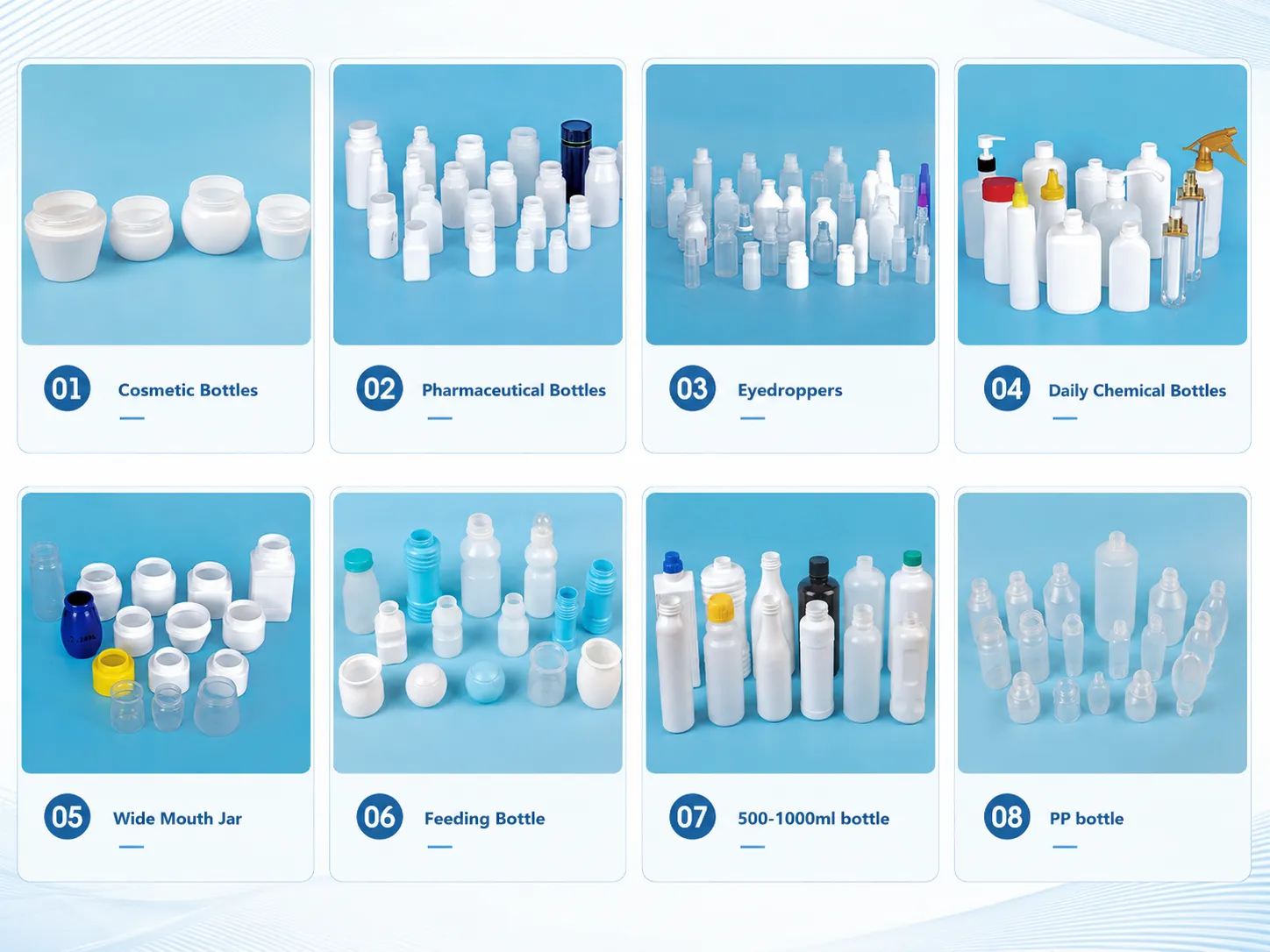
Korean Fabric Softener IBM — Acidic pH Consideration
Korean fabric softener (conditioning agents at 5–15% concentration, citric acid at 0.5–2% for pH 3–5) presents a different HDPE chemical environment from alkaline laundry detergent. Acidic fabric softener at pH 3–5 does not trigger the alkaline antioxidant saponification mechanism — the dominant ESCR driver is the cationic surfactant (DSDMAC, DEQA fabric softening agents at 5–15%) which is less aggressive to HDPE ESCR than anionic LAS.
Korean Baby Laundry IBM — Purity and Certification Requirements
Korean baby laundry hypoallergenic liquid (pH 6.5–7.5, enzyme-free, fragrance-free) is the Korean IBM household application with the most stringent purity and certification requirements — comparable in documentation level to Korean pharmaceutical IBM for mild formulations:
- ▸Zero flash mandatory — Korean baby brand QA policy prohibits any production process that generates particles potentially contaminating the primary container before filling
- ▸Korean HDPE food contact material declaration required — same Korean MFDS positive list compliance as food-contact HDPE, for the baby product contact container
- ▸Korean Eco-label (환경표지) packaging compatibility: IBM HDPE mono-material container + PP cap qualifies as easily recyclable Korean packaging under Korean MOE recycling classification — required for Korean Eco-mark certified baby laundry products
- ▸Container sterilisation: some Korean baby laundry brands require the empty container to be certified clean (residual particle count ≤ Korean baby product specification) — IBM containers with no trim operation require no air-rinse step before Korean filling, satisfying this requirement inherently
SECTION 07
Korean Detergent IBM Packaging Trends
Concentrated Format Growth
Korean laundry brands have shifted marketing investment toward 3× and 5× concentrated formats at 300–500 ml — the same wash loads as 1.5–2.5 L standard. This shift plays to IBM’s strengths: smaller IBM containers at 300–500 ml achieve higher cavity counts (ZQ80 at 8–10 cavities vs ZQ110 at 4–6 for 600 ml) and faster cycle times (4.6 s vs 5.2 s) — lower unit production cost at IBM scale. Korean concentrated detergent is also a premium-priced channel (KRW 12,000–22,000 per unit) where IBM’s superior neck precision and clean appearance commands a price premium over EBM containers at Korean retail.
PCR HDPE Integration
Korean laundry brands under Korean Ministry of Environment green procurement guidelines are introducing 10–30% post-consumer recycled (PCR) HDPE blends into their Korean IBM detergent containers as part of Korean ESG reporting targets. PCR HDPE blended with virgin HDPE at 20% concentration maintains IBM processability (blended MI approximately 0.8–1.2 depending on PCR source) and ESCR performance for standard Korean laundry detergent pH 8.5–9.5 — with caveat that PCR HDPE source consistency varies, requiring virgin HDPE carrier to maintain the blended MI within the 0.7–1.2 IBM processing window. Korea Ever-Power verifies PCR blend processability and ESCR at pre-delivery production trial using customer-supplied PCR/virgin blend before Korean brand approval.
Refill System Adoption
Korean laundry refill systems (durable IBM primary bottle + pouch refill) are gaining Korean market adoption following Korean dish soap refill system success. Korean laundry refill IBM specifications: wall minimum 0.85 mm (repeat pump/pour cap assembly impact), ESCR F50 ≥ 400 h (24–36 month continuous formulation contact during Korean refill period), neck thread wear resistance tested at 20 assembly/disassembly cycles. IBM containers for Korean laundry refill are produced on the same ZQ110 platform as single-use Korean laundry IBM containers — the higher specification translates to slightly higher HDPE grade cost and marginally longer blow dwell time, with no machine capital addition.
SECTION 08
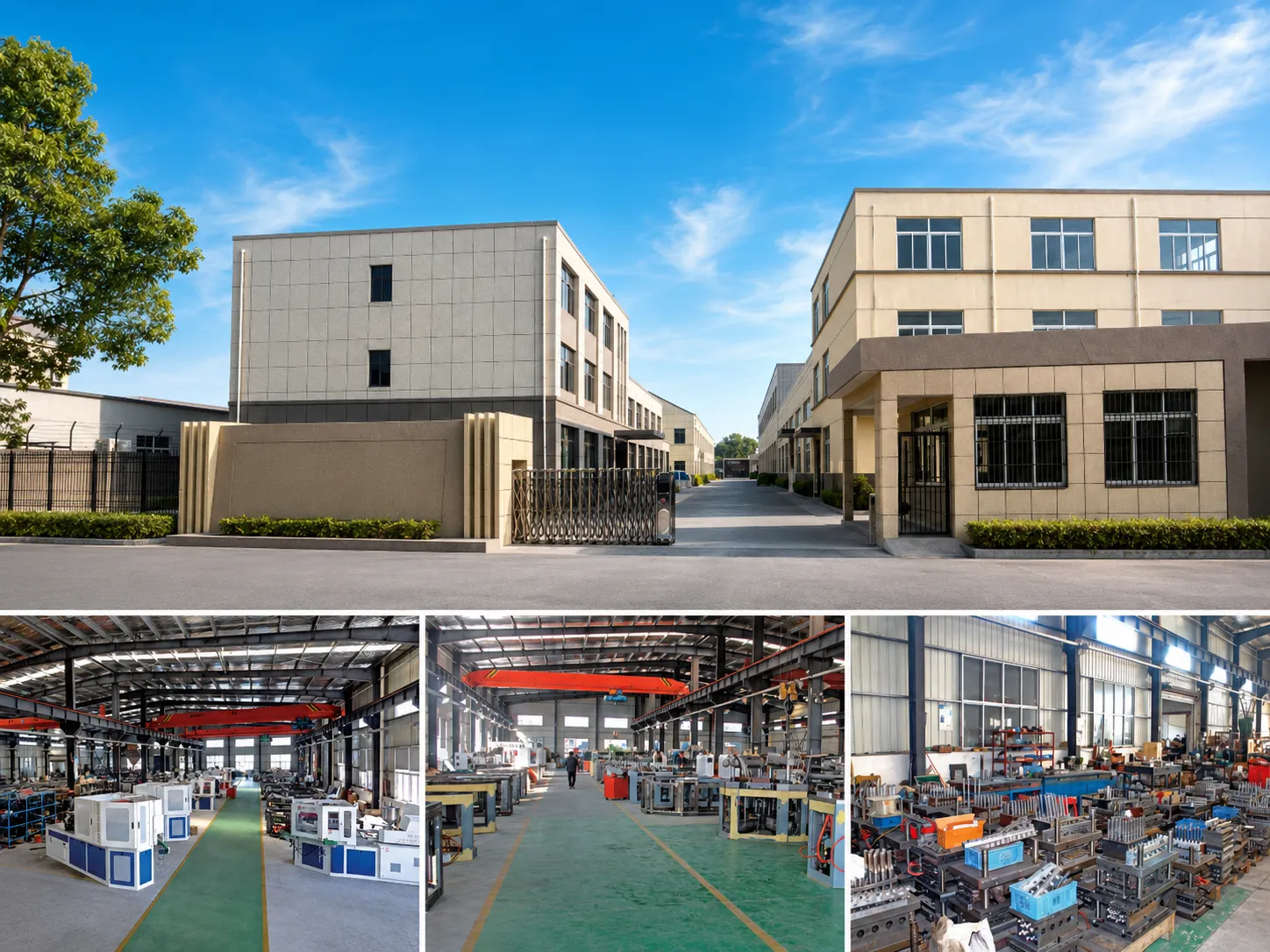
ZQ Series Selection for Korean Laundry IBM
| ZQ MODEL | 300 ml conc. (cav/hr) | 500 ml fabric soft. (cav/hr) | 600 ml detergent ★ (cav/hr) | KOREAN LAUNDRY PROFILE |
|---|---|---|---|---|
| EP-ZQ60 | 10 / ~8,700 | 5 / ~4,100 | 4 / ~3,000 | Korean boutique organic laundry, small Korean baby laundry startup |
| EP-ZQ80 | 14 / ~12,200 | 6–8 / ~5,800 | 4–5 / ~3,500 | Korean mid-scale concentrated detergent OEM, Korean premium fabric softener |
| EP-ZQ110 ★ | 18+ / ~15,700 | 8 / ~7,200 | 6–8 / ~5,400 | Korean national brand standard detergent, Korean major fabric care OEM, baby laundry national brand |
| EP-ZQ135 | 20+ / ~17,400 | 10 / ~9,000 | 8–10 / ~7,200 | Korean laundry conglomerate flagship, Korean contract packaging at 60M+ annual laundry units |
★ ZQ110 at 6–8 cavities for 600 ml laundry detergent is the Korean national brand laundry IBM production standard. Annual capacity at 6 cav, 5.2s: ~28.5M units/year Korean 2-shift. At 8 cav: ~38M units/year — within the annual volume range of Korea’s top-5 liquid laundry detergent SKUs.
ENGINEERING FAQ
Laundry Detergent IBM — Engineering Questions
Q 01
How does alkaline detergent ESCR differ from dish soap surfactant ESCR for HDPE IBM container selection?
Alkaline laundry detergent produces HDPE container failure through two mechanisms simultaneously, while dish soap produces failure through one. The first mechanism — surfactant ESCR — operates identically in both: anionic surfactants (LAS, SLES) at 10–25% concentration penetrate HDPE crystal boundaries, reduce crack propagation surface energy and enable stress crack initiation at moulding residual stress zones. This is the mechanism addressed by selecting low-MI high-molecular-weight HDPE (MI 0.5–1.0) and is common to both dish soap and laundry detergent IBM. The second mechanism — alkaline antioxidant hydrolysis — is specific to laundry detergent at pH 8.5–10.5 and absent at dish soap pH 7–9. At pH above 8.0, hydroxide ions saponify ester-based antioxidant molecules at the HDPE surface — specifically fatty acid ester antioxidants like Irganox 1010 (pentaerythritol tetrakis(3-(3,5-di-tert-butyl-4-hydroxyphenyl)propanoate)). Loss of antioxidant protection in the HDPE surface zone reduces oxidative stability and allows chain scission at stress concentration points, producing surface embrittlement and whitening over 12–24 months of Korean ambient storage. The solution is to specify HDPE with a hindered phenol antioxidant that does not contain labile ester bonds at the phenol ring — grades using secondary antioxidants based on thiodipropionic acid diesters (DSTDP, DLTDP) provide better alkaline pH stability than primary antioxidant-only packages. In practical Korean HDPE procurement: Korean HDPE suppliers targeting HDPE for laundry detergent blow moulding explicitly note “suitable for alkaline detergent” on their technical data sheets — use only these grades for Korean laundry detergent IBM at pH above 9.0. Grades suitable for dish soap (pH 7–9) are not automatically qualified for alkaline laundry detergent (pH 9–10.5) without antioxidant package verification.
Q 02
What Korean detergent neck standards are used and how do they affect ZQ cavity count at 500–600 ml?
Korean laundry detergent IBM uses two primary neck standards: 38/400 (pour cap) for liquid laundry detergent and 28/410 (pump) for fabric softener. The 38/400 neck OD is 38.0 mm nominal — approximately 10 mm wider than the 28/410 dish soap neck at 28.0 mm. This wider neck has a significant impact on ZQ machine platen cavity count for large-format laundry detergent IBM. For a 600 ml HDPE laundry detergent container with body OD ~75 mm: the 38/400 neck zone itself occupies a 45–48 mm footprint in the IBM injection mould cavity (neck OD + required neck insert steel around the thread = 38.0 + 5–7 mm each side). On the ZQ110 turret platen (diameter approximately 520 mm usable radius), a linear arrangement of 38/400 neck cavities at ~80 mm pitch allows 6 cavities maximum in a 2-row arrangement — versus 8 cavities for the same 600 ml body OD with 28/410 neck. The 38/400 neck’s wider steel requirement around the neck insert is therefore the binding platen constraint for large Korean laundry detergent at 500–800 ml, overriding the body OD constraint. Korea Ever-Power provides the cavity layout drawing for each container+neck+machine combination at the enquiry stage — the platen layout calculation for 38/400 laundry detergent IBM is routinely done for ZQ80, ZQ110 and ZQ135 to confirm achievable cavity count before project commitment. Practical recommendation: for Korean 600 ml 38/400 laundry detergent IBM at ZQ110, plan for 6 cavities as the realistic maximum and verify with Korea Ever-Power’s platen layout service before mould investment.
Q 03
Can IBM produce 1-litre laundry detergent containers at commercially viable cavity counts?
IBM can produce 1-litre laundry detergent containers but at cavity counts (2–4 cavities on ZQ135) that limit annual output to approximately 12–18M units/year at 2-shift Korean operation — borderline for Korean national brand flagship SKU volumes. The constraints that limit 1-litre IBM cavity count are the intersection of three factors at 1 L container size. First, platen size: a 1-litre HDPE laundry container body OD is approximately 88–95 mm — at 80–90 mm pitch spacing between cavity centres, the ZQ135’s platen (largest Korea Ever-Power model) accommodates a maximum of 4 cavities in a 2×2 arrangement. Second, shot weight: 1-litre HDPE at 0.8 mm average wall = approximately 50–60 g per container; 4 cavities × 55 g = 220 g total shot weight — below ZQ135’s 750g limit with headroom, but approaching ZQ110’s 500g limit at 4 cavities. Third, blow dwell: 1-litre body OD at 90 mm requires blow dwell of 3.0–4.0 s for adequate base zone solidification — producing a total cycle time of 6.5–8.0 s, significantly longer than 500 ml (5.0–5.5 s). At 4 cavities, 7.0-second cycle, ZQ135: 4 × (3600÷7.0) × 0.88 × 3,500 hr = ~6.4M units/year. For Korean 1-litre laundry at volumes above 15M/year, EBM with handle is the correct commercial decision — IBM 1-litre handleless is economically viable only for Korean premium concentrated 1-litre formats where the per-unit IBM quality premium (precision neck, no body parting line) justifies the lower production rate.
Q 04
What makes Korean baby laundry IBM container specifications stricter than standard detergent IBM?
Korean baby laundry IBM container specifications are stricter than standard Korean detergent IBM across five dimensions. First, zero flash: standard Korean laundry detergent may accept EBM containers at value channel price points, but Korean baby laundry brand QA policies consistently specify IBM to eliminate the EBM trim particle contamination risk — no Korean baby product brand has accepted EBM primary containers at any Korean channel since the 2021 Korean consumer plasticiser contamination scare in baby products. Second, HDPE food contact material certification: Korean baby laundry brands specify the container HDPE as food-contact grade with full Korean MFDS positive list additive documentation — the same documentation level as Korean food packaging IBM, not just Korean household chemical IBM. Third, additive restriction: Korean baby laundry brands restrict HDPE masterbatch colourant to food-grade pigments only (no industrial dye colourants), and restrict UV stabilisers to food-contact-listed grades — stricter than adult laundry brands which use industrial-grade colour and UV packages. Fourth, colour consistency: Korean baby laundry brands typically specify white or light pastel container colours (white, pale blue, pale green) with Delta E ≤ 1.5 across Korean production batches — achieved by IBM’s closed-loop masterbatch dosing, not by commodity hand-dosing used in lower-specification EBM household laundry production. Fifth, container certification documentation: Korean baby laundry IBM containers require a container specification sheet (signed by Korea Ever-Power applications engineering) confirming HDPE grade, additive package, production process (IBM, zero trim) and dimensional compliance — a documentation package that Korean adult laundry contracts do not require. This five-point stricter specification set is standard Korea Ever-Power pre-delivery documentation for Korean baby laundry IBM projects and is included in Korea Ever-Power’s Korean baby laundry container qualification package without additional documentation charge.
Q 05
How does Korean fabric softener formulation chemistry affect IBM container material selection vs laundry detergent?
Korean fabric softener and Korean laundry detergent present different chemical environments for HDPE IBM containers — primarily because fabric softener is acidic (pH 3–5) while laundry detergent is alkaline (pH 8.5–10.5), and because fabric softener uses cationic surfactants while laundry detergent uses anionic surfactants. These chemistry differences produce three material selection implications for Korean fabric softener IBM versus Korean laundry detergent IBM. First, antioxidant package: at acidic pH 3–5, Korean fabric softener does not cause alkaline antioxidant saponification — the ester-based antioxidant packages that must be avoided for alkaline laundry detergent (Irganox 1010 in alkaline environment) are perfectly stable in fabric softener at pH 3–5. Standard HDPE antioxidant packages (Irganox 1010 or 1076) are acceptable for Korean fabric softener IBM without pH-specific antioxidant selection. Second, ESCR from cationic surfactants: cationic surfactants (quaternary ammonium compounds DSDMAC, DEQA at 5–15% in Korean fabric softener) have lower HDPE ESCR aggressiveness than anionic LAS at equivalent concentration — because the cationic surfactant’s positive charge is partially repelled by HDPE’s non-polar surface, reducing interfacial penetration. Korean fabric softener IBM at 10% DSDMAC produces F50 ESCR failures at longer timeframes than Korean dish soap at 20% LAS — allowing slightly higher MI HDPE (MI up to 2.0) while maintaining acceptable ESCR for 24-month Korean fabric softener shelf life. Third, container appearance in the Korean context: Korean fabric softener containers (premium pricing, Korean premium personal care channel) are marketed on appearance. IBM’s zero body parting line and consistent surface finish are particularly important for Korean fabric softener because Korean premium brands use transparent or translucent sleeve labels (from which the HDPE container surface is partially visible) — an EBM body parting line showing through a transparent Korean fabric softener sleeve label is a Korean brand acceptance rejection reason regardless of the functional ESCR compliance of the container.
Q 06
What are the Korean measure-pour cap sealing requirements that make IBM’s neck precision commercially critical for laundry detergent?
Korean liquid laundry detergent is dispensed using a measure-pour cap — a cap with an integrated dosing chamber (typically 40–100 ml) that the Korean consumer fills by inverting the bottle, then pours into the Korean washing machine drum. The measure-pour cap’s dosing chamber is sealed against the bottle neck by an internal elastomeric sealing ring that contacts the neck’s sealing land (the flat annular surface at the neck’s top edge). For leak-free performance, this elastomeric seal must contact the sealing land uniformly around the full 360° neck circumference — a sealing condition that requires the sealing land to be flat (≤ 0.05 mm deviation from plane) and the neck OD to be within the cap manufacturer’s specified engagement range (typically nominal ±0.08–0.10 mm). IBM’s injection-moulded 38/400 neck achieves both: sealing land flatness ≤ 0.03 mm (controlled by the injection mould’s neck insert machining tolerance of ±0.01 mm) and neck OD ±0.05 mm across all production cavities. EBM’s 38/400 neck produced by blow pressure action has a sealing land flatness of 0.05–0.20 mm (variable with blow pressure and parison distribution cycle-to-cycle) and neck OD of ±0.20–0.35 mm — frequently outside the measure-pour cap sealing engagement range on a fraction of production containers. The commercial consequence of a Korean measure-pour cap sealing failure is significant: Korean liquid laundry detergent leaking from a loose measure-pour cap at Korean retail produces a Korean product contamination event (laundry detergent dripping onto Korean pharmacy or hypermarket shelf), a Korean brand quality non-conformance report from the Korean retailer, and a customer complaint rate that triggers Korean brand internal quality investigation. Korea Ever-Power documents 38/400 neck sealing land flatness and OD values in the pre-delivery production trial dimensional report for each Korean laundry detergent IBM project — confirming that all production cavities meet the Korean measure-pour cap manufacturer’s sealing engagement specification before Korean brand approval is issued.
LAUNDRY DETERGENT IBM ENQUIRY · KOREA EVER-POWER
Planning Korean Laundry Detergent IBM Production?
Korea Ever-Power provides alkaline HDPE grade verification, 38/400 measure-pour cap neck dimensional qualification and ZQ110 production trial for Korean national laundry brands and Korean laundry IBM OEM packaging producers.