Technical Deep Dive · Optical Quality Engineering · Korean ISBM 2026
How to Improve ISBM Bottle
Transparency: Korean Guide
In Korean K-Beauty, premium beverage, and pharmaceutical packaging, bottle transparency is not a cosmetic feature — it is a commercial specification. A Korean K-Beauty PETG bottle with haze 3% instead of 1.5% fails brand incoming inspection. A Korean premium water bottle with haze 4% communicates low quality to the Korean convenience store consumer before they touch it. This guide identifies every process variable that creates haze in Korean ISBM production and provides the corrective protocol for each.
PETG ≤ 1.5% Haze Protocol
Korean Brand Specification Matrix
Korean ISBM Optical Quality Specification Reference — 2026
| Application | Haze Limit | Resin | Primary Haze Risk |
|---|---|---|---|
| Korean K-Beauty PETG pump/toner | ≤ 1.5% | PETG | Over-conditioning, blow air moisture, mould surface |
| Korean HPP cold-press juice | ≤ 1.5% | Crystal PET | Under-conditioning, moisture, drying failure |
| Korean premium still water | ≤ 2.0% | PET | Moisture contamination, conditioning variation |
| Korean Tritan supplement / baby | ≤ 2.0% | Tritan TX1001 | Under-conditioning, blow dwell too short |
| Korean pharmaceutical oral liquid | ≤ 2.5% | PET / PP | Contamination, resin degradation, AA content |
1. Why Transparency Is a Commercial Specification, Not a Visual Preference

Korean ISBM bottle transparency — quantified as haze percentage (the fraction of transmitted light scattered by the bottle wall, measured per ASTM D1003) — has evolved from an aesthetic quality indicator to a commercial threshold specification in Korean premium packaging. The shift is driven by three converging Korean market forces. First, Korean K-Beauty brand consumers benchmark their cosmetic packaging against glass and crystal-clarity Koreandesign references — any PETG toner bottle with haze above 1.5% is visually distinguishable from glass at Korean Olive Young shelf lighting conditions, damaging the brand’s premium positioning. Second, Korean premium cold-press juice brands use crystal PET bottle transparency as the primary “natural ingredient” communication tool — the product’s colour communicates ingredient purity, and bottle haze distorts this colour communication, reducing the brand’s shelf premium. Third, Korean pharmaceutical packaging brands increasingly specify haze limits as a compliance parameter (not just an aesthetic one) because haze in PET oral liquid bottles correlates with orientation uniformity — which correlates with migration consistency in KFDA extract testing.
The molecular physics that determines why biaxially oriented ISBM PET and PETG achieve lower haze than IBM or EBM alternatives — and what causes haze to vary within ISBM production — is in the biaxial molecular orientation guide.
2. Haze Measurement: How to Quantify and Track Optical Quality in Korean ISBM
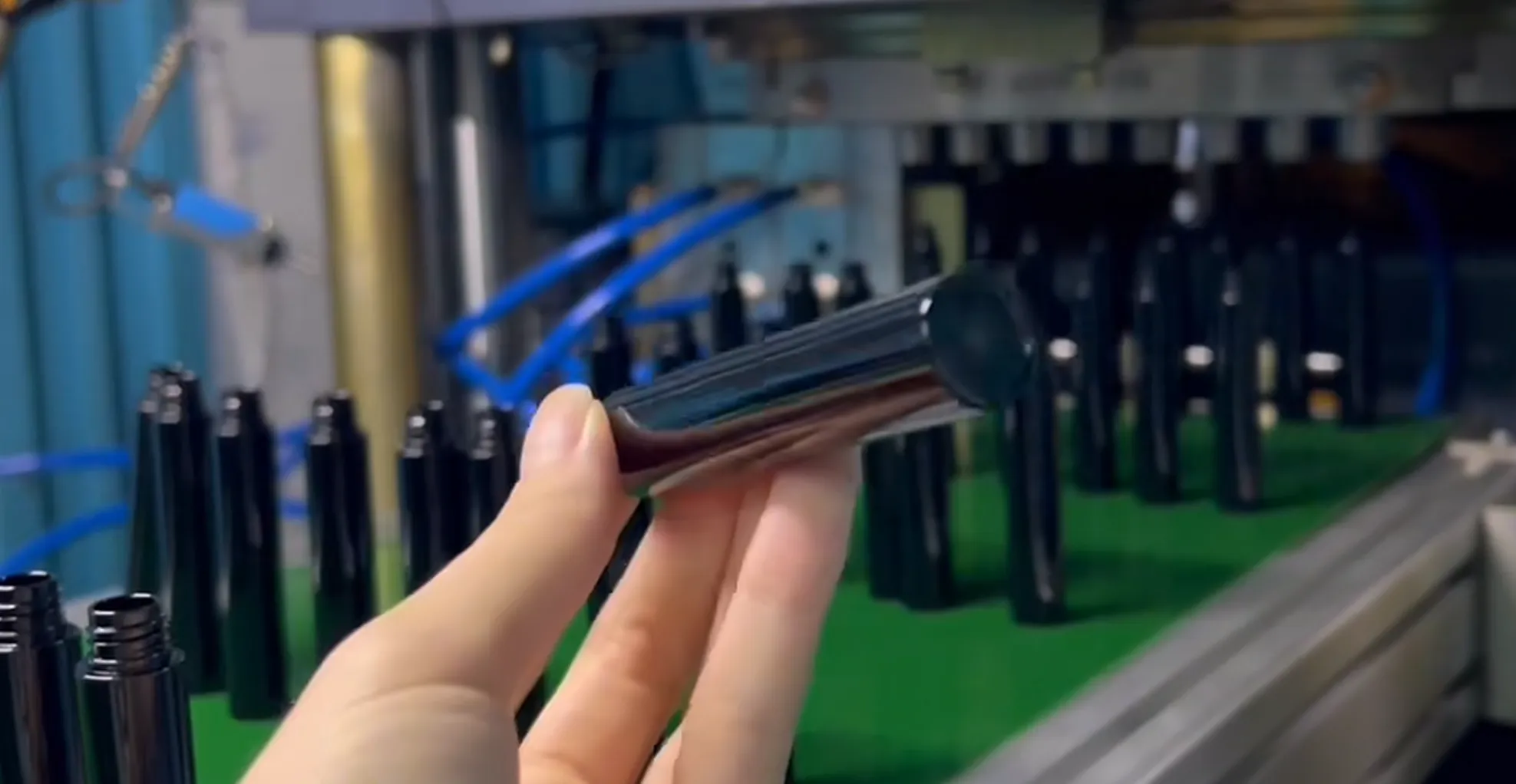
Korean ISBM haze measurement uses a spectrophotometric haze meter (hazemeter) per ASTM D1003 — the international standard that Korean brand QC teams and Korean ISBM producers both reference in supplier qualification documents. The measurement procedure for Korean ISBM bottle sections: cut a flat coupon (25mm × 25mm) from the measurement zone (body label panel for standard haze measurement), mount in the hazemeter, and read the haze % value. Measurement protocol for Korean ISBM QC:
Korean ISBM Haze Measurement Protocol
- Sampling: 5 bottles per cavity per shift — measure haze at 3 zones (lower body, mid-body, upper shoulder) per bottle. Record each zone separately, not an average.
- Baseline establishment: During mould qualification, measure 30 consecutive bottles from each cavity and establish haze mean ± 2σ as the production control limits.
- Alert threshold: Any single measurement above the Korean brand’s specification limit triggers immediate investigation — not a “monitor and see” response.
- Trend monitoring: Track haze as a shift-average trend chart per cavity. Upward trend (even within specification) is a process warning — Korean ISBM operations that respond to trends prevent specification breaches; those that respond only to breaches incur lot rejection costs.
Korean ISBM haze measurement zones vary by application: K-Beauty PETG toner bottles are measured at the label panel (the zone visible on the shelf) AND the body shoulder (where pump head meets bottle — a zone often overlooked that fails K-Beauty brand inspection when shoulder haze exceeds 2.0% on a label-panel-passing bottle). Korean HPP cold-press juice bottles are measured at the full circumference at mid-body — the entire body is the “display zone” for juice colour communication, not just the front label panel. Korean pharmaceutical PET is measured per the KFDA extract test specification which requires measurement at the body wall zone from which the extract coupon is taken.
3. Resin Selection: PET vs PETG vs Tritan for Optical Clarity
The choice of resin is the single most influential decision in Korean ISBM optical clarity specification — before any process parameter is set. Different resins have fundamentally different optical potential: their polymer chain structure, crystallisation behaviour, and refractive index uniformity determine the minimum achievable haze at optimal process conditions. Understanding the optical limits of each resin avoids the Korean ISBM quality failure of specifying a haze target that the chosen resin cannot achieve regardless of how well the machine is operated.
| Resin | Minimum Achievable Haze (ISBM) | Primary Clarity Advantage | Primary Haze Risk |
|---|---|---|---|
| PETG (Eastman TX2001) | 0.3–0.8% | Amorphous copolymer — no crystallisation haze; glass-competing clarity | Over-conditioning, blow air moisture, surface abrasion |
| Crystal PET (IV ≥ 0.82) | 0.8–1.5% | High orientation clarity from biaxial stretch; broad resin availability | Moisture, under-orientation, mould surface contamination |
| Tritan TX1001 | 0.5–1.2% | Amorphous copolyester — no crystallisation; excellent impact clarity | Under-conditioning (Tg 110°C — must reach 135–165°C), blow dwell too short |
| Standard PET (IV 0.76–0.80) | 1.5–3.0% | Cost-effective; adequate for Korean still water and standard beverage | IV variation, wider haze distribution, less stable |
| PP (natural grade) | 4–8% | Not a clarity resin — heat resistance is PP’s advantage, not optical clarity | Crystallisation inherent to PP — transparency not achievable |
Korean ISBM producers who are asked by Korean K-Beauty brands to “improve the transparency” of an existing PP container should advise the brand that the correct solution is a resin change to PETG — not a process optimisation, because PP’s crystalline structure makes haze below 4% physically unachievable regardless of process conditions. The systematic comparison of PET and PETG for Korean ISBM transparency, heat resistance, and food contact applications is in the Korean PET vs PETG resin selection guide.
4. Drying and Moisture: The Most Frequently Overlooked Haze Cause
Resin moisture is the most frequently overlooked cause of Korean ISBM haze — and the easiest to control once it is correctly identified. Both PET and PETG are hygroscopic: they absorb moisture from ambient air during storage and handling. When inadequately dried resin enters the injection barrel at temperatures of 265–285°C (PET) or 255–275°C (PETG), water molecules dissolved in the resin react with ester linkages in the polymer backbone in a hydrolysis reaction that cleaves the polymer chains, reducing IV and generating oligomeric degradation products. These low-molecular-weight oligomers have a different refractive index from the surrounding polymer matrix — creating microscopic optical inhomogeneity that manifests as haze.
Korean ISBM drying specification by resin
| Resin | Target Moisture | Dewpoint | Drying Temp | Min Drying Time |
|---|---|---|---|---|
| PET | ≤ 30 ppm | ≤ −35°C | 160–175°C | 4–6 h |
| PETG | ≤ 20 ppm | ≤ −40°C | 65–75°C | 4–6 h |
| Tritan | ≤ 30 ppm | ≤ −35°C | 100–115°C | 4–6 h |
Important PETG drying distinction: PETG must be dried at a lower temperature (65–75°C) than PET (160–175°C) because PETG begins to soften at 80°C and would agglomerate in a high-temperature dryer — but it requires a tighter dewpoint (≤ −40°C versus PET’s ≤ −35°C) because PETG’s more hygroscopic glycol modifier absorbs moisture more readily. Korean ISBM producers transitioning from PET to PETG production who use their PET dryer temperature for PETG create two simultaneous problems: the high drying temperature (160°C) yellows the PETG pellets (PETG shows yellowing degradation above 90°C in a dryer environment), and the tighter dewpoint specification may not be met if the desiccant was sized for the less demanding PET dewpoint target.
5. Conditioning Temperature Precision and Its Effect on Optical Quality
The conditioning station temperature is the most direct process variable controlling haze in Korean ISBM production — because haze in PET and PETG is primarily a function of the polymer’s crystalline structure in the finished bottle, and the crystalline structure is determined by how well-oriented the polymer chains become during biaxial stretching, which depends critically on the preform’s temperature at the moment stretch-blow begins.
Three conditioning temperature errors produce haze through distinct mechanisms:
- Over-conditioning (too hot): When the preform is conditioned above the optimal temperature window, the polymer melts rather than orients during stretch-blow — the chains flow rather than align. Flow-crystallisation produces large spherulitic crystals that scatter light, creating a characteristically milky or opaque haze pattern. For PETG, over-conditioning above 100°C produces visible stress-whitening at the shoulder zone during blow. Correction: reduce conditioning setpoint by 3–5°C increments; measure haze at each step until improvement confirmed.
- Under-conditioning (too cold): When the preform temperature is below the thermoelastic window, the polymer is too stiff to stretch uniformly — local under-stretched zones have low crystallinity (amorphous, slightly hazy) while adjacent zones may be over-stressed, creating micro-crazes that scatter light. Under-conditioning in Korean ISBM also produces a characteristic “stretch mark” pattern — visible as fine white lines in the bottle body running parallel to the axial stretch direction. Correction: increase conditioning setpoint by 3°C; verify with haze measurement and bottle visual inspection.
- Zone-to-zone conditioning variation (non-uniform): Temperature variation between conditioning zones (above ±2°C) produces haze banding — alternating clearer and hazier horizontal bands in the bottle wall that correspond to the zones of higher and lower conditioning temperature. This is the hardest Korean ISBM haze root cause to identify without thermal imaging, because the average conditioning temperature (as reported by the controller) may be correct while the zone-to-zone variation produces the banding. Diagnosis: thermal image the conditioning station exterior or use a reference thermocouple probe at each zone position to map zone-to-zone variation.
6. Blow Station Parameters That Affect Korean ISBM Bottle Clarity
Three blow station parameters directly affect Korean ISBM bottle optical clarity: high-blow pressure adequacy, blow dwell time, and blow air dewpoint. Each affects haze through a different mechanism.
High-blow pressure adequacy: The high-blow phase (24–42 bar depending on application) must press the expanded parison firmly against the cooled mould cavity surface — this surface contact drives heat from the bottle wall into the mould, rapidly quenching the orientation structure and preventing crystallite growth that would scatter light. If the high-blow pressure is below the minimum required for complete cavity wall contact (typically 24 bar minimum for 500ml PET), microscopic air pockets between the parison and cavity wall act as insulating layers — local zones of the bottle wall cool slower, allowing stress relaxation and crystallite growth that produces haze patches. These haze patches are diagnostic: they appear at the same location on every bottle and correlate with zones of the mould cavity where surface contact was incomplete.
Blow dwell time: The blow dwell (time the bottle remains pressurised inside the closed mould after the rod end-point) must be long enough for the bottle wall to cool below the crystallisation temperature before the mould opens. If the dwell is too short, the bottle wall is still above the crystallisation temperature when the mould opens — the brief contact with ambient air as the bottle is ejected creates a thermal shock that drives rapid crystallisation, producing a “frost ring” of high haze just inside the ejection zone. For Korean K-Beauty PETG (haze ≤ 1.5%), every 0.1s reduction in blow dwell below the minimum increases haze by approximately 0.15–0.25% at the ejection zone — a measurable, correctable effect.
Blow air dewpoint: Condensed water in the blow air circuit (dewpoint above −15°C) contacts the hot parison surface during the blow phase, creating localised rapid cooling that produces crystallisation hazes where water droplets touched the parison. Korean ISBM K-Beauty PETG operations should verify blow air dewpoint ≤ −25°C at the machine inlet at 2-hour intervals during production — Korean summer conditions (60–85% ambient RH) saturate blow air dryer desiccant faster than winter, making afternoon blow air dewpoint rise above the morning startup level a systematic seasonal quality risk.
7. Mould Surface Finish: Ra Specification for Korean ISBM Optical Quality

The blow mould cavity surface finish directly determines how much surface-scattered haze the bottle inherits from the mould — independent of the resin, conditioning temperature, or any other process variable. The mould surface replicates in the bottle wall surface with high fidelity during the blow phase: the high-blow pressure (24–42 bar) presses the parison against the mould surface with sufficient force to replicate surface features down to approximately 0.1μm.
Korean ISBM mould surface finish specification by application: Korean K-Beauty PETG and Korean crystal PET premium applications require Ra ≤ 0.05μm (mirror polish, the highest specification) for the bottle body and shoulder zones. Korean standard still water and pharmaceutical PET: Ra ≤ 0.10μm (fine polish, achievable with standard diamond paste polishing). Korean hot-fill HS-PET vacuum panel zones: Ra 0.05–0.15μm for the vacuum panel surfaces (slightly rougher than body is acceptable and even beneficial for label adhesion); Ra ≤ 0.05μm for non-panel body zones for haze control. Mould surface polish maintenance: Korean ISBM moulds for K-Beauty applications should have body cavity surface Ra verified every 500K shots with a profilometer — polishing restoration scheduled when Ra drifts above 0.08μm. The mould specification framework that covers surface finish requirements alongside steel selection, cooling circuit design, and cavity count for all Korean ISBM applications is in the 9-factor Korean ISBM mould selection guide.
8. Production Environment and Contamination Control for Korean Optical-Grade ISBM
Korean ISBM optical-grade production (haze target ≤ 1.5% for K-Beauty PETG and crystal PET) requires production environment management that goes beyond standard packaging plant ambient conditions. The bottle’s optical surface — the exterior wall — is formed in contact with the mould cavity surface; any contamination on the cavity surface replicates in the bottle and adds surface scatter. The bottle’s interior surface is formed by the expanding parison in contact with the blow air — any particulate or oil aerosol in the blow air deposits on the inner bottle surface and appears as haze or visible inclusion.
Korean ISBM optical-grade production environment requirements:
- Blow air oil-free specification: Korean ISBM blow air must be oil-free (ISO 8573-1 Class 1 oil content — ≤ 0.01 mg/m³) at the machine blow inlet. Oil aerosol from compressors that have worn piston seals or oil-lubricated components contaminates the blow air circuit and deposits on the inner bottle wall — visible as a faint sheen or haze under 5,000K LED inspection lighting. Install and verify inline oil coalescence filters at the machine blow air inlet quarterly.
- Mould cavity cleanliness: Korean K-Beauty PETG blow mould cavities should be cleaned with lint-free cloths and IPA (isopropanol) at every mould changeover and at 4-hour intervals during continuous production. Polymer deposits from previous production runs accumulate on the cavity surface and replicate as opaque patches in subsequent bottle production. A single polymer deposit of 0.1mm diameter on the mould surface creates a 0.3–0.5mm haze spot on the bottle wall — visible under K-Beauty brand LED inspection.
- Ambient particulate control: Korean ISBM optical-grade production areas should maintain ambient particle count ≤ 100,000 particles/m³ (≥ 0.5μm), equivalent to ISO 14644-1 Class 8 cleanroom. This does not require a formal cleanroom but does require: filtered HVAC for the production area, positive pressure relative to adjacent non-production areas, and protective garments for Korean ISBM operators (hair covers, lint-free coveralls).
- UV lighting for inspection: Korean ISBM optical-grade production should use 5,000K LED inspection lighting (minimum 1,000 lux) at the bottle ejection point. Standard factory fluorescent lighting (3,000K, 300 lux) is insufficient to detect haze variations between 1.0% and 1.5% — the range that determines K-Beauty brand pass/fail. Installing a dedicated 5,000K LED inspection station at the bottle takeout position allows operators to identify haze-affected bottles in real time rather than during QC sampling.
Frequently Asked Questions
Optical Quality Support
Korean ISBM Haze Failing Korean K-Beauty or Premium Beverage Specification?
Korean Ever-Power provides haze diagnostic protocol, conditioning zone thermal mapping, blow air dewpoint verification, mould surface Ra measurement, and EV servo conditioning optimisation for Korean PETG and crystal PET optical-grade ISBM production.