INDUSTRY APPLICATION
K-Beauty Cosmetic Bottle Manufacturing: ISBM Guide for Korean Contract Fillers
Korean K-beauty brands exporting to Japan, China, North America, and Europe demand glass-clarity bottle finish that mass-market PET producers cannot consistently deliver. This guide covers the ISBM specifications, machine platforms, and process discipline that Korean contract fillers in Suwon, Seongnam, and Cheongju use to produce K-beauty bottles meeting premium brand quality standards.
In This Guide
1. K-Beauty Boom & Bottle Quality Demands
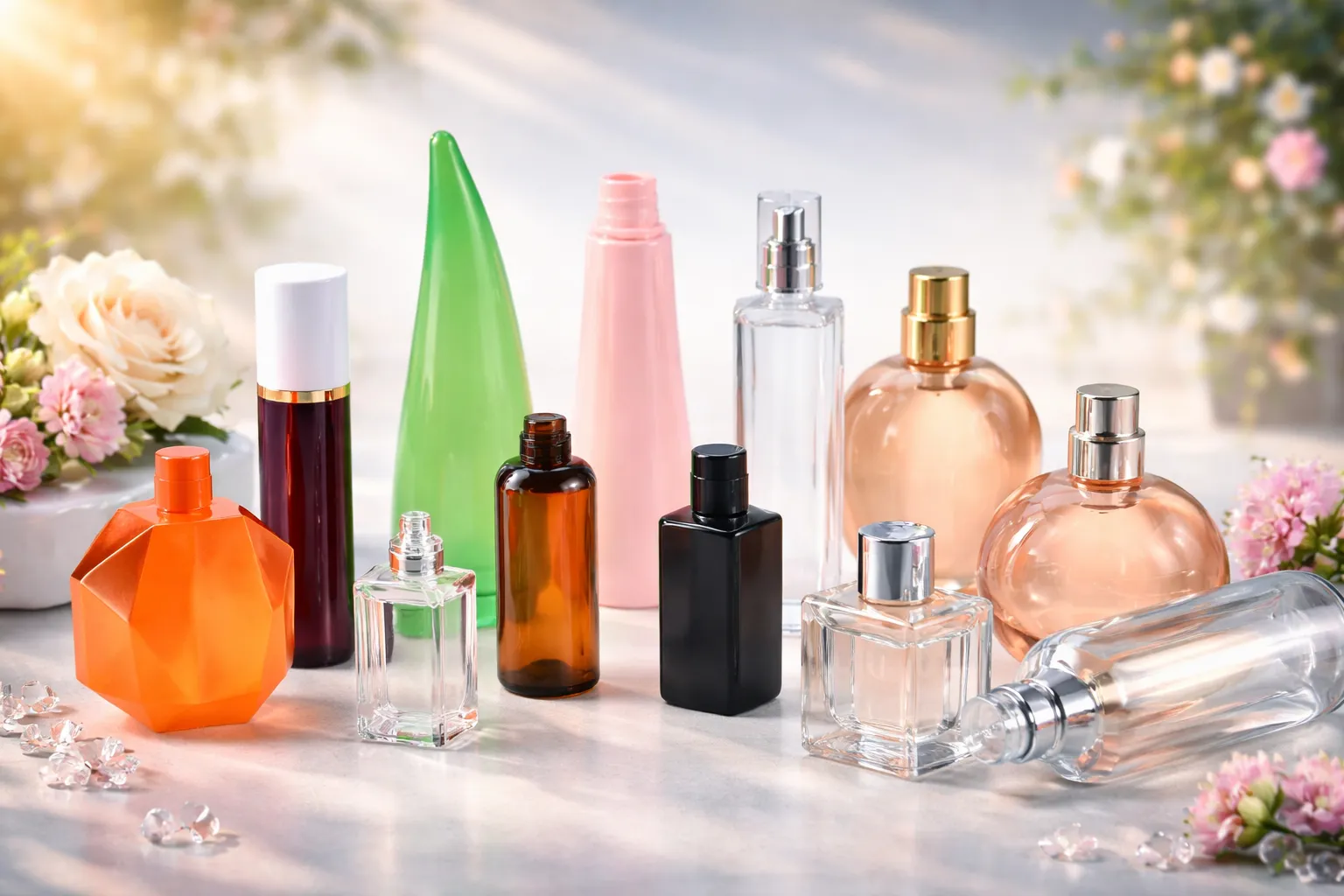
Premium K-beauty cosmetic bottles — the glass-like optical clarity Korean brands export to global luxury channels
Korean cosmetic exports crossed 13 billion USD annual value in 2024, anchoring the Suwon, Seongnam, and Cheongju contract manufacturing cluster as the global production hub for premium personal care packaging. K-beauty brand owners (Amorepacific group, LG H&H affiliates, specialty indie brands such as COSRX, Pyunkang Yul, and Dr. Jart partners) compete on visual product appeal as much as formula efficacy. Bottle finish quality is the first consumer touchpoint, and a visible parting line seam on a premium serum bottle immediately signals lower quality tier regardless of the formulation inside.
This market reality demands ISBM production discipline substantially tighter than mass-market beverage bottle manufacturing. Where Korean beverage bottlers accept ±0.05 mm parting line tolerance and a faint visible seam, K-beauty contract fillers specify ±0.02 to ±0.03 mm parting line tolerance and zero visible seam under normal viewing conditions. Wall thickness consistency tightens from ±0.05 mm beverage spec to ±0.03 mm K-beauty spec. Cycle-to-cycle dimensional repeatability on neck threads must hold within 0.05 mm to accommodate the precision automated capping and labelling lines that K-beauty facilities run at 4,000-6,000 units per hour.
Beyond the dimensional rigour, K-beauty production introduces operational challenges that mass-market bottle lines do not face. SKU count runs 20-40 active products per contract filler with frequent campaign launches, requiring rapid mould changeover capability. Brand-driven colour, texture, and decorative requirements demand resin flexibility (PET for base clarity, PETG for heavier-wall premium, PCTG for specialty jars). Export documentation compliance (KFDA certification, REACH registration for EU markets, California Proposition 65 for US) layers compliance discipline onto the production workflow.
2. Bottle Specification Landscape
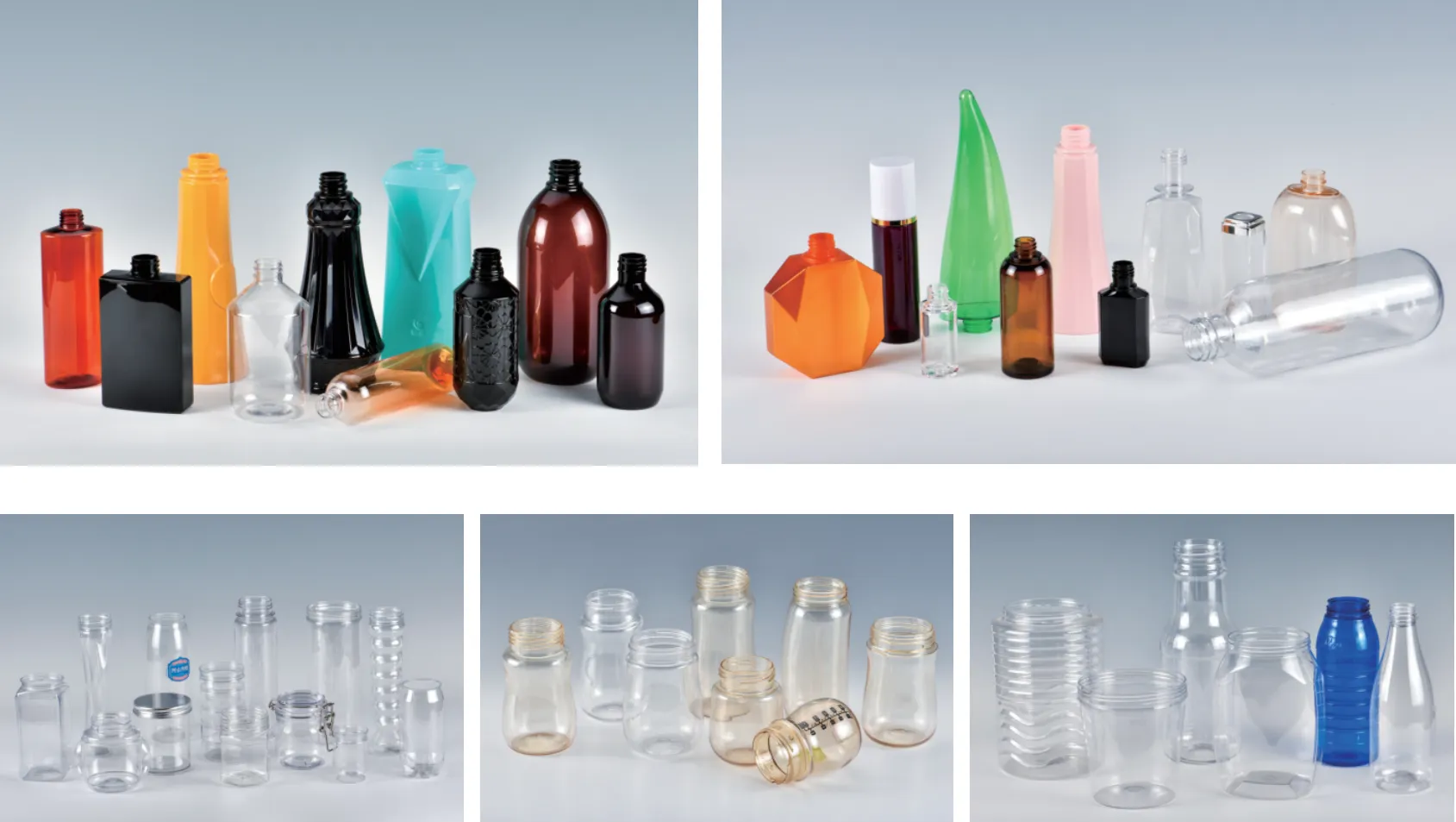
K-beauty bottles cluster into four volume and geometry categories that each map to specific ISBM platform recommendations. Understanding this segmentation upfront helps contract fillers match machine capacity to actual product mix rather than buying oversize for flagship product only.
CATEGORY 1
Micro-Volume Premium (10-50 ml)
Typical products: ampoule serums, eye creams, specialty essences, sampler sizes. Volume per SKU runs 200,000-800,000 units per campaign. Cycle time priority yields to aesthetic perfection. Bottle geometry is often complex (faceted, oval, tapered shoulders). Micro-volume production typically uses 3-station ISBM architecture with 1-4 cavity moulds.
CATEGORY 2
Standard Serum / Essence (50-150 ml)
Typical products: flagship serum and essence bottles. Volume per SKU runs 800,000-3,000,000 units annually. Bottle geometry standardises on round or subtle-oval with clear body and frosted neck ring options. This category represents the core K-beauty volume segment and drives the main machine procurement decision for most contract fillers.
CATEGORY 3
Toner & Mist (150-300 ml)
Typical products: toner, facial mist, hair treatment base, body serum. Volume per SKU runs 1,500,000-4,500,000 units annually. Higher volume tolerates slightly less dimensional rigour than Categories 1-2 but still tighter than mass beverage specification. 4-station architecture with 4-8 cavity moulds dominates this segment.
CATEGORY 4
Body Care & Large-Format (300-500 ml)
Typical products: body lotion, shampoo, body serum, oversized limited-edition serums. Volume per SKU runs 2,000,000-6,000,000 units annually for mass tier, lower for premium tier. Heavier-wall specification often uses PCTG resin for the premium segment and standard PET for mass tier. 4-station or 6-station platforms depending on volume.
3. Recommended ISBM Platforms
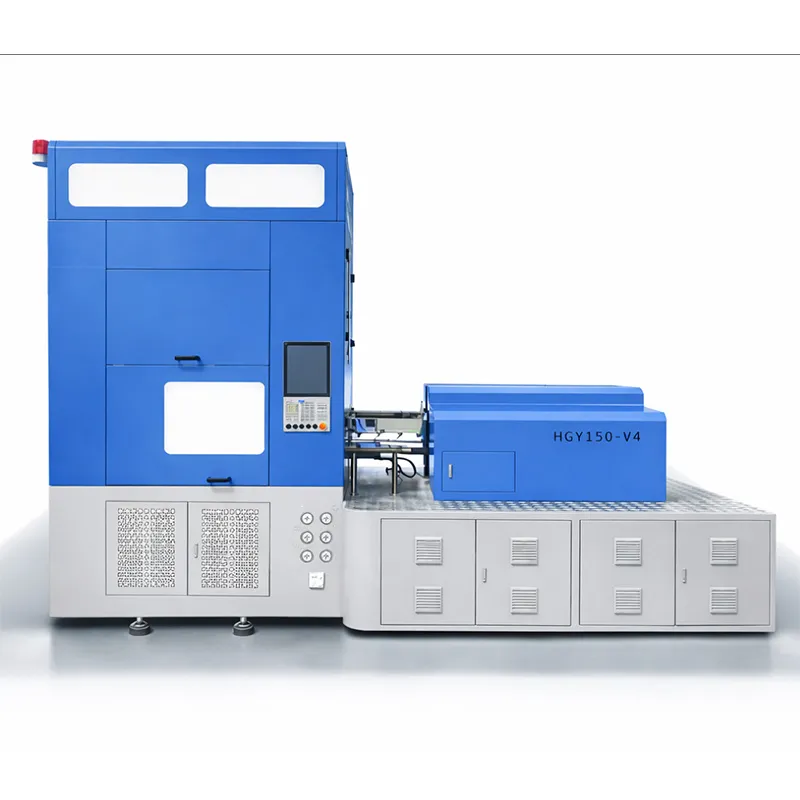
HGY150-V4 4-station platform — the K-beauty workhorse for 50-300 ml standard serum and toner production
Machine platform selection for K-beauty production balances four variables: bottle volume range, annual SKU output, quality tier, and SKU count across the product portfolio. The three recommended Ever-Power platforms below cover 90% of Korean K-beauty contract filler requirements.
SMALL-VOLUME
HGY50-V3-EV for Micro-Volume Premium
For the 10-50 ml premium segment with 1-4 cavity moulds and rapid SKU rotation, the HGY50-V3-EV precision ISBM is purpose-built. Compact 3-station architecture, fast changeover, and precision-ground mould mounting deliver the aesthetic quality premium ampoule and specialty serum brands demand. Typical customer profile: indie K-beauty brands producing 200K-800K units per campaign.
CORE PLATFORM
HGY150-V4 for Standard K-Beauty Volume
For 50-200 ml serum, essence, and toner production with 4-8 cavity moulds at the 800K-3M units per SKU volume level, the HGY150-V4 is the industry-standard workhorse. The 4-station architecture provides cycle efficiency for mid-volume campaigns, 150 KN injection clamping handles up to 8-cavity tooling comfortably, and precision-ground mould alignment delivers ±0.02 mm parting line tolerance.
HIGH-VOLUME
HGY200-V4 for Large Toner & Body-Care
For 150-500 ml body care and premium toner production with 4-8 cavity moulds, the HGY200-V4 platform provides the additional clamping force and injection volume required for larger bottle geometries. PCTG resin compatibility enables premium heavy-wall jar production for Korean cult-brand products targeting Japanese and North American luxury retail channels.
4. Premium Clarity Requirements
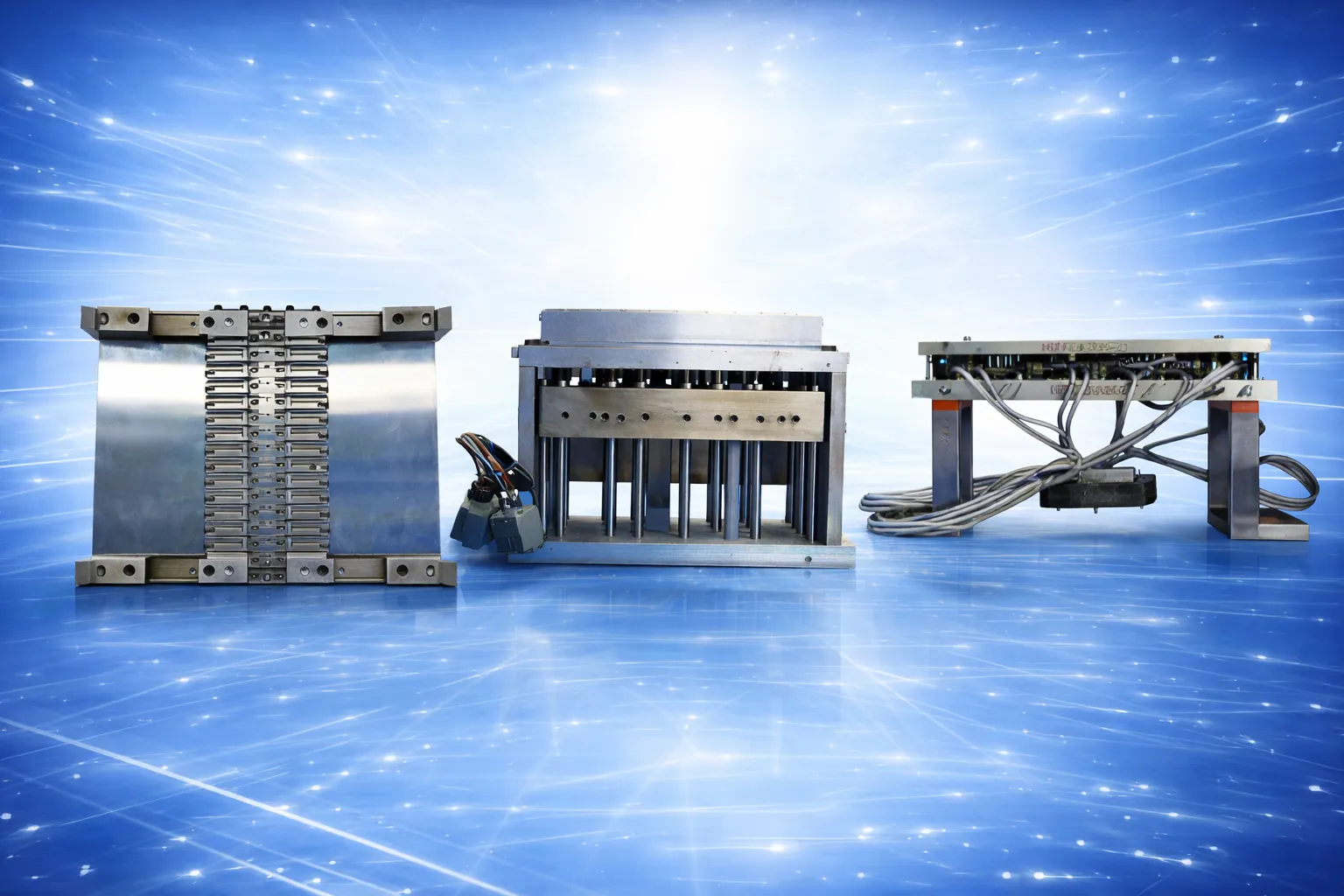
Precision-ground ISBM mould with ±0.02 mm parting surface tolerance — the foundation of K-beauty glass-clarity bottle finish
Premium K-beauty clarity depends on three compounding factors: mould parting line precision, full biaxial molecular orientation during blow, and controlled cooling that prevents crystallization. Each factor contributes roughly one third to the final bottle appearance. Skipping any single factor compromises the finish regardless of how rigorously the other two are managed.
K-beauty clarity specifications:
- ✓Parting line tolerance: ±0.02 mm across mating surfaces (vs ±0.05 mm beverage standard)
- ✓Surface finish: Ra 0.05 μm or better on all visible cavity surfaces
- ✓Wall thickness consistency: ±0.03 mm (vs ±0.05 mm beverage)
- ✓Haze/cloudiness: imperceptible under normal viewing (< 2% haze by ASTM D1003)
- ✓Stretch ratio target: axial 2.8-3.0×, hoop 4.2-4.5× (total 12-13.5×)
- ✓Neck thread tolerance: ±0.05 mm for automated capping line compatibility
The molecular orientation requirement is particularly demanding because undersized stretch ratio produces amorphous haze even with perfect mould and cooling. For the physics behind why stretch ratio drives clarity, see our biaxial molecular orientation guide. K-beauty contract fillers targeting premium export brands typically run 2-3% tighter on all three factors than the minimum specification to provide consistency margin.
5. Rapid SKU Changeover Economics
K-beauty contract fillers run 20-40 active SKUs with roughly 60-120 campaign launches per year. Changeover frequency is substantially higher than mass-market beverage production, which typically sees 3-6 changeovers per year per line. Changeover efficiency becomes a first-order economic variable rather than an operational convenience.
!
Changeover Time Impact on K-Beauty Economics
A 6-hour changeover versus a 2-hour changeover on a contract filler running 90 SKU rotations annually represents 360 hours of line-loss difference per year — roughly 15 production days at nominal cycle. Fast changeover is not a productivity nice-to-have for K-beauty; it is the single largest efficiency lever in contract manufacturing economics.
Changeover acceleration practices:
- ▸Quick-mould-change (QMC) mounting reduces physical swap from 3-4 hours to 45-60 minutes
- ▸Pre-heated mould staging reduces warm-up time from 45 minutes to 10-15 minutes
- ▸PLC recipe library stores per-SKU parameters; one-touch recall eliminates 30-45 minutes of re-programming
- ▸Standardised preform neck geometry across SKU family (22/415, 24/410 finishes) eliminates preform feed retooling
- ▸Dedicated changeover toolkit and trained crew cuts overall changeover from 6 hours to 2 hours
6. Resin Selection for K-Beauty
K-beauty resin selection follows a four-way hierarchy based on bottle geometry, target retail tier, and brand aesthetic requirements. Each resin carries distinct processing windows, cost points, and finish capabilities that match different product categories.
| Resin | Typical Use | Cost Index | Key Property |
|---|---|---|---|
| PET | Mass-tier toner, standard serum body | 1.0× | Lowest cost, good clarity with process discipline |
| PETG | Premium serum, ampoule, specialty essence | 1.4-1.6× | Glass-like clarity, wider processing window |
| PCTG | Premium body jar, heavy-wall large serum | 1.8-2.2× | Structural heavy-wall clarity, drop resistance |
| Tritan | BPA-free certified lines (kids/baby crossover) | 2.5-3.0× | BPA-free certification, premium durability |
Most Korean K-beauty contract fillers standardise on PET for the mass product tier and add PETG capability for the premium export segment. PCTG and Tritan are niche for specific brand positioning and represent 10-15% of typical production mix.
7. Decorative & Frosted Finish Options
Decorative surface finishes multiply the visual product differentiation options available to K-beauty brand owners. Four common finishing approaches integrate with ISBM production workflow at different cost and complexity points.
FINISH 1
Textured Cavity Surface (Integrated Frosted Effect)
EDM or chemical etching of cavity surface produces integrated frosted appearance directly during moulding. No secondary operation required. Typical texture Ra 1.5-3.5 μm depending on brand preference. Cost increment over smooth cavity: 8-12% of mould cost. Ideal for brand-standardised frosted finishes across an SKU family.
FINISH 2
Post-Mould Sandblast or Etched Finish
Downstream sandblasting or acid etching station applies frosted effect after ISBM production. Flexibility advantage: same bottle can run clear or frosted depending on customer campaign. Cost increment: 0.04-0.08 USD per bottle. Integration with automated bottle handling line typical in Korean contract fillers.
FINISH 3
In-Mould Label (IML) Integration
Pre-printed label placed in mould cavity before blow produces seamlessly bonded graphics integrated with the bottle wall. Premium aesthetic, eliminates separate labelling operation, and supports complex graphic designs. Cycle time adds 10-15% for label placement; cost increment 0.08-0.15 USD per bottle depending on label complexity.
FINISH 4
Silk-Screen Printing or Hot Stamp
Downstream silk-screen or hot-stamp decoration applies brand graphics after ISBM. Most common Korean K-beauty decoration method because of flexibility across SKU portfolio. Typical 4-6 color capability, metallic finishes available via hot stamp. Cost increment 0.05-0.12 USD per bottle. Requires downstream decoration line integration.
8. Suwon / Seongnam K-Beauty Case Studies
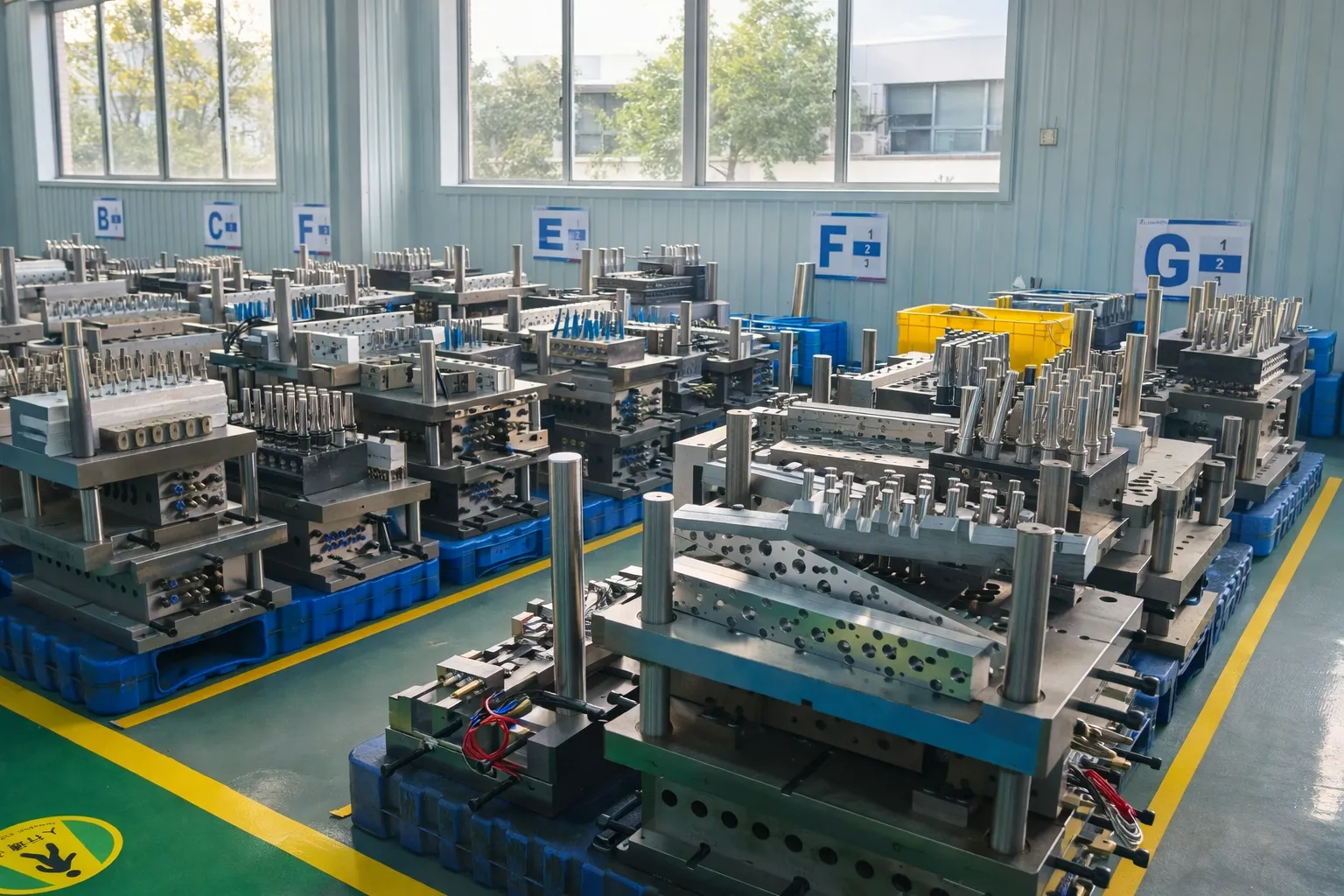
Case Study 1 · Suwon Premium Serum Contract Filler
100ml Signature Serum Bottle Line (2.4M units/year)
Challenge: 30 SKU portfolio across 6 premium brand owners. Previous Japanese machine averaged 5.5-hour changeover and inconsistent ±0.04 mm parting line on the export-grade bottles.
Result: Ever-Power HGY150-V4 with 6-cavity precision moulds and QMC mounting delivered 2-hour changeover and consistent ±0.02 mm parting tolerance. Annual production capacity rose 22% on same facility footprint; brand acceptance rate on first-shipment QC climbed from 94% to 99.3%.
Case Study 2 · Seongnam Indie K-Beauty Contract Filler
30ml Ampoule Serum Micro-Volume Campaigns
Challenge: Indie brand portfolio with 300K-600K unit campaigns per SKU across 20 active brands. Economics required sub-1-hour changeover to preserve margin on short-run campaigns.
Result: HGY50-V3-EV precision platform with 2-cavity ampoule moulds enables 45-55 minute changeover via PLC recipe library and pre-staged mould sets. Per-campaign setup cost dropped from 1.2M KRW to 420K KRW, improving indie brand margin by 4-6 percentage points.
Case Study 3 · Cheongju Premium Body-Care Contract Filler
300ml Heavy-Wall PCTG Premium Jar Production
Challenge: New premium jar SKU targeting Japanese department store channel. PCTG heavy-wall clarity specification at 3.5 mm wall thickness required substantial injection volume and stretch control precision.
Result: HGY200-V4 with 4-cavity custom mould tooling and PCTG-specific hot runner configuration delivered specification-compliant product on first validation run. Japanese retailer acceptance secured 2.8M unit annual contract.
9. KFDA & Export Compliance
Korean K-beauty export regulation layers compliance discipline onto production workflow. Bottle materials and decorative finishes must meet Korean KFDA cosmetic packaging standards plus destination market requirements. Four regulatory frameworks cover 95% of K-beauty export destinations.
K-beauty export compliance checklist:
- ✓Korea KFDA: cosmetic packaging material registration, food-contact compliance for lip and oral-care products
- ✓EU REACH: registration of all chemicals in bottle material; restricted substance compliance
- ✓US California Proposition 65: heavy metal content limits on all packaging sold in California
- ✓China NMPA: cosmetic ingredient and packaging material registration for PRC retail sales
- ✓Japan Positive List: approved-material list for cosmetic-contact surfaces under Japanese regulation
- ✓Sustainability credentials: PCR content certification, recyclability documentation, carbon footprint tracking
Ever-Power maintains KFDA, REACH, and NMPA material compliance documentation for all standard resin configurations. For export-destined production, contract fillers should verify documentation covers the specific destination market before initial shipment; non-compliant material composition can trigger retroactive recall obligations that destroy contract economics.
10. Conclusion
K-beauty bottle manufacturing sits at the intersection of aesthetic discipline, operational agility, and regulatory compliance. The Suwon, Seongnam, and Cheongju contract filler cluster produces 60%+ of global premium cosmetic packaging volume because Korean engineering and process discipline meet the quality bar that mass-market alternative suppliers cannot sustain. ISBM platform selection, mould precision specification, changeover efficiency, and resin flexibility together determine whether a contract filler can compete for and retain premium brand business.
Ever-Power’s three recommended platforms (HGY50-V3-EV for micro-volume, HGY150-V4 for standard volume, HGY200-V4 for large-format) cover 90% of K-beauty contract filler requirements. Combined with precision-ground moulds delivering ±0.02 mm parting tolerance, PLC recipe library for sub-2-hour changeover, and multi-resin processing capability (PET/PETG/PCTG/Tritan), the platform matches the operational demands of modern K-beauty contract manufacturing economics.
K-Beauty ISBM Key Takeaways
- ✓K-beauty quality bar: ±0.02 mm parting tolerance vs ±0.05 mm beverage standard
- ✓Four volume categories: micro (10-50ml), standard (50-150ml), toner (150-300ml), body (300-500ml)
- ✓Platform match: HGY50-V3-EV micro / HGY150-V4 standard / HGY200-V4 large-format
- ✓Changeover efficiency: 2-hour target vs 6-hour baseline (saves 15+ production days per year)
- ✓Resin hierarchy: PET mass-tier, PETG premium, PCTG heavy-wall jar, Tritan BPA-certified
- ✓Decorative finish options: textured cavity, sandblast, IML, silk-screen/hot-stamp
- ✓Export compliance: KFDA, EU REACH, US Proposition 65, China NMPA, Japan Positive List
- ✓Suwon/Seongnam/Cheongju cluster produces 60%+ of global premium cosmetic packaging
Ready to Upgrade Your K-Beauty Production Line?
Share your bottle specifications, target SKU volume, and production facility details. Our Korean engineering team returns a platform recommendation, cavity-count optimisation, and projected ROI analysis within 48 hours — tuned specifically for K-beauty contract filler economics.