BUYER’S GUIDE
PET vs PETG vs PCTG vs Tritan: Choosing the Right Resin for Your Bottle
The resin you choose determines bottle clarity, drop resistance, chemical compatibility, regulatory compliance, and cost per kilogram. Korean K-beauty brands, pharmaceutical packaging companies, baby bottle producers, and beverage bottlers each have distinct optimal resins. This guide helps you match the right resin to your application.
In This Guide
- Why Resin Selection Matters More Than You Think
- PET: The Universal Workhorse
- PETG: The K-Beauty Clarity Champion
- PCTG: The Heavy-Wall Premium Specialist
- Tritan: The BPA-Free Baby Bottle Standard
- Head-to-Head Properties Comparison
- Korean Application Matching Guide
- rPET: The Sustainability Consideration
- Resin Decision Framework
- Conclusion
1. Why Resin Selection Matters More Than You Think
Resin is the foundation material of every ISBM bottle, and the choice between PET, PETG, PCTG, and Tritan determines properties that cannot be adjusted by any downstream process tuning. Optical clarity, drop resistance, chemical compatibility with bottle contents, regulatory compliance for pharmaceutical and baby-product applications, and cost per kilogram all flow directly from the resin decision. Korean packaging buyers who match resin to application correctly produce premium bottles that sell at price premiums; buyers who mismatch resin end up with production that cannot meet customer specifications regardless of machine quality or operator expertise.
The Korean packaging market has four dominant resin categories for ISBM production. Each carries distinct chemistry, distinct optimal stretch ratios as discussed in our biaxial orientation guide, and distinct application fit. Cost per kilogram varies by roughly 3x across the range, from commodity PET at the low end to specialty Tritan at the premium end. Processing temperature ranges, stretch ratio tolerances, and post-production aging behavior all differ between the four resins.
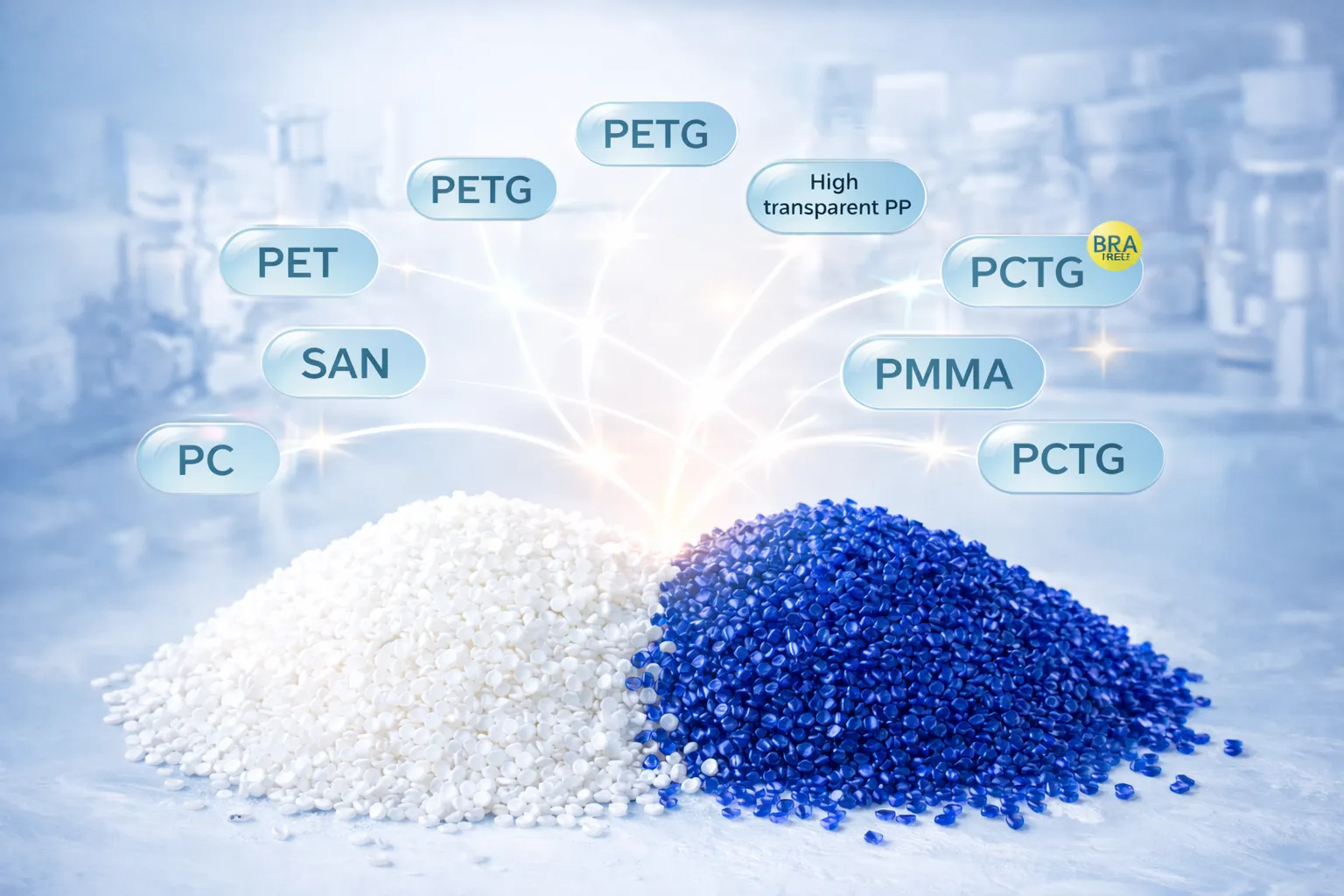
This guide explains each resin’s strengths and limitations, shows head-to-head property comparisons in a consolidated table, maps Korean application categories to recommended resin specifications, and covers the increasingly important topic of recycled PET (rPET) for sustainability-focused brand owners. By the end of this guide, Korean buyers should be able to select the optimal resin for their specific bottle application with confidence.
2. PET: The Universal Workhorse
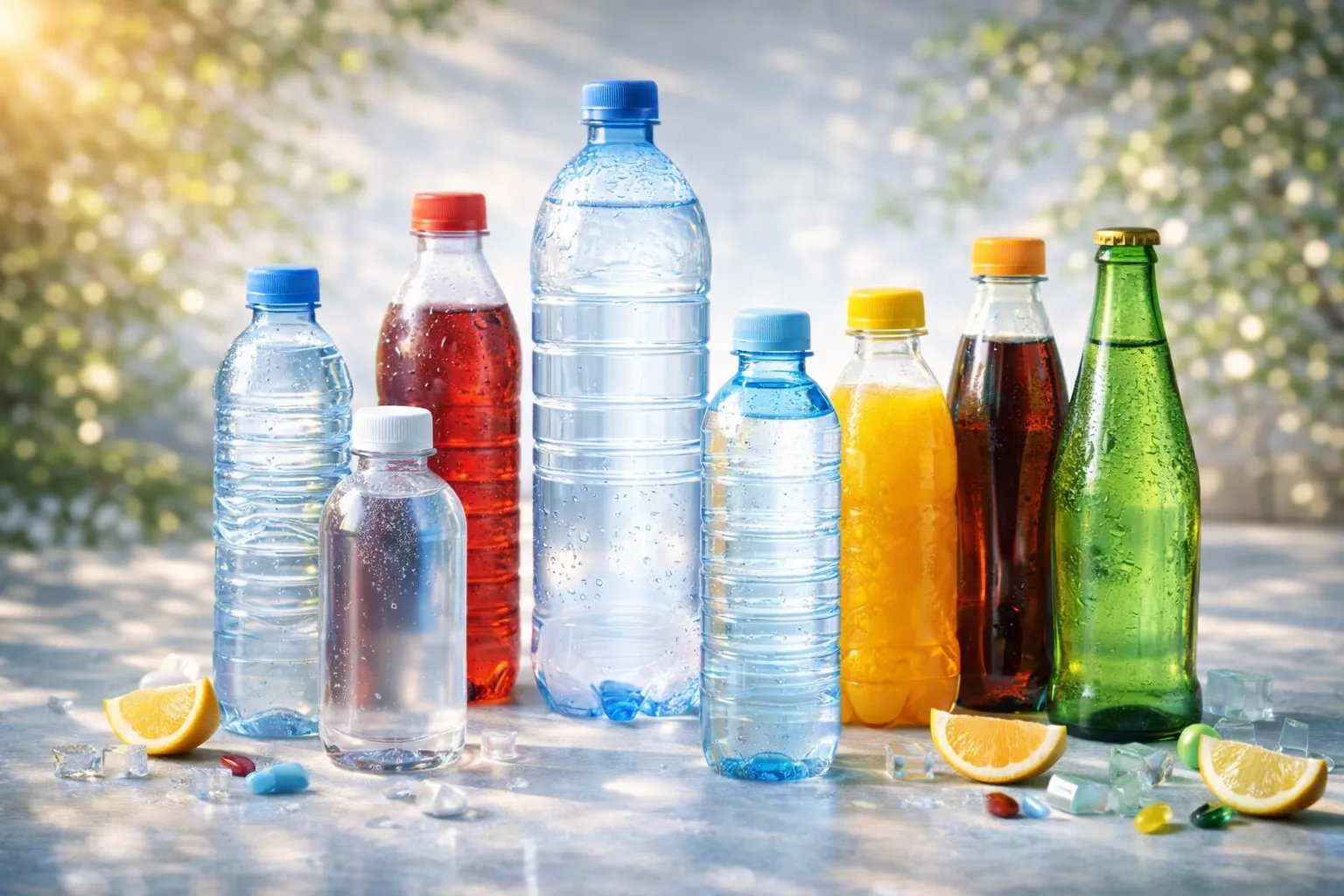
Clear PET beverage bottles — the default resin for 80-90% of Korean ISBM production
Polyethylene Terephthalate
PET — The Industry Standard
Semi-crystalline polyester dominating beverage, pharmaceutical, and general-purpose bottle applications worldwide.
PET (polyethylene terephthalate) is the dominant ISBM resin globally and throughout the Korean packaging market. A semi-crystalline polyester with the molecular formula (C10H8O4)n, PET combines excellent mechanical properties, good optical clarity, moderate chemical resistance, and low cost per kilogram to dominate beverage, pharmaceutical syrup, household chemical, and general-purpose bottle applications. Virtually every Korean water bottle, juice container, soft drink bottle, and condiment container is produced from PET.
PET’s defining characteristics:
- ✓Commodity cost: 1,400-1,700 KRW/kg in Korean industrial markets, cheapest of the four options
- ✓Excellent mechanical strength: biaxial orientation delivers 15-30 gram bottles surviving 1.5m drop tests
- ✓Good optical clarity: 90-92% light transmission when properly oriented (biaxial stretch required)
- ✓Strong oxygen and CO2 barrier: adequate for carbonated beverage shelf life
- ✓Chemical compatibility: resistant to water, most foods, weak acids and bases, but attacked by chlorinated solvents
- ✓FDA/KFDA food-contact approved: compliant for food and pharmaceutical contact applications
PET’s limitations center on its semi-crystalline nature. When processed outside the narrow 2.5 to 3.0 axial by 4.0 to 4.5 hoop stretch ratio window, PET develops either stress whitening (under-stretched) or pearlescent haze (over-stretched), as detailed in our biaxial orientation physics guide. PET also yellows under UV exposure over time, making it unsuitable for outdoor applications, and it has limited thermal resistance above 65 Celsius, requiring careful handling during hot-fill beverage production.
3. PETG: The K-Beauty Clarity Champion
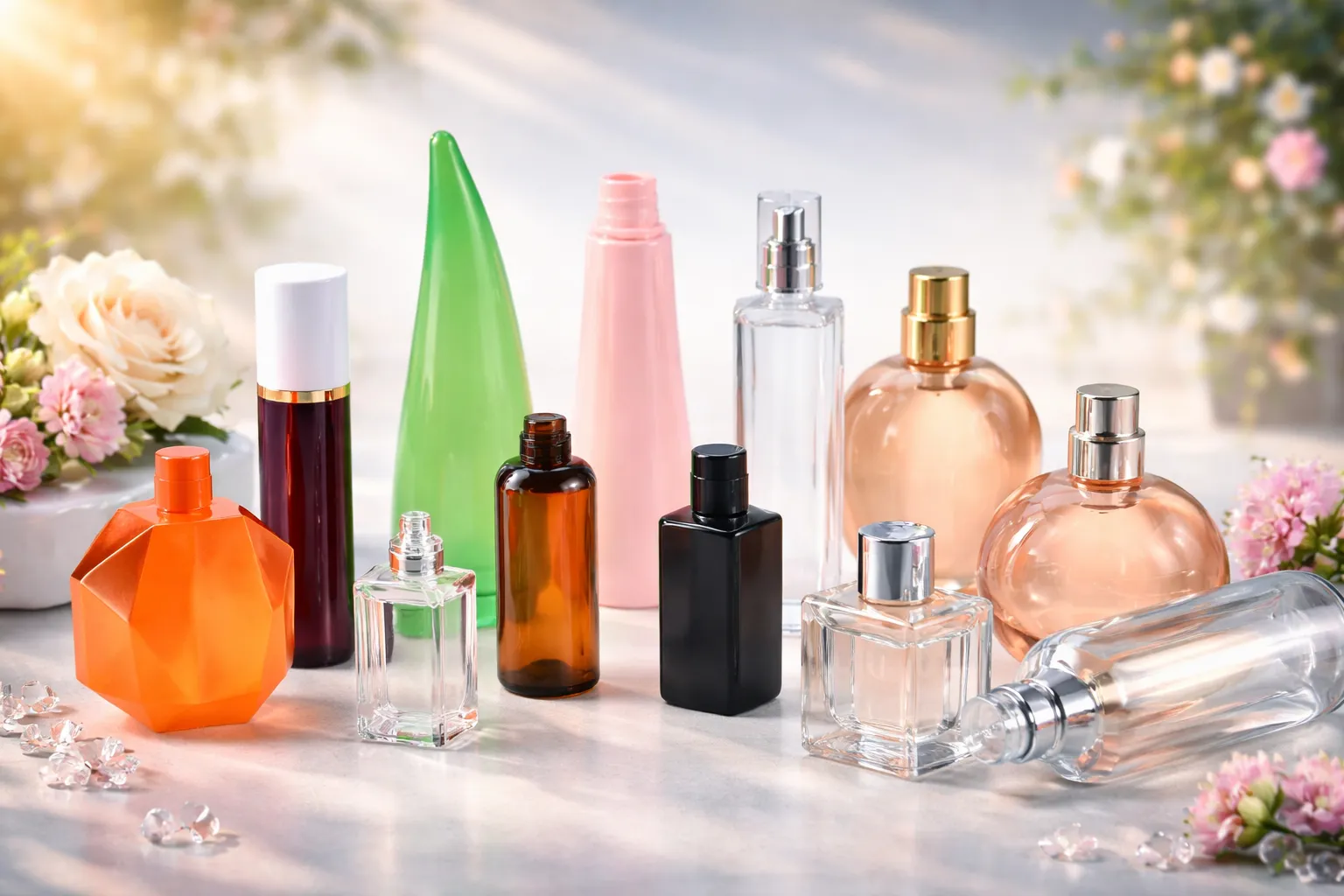
PETG cosmetic bottles — the glass-clarity optical finish Korean K-beauty brands in Suwon and Seongnam demand
Glycol-Modified PET
PETG — The Premium Cosmetic Choice
Amorphous copolyester delivering glass-clarity optics for Korean K-beauty serum and cosmetic flacons.
PETG (glycol-modified PET) replaces roughly 30 percent of PET’s ethylene glycol monomer with cyclohexanedimethanol (CHDM), producing a fully amorphous copolyester with dramatically different processing and optical properties versus standard PET. The amorphous structure means PETG does not crystallize under stretching, eliminating the pearlescent haze failure mode that limits PET’s lightweighting potential. Korean K-beauty contract fillers in Ansan and Suwon overwhelmingly specify PETG for premium serum bottles, toner flacons, and lotion containers specifically for the glass-clarity appearance that PET cannot reliably match.
PETG’s defining characteristics:
- ◆Glass-clarity optics: 91-93% light transmission, superior to PET at equivalent wall thickness
- ◆Wider processing window: 85-110 Celsius stretch temperature versus PET’s narrow 95-115 range
- ◆Better chemical resistance: tolerates alcohols and oils better than PET, important for cosmetic formulations
- ◆Premium cost: 2,500-3,200 KRW/kg, approximately 1.8x PET cost
- ◆Lower stretch ratios: 2.2-2.8 axial by 3.5-4.2 hoop, cannot tolerate PET’s higher values
- ◆Heavier finished bottles: typically 15-25% heavier than equivalent PET bottles due to lower stretch ratios
PETG dominates Korean K-beauty packaging because premium brand owners specify glass-clarity appearance as a non-negotiable brand standard. The slightly higher resin cost and heavier bottle weight are acceptable trade-offs against the brand-perception benefits of optical clarity. PETG also performs well on HGY150-V4 4-station platform with mirror-polished S136 cavities to deliver the glass-clarity finish Korean K-beauty brands demand.
4. PCTG: The Heavy-Wall Premium Specialist
PCTG premium heavy-wall containers — the structural clarity for high-end cosmetic jars and specialty packaging
Cyclohexanedimethanol-modified PET
PCTG — Heavy-Wall Cosmetic Jars
Higher CHDM content than PETG, optimized for thick-walled premium cosmetic jars and pharmaceutical containers.
PCTG extends PETG’s chemistry further by increasing the CHDM modification ratio to approximately 50 percent, delivering a copolyester with even broader processing window and excellent heavy-wall molding behavior. Korean cosmetic brands producing thick-walled premium jars (50ml to 200ml cream containers, toner jars, foundation containers) specifically favor PCTG because it delivers superior heavy-wall optical quality that neither PET nor PETG can reliably match at equivalent wall thicknesses.
PCTG’s defining characteristics:
- ★Excellent heavy-wall molding: produces 3-5mm wall thickness without haze or sink marks
- ★Even wider processing window: 80-115 Celsius, most forgiving of the three PET variants
- ★Superior impact toughness: 15-20% higher than PETG, excellent drop resistance for heavy containers
- ★Premium cost: 3,400-4,200 KRW/kg, approximately 2.3x PET cost
- ★Lowest stretch ratios: 2.0-2.5 axial by 3.2-3.8 hoop, designed for heavy-wall applications
- ★Limited availability: fewer suppliers than PET or PETG, longer lead times for specialty grades
PCTG is the right choice for Korean cosmetic packaging applications requiring thick decorative walls, molded-in colors, or sculptural bottle designs that exceed PETG’s practical processing envelope. The higher resin cost is justified by the visual quality benefits that premium brand owners actively pay for, typically increasing finished bottle price by 30-40 percent over equivalent PETG alternatives.
5. Tritan: The BPA-Free Baby Bottle Standard
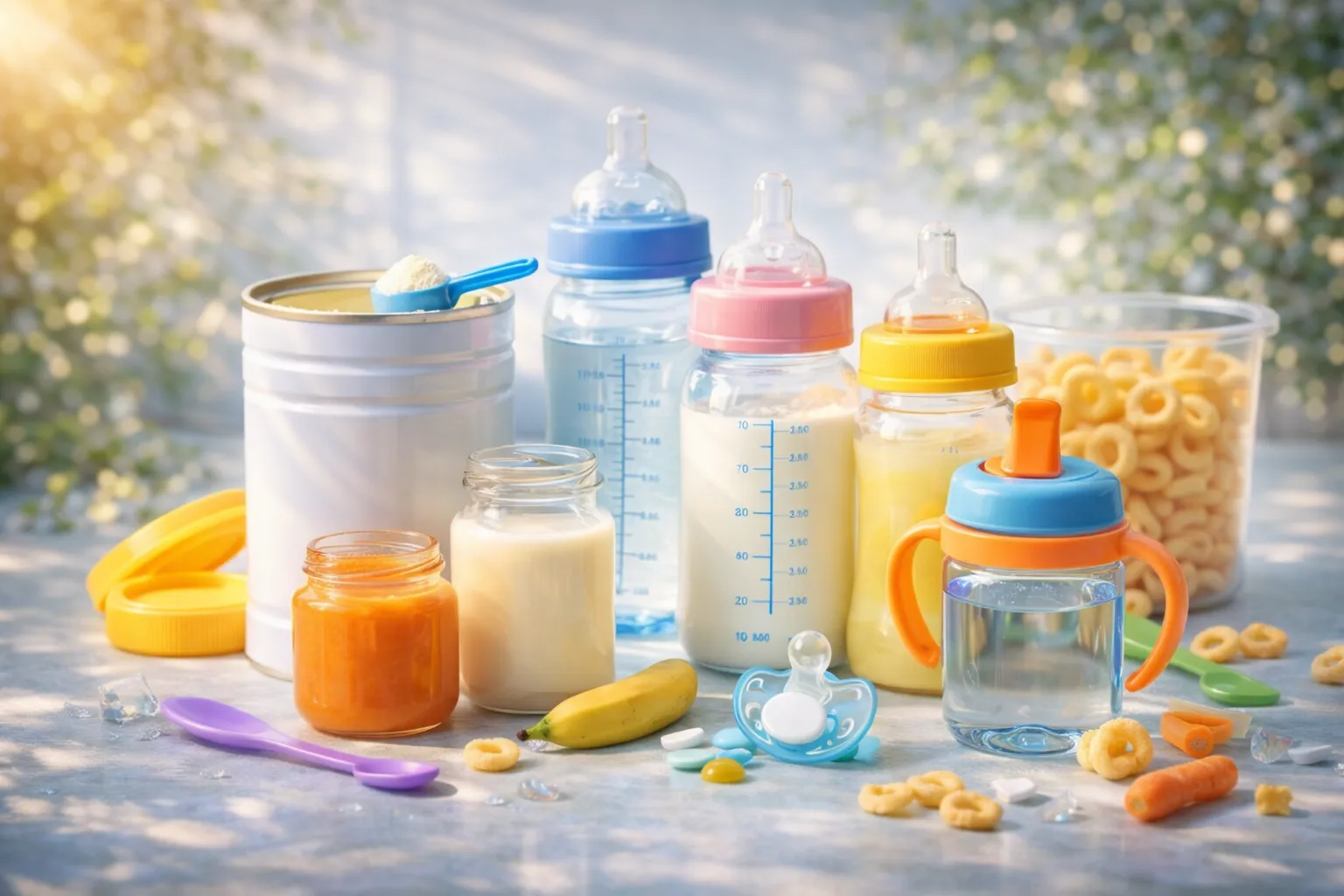 Tritan BPA-free containers — the certified standard for Korean baby bottles and reusable drinkware in Ulsan and Gyeonggi-do
Eastman Tritan Copolyester
Tritan — BPA-Free Premium Grade
Proprietary Eastman copolyester delivering KFDA-compliant BPA-free performance for baby bottles and pharmaceutical applications.
Tritan is a proprietary copolyester developed by Eastman Chemical (USA) specifically for applications where BPA-free compliance matters commercially or regulatorily. The chemistry combines CHDM with tetramethyl cyclobutanediol (TMCD), producing a resin with excellent clarity, exceptional chemical resistance to repeated dishwashing, and definitive BPA-free status that satisfies Korean KFDA baby product safety regulations. Korean baby care brands in Ulsan and Busan specifically demand Tritan for bottles that will be reused and sterilized multiple times, where repeated thermal exposure would cause other resins to develop stress cracks or chemical migration issues.
Tritan’s defining characteristics:
- ✓BPA-free certification: proprietary Eastman chemistry, KFDA and FDA approved for baby products
- ✓Excellent dishwasher compatibility: withstands 500+ cycles at 70 Celsius without cracking
- ✓Outstanding chemical resistance: handles detergents, alcohols, and sterilization agents
- ✓Premium cost: 4,500-5,500 KRW/kg, approximately 3x PET cost
- ✓Good stretch behavior: 2.2-2.7 axial by 3.8-4.3 hoop, fair orientation capability
- ✓Single supplier: Eastman licensing-only, limited sourcing flexibility
For Korean baby care brand owners and pharmaceutical contract fillers producing dropper bottles, Tritan’s regulatory positioning and reuse durability justify the premium cost. The resin is also specified by K-beauty brands producing travel-size bottles marketed as “reusable eco-friendly packaging” where repeated washing cycles are an expected use case.
6. Head-to-Head Properties Comparison
The consolidated comparison table below summarizes the four resins across the properties that drive Korean packaging buyer decisions. Data reflects typical values for standard commercial grades in Korean industrial markets.
| Property | PET | PETG | PCTG | Tritan |
|---|---|---|---|---|
| Cost (KRW/kg) | 1,400-1,700 | 2,500-3,200 | 3,400-4,200 | 4,500-5,500 |
| Structure | Semi-crystalline | Amorphous | Amorphous | Amorphous |
| Optical Clarity | 90-92% | 91-93% | 91-92% | 90-92% |
| Processing Window | 95-115°C | 85-110°C | 80-115°C | 90-120°C |
| Axial Stretch Ratio | 2.5-3.0 | 2.2-2.8 | 2.0-2.5 | 2.2-2.7 |
| Hoop Stretch Ratio | 4.0-4.5 | 3.5-4.2 | 3.2-3.8 | 3.8-4.3 |
| Drop Resistance | Excellent | Good | Excellent | Excellent |
| Chemical Resistance | Moderate | Good | Good | Excellent |
| Heat Resistance | 65°C | 70°C | 75°C | 95°C |
| BPA Status | BPA-free | BPA-free | BPA-free | BPA-free (certified) |
| Recyclability | Excellent (#1) | Limited (#7) | Limited (#7) | Limited (#7) |
7. Korean Application Matching Guide
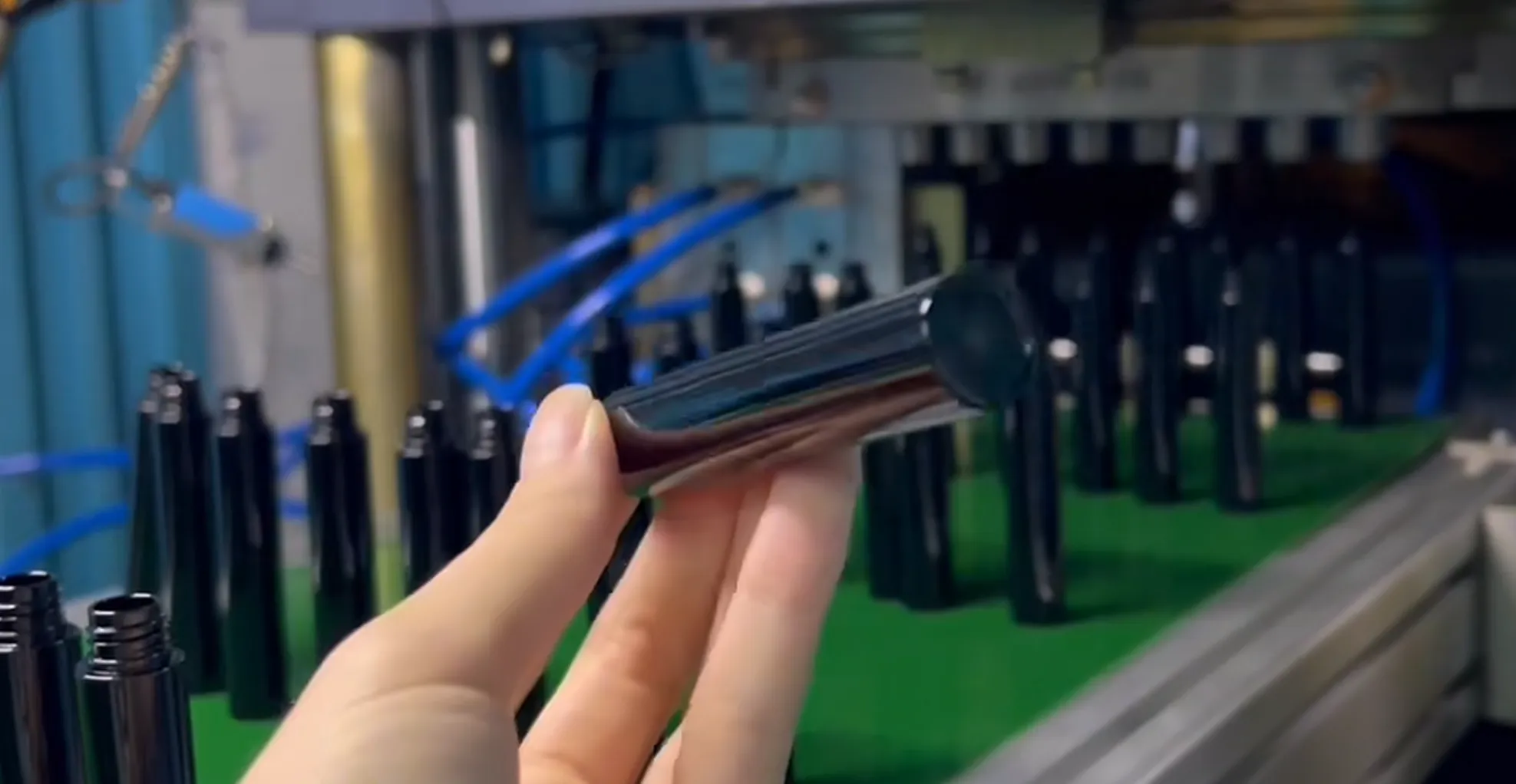
Korean ISBM applications across K-beauty, pharmaceutical, beverage, and baby product sectors
Four dominant Korean application categories map to specific resin recommendations. The guidance below reflects our customer installation data across 300+ Korean production lines from 2020-2026.
Beverage & Water Bottles
Recommended resin: Standard PET with optional rPET percentage for sustainability branding.
Korean regional beverage bottlers in Daegu, Ulsan, and Busan universally use PET for 500ml water, 1L juice, 1.5L sports drinks, and 2L soft drink bottles. The cost-to-performance ratio is unbeatable, and PET’s excellent CO2 barrier handles carbonated beverages without shelf life issues.
K-Beauty Cosmetics
Recommended resin: PETG for thin-walled serums and toners; PCTG for heavy-walled premium jars.
Ansan, Suwon, and Seongnam K-beauty contract fillers specify PETG as the default for 50-200ml serum bottles and flacons where glass-clarity appearance is a brand standard. Thick-walled premium jars (50-300ml cream containers) use PCTG for superior heavy-wall optics.
Baby Bottles & Children’s Products
Recommended resin: Tritan for reusable baby bottles; PETG for disposable children’s drink containers.
Ulsan and Busan baby care brand owners specify Tritan for reusable 240-330ml baby bottles that will undergo repeated dishwasher sterilization cycles. KFDA regulations mandate BPA-free documentation, which Tritan satisfies with certified supplier testing.
Pharmaceutical & Medical Packaging
Recommended resin: PET for syrup bottles; Tritan for reusable dropper bottles; PETG for OTC wide-use products.
Daejeon and Incheon pharmaceutical contract manufacturers primarily use PET for single-use syrup and liquid medication containers. Reusable dropper bottles for eye-drops and specialty formulations specify Tritan. KFDA registration simplifies substantially with globally-established resin supplier documentation.
8. rPET: The Sustainability Consideration
Recycled PET (rPET) has shifted from niche specification to mainstream requirement over the past three years in Korean packaging. Government sustainability mandates, brand owner ESG commitments, and consumer preference for environmentally-responsible packaging have all converged to drive rPET adoption. Most Korean beverage bottlers now use 10 to 30 percent rPET content in their standard PET blends, with some premium brands targeting 50 percent rPET content or higher.
!rPET Processing Considerations
- ▸rPET requires more rigorous drying (180 Celsius for 6-8 hours vs 4 hours for virgin PET) due to higher moisture absorption from recycled content
- ▸Contamination from recycling stream can cause black specks or gel particles that require higher-grade melt filtration (50 micron typical)
- ▸rPET wears moulds faster than virgin PET due to abrasive contaminants — H13 steel cavities required, not standard 718H
- ▸Higher rPET content (above 30%) often produces slightly hazy bottles; most commercial applications blend 20-30% rPET with virgin PET for balance
- ▸Cost per kilogram is typically 80-90% of virgin PET after the 2024 Korean regulatory changes expanded food-grade rPET supply
For Korean buyers planning rPET adoption or expansion, the critical equipment consideration is mould material specification. Standard 718H steel degrades rapidly under rPET abrasive wear; H13 is required for cavity surfaces exposed to the recycled stream. Our mould steel grades guide covers this specification in detail. rPET processing also benefits from the full-servo architecture available on Ever-Power platforms because the wider process window available on servo machines better accommodates rPET’s batch-to-batch variability.
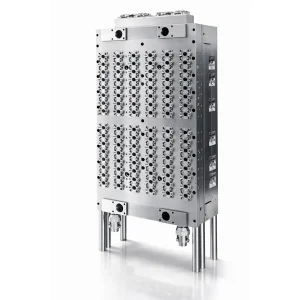
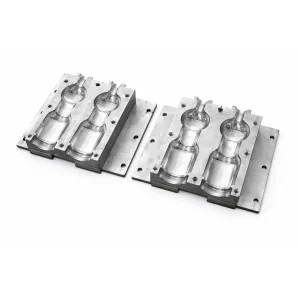
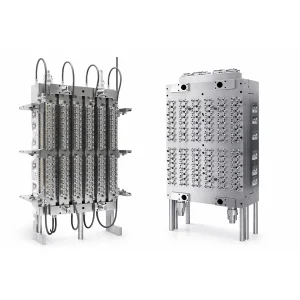
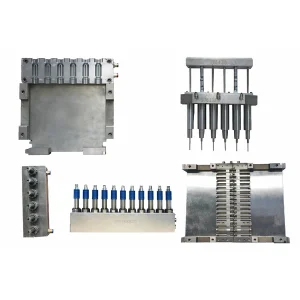
Moulds Optimised for Each Resin Type
Explore purpose-built ISBM moulds with steel grades and surface finishes tuned for PET, PETG, PCTG, and rPET processing.
9. Resin Decision Framework
The decision tree below walks through the three questions that determine resin selection for most Korean packaging applications. Answer in order, and the recommended resin falls out at the end.
Question 1: Is regulatory BPA-free documentation required?
- ✓Yes → proceed to Tritan specification (especially for baby products, reusable containers)
- ✓No → proceed to Question 2
Question 2: Is glass-clarity optical appearance a brand requirement?
- ✓Yes, thin-walled bottles → PETG
- ✓Yes, heavy-walled jars → PCTG
- ✓No → proceed to Question 3
Question 3: Is production volume above 5 million bottles per year per SKU?
- ✓Yes → PET with 20-30% rPET blend for sustainability premium positioning
- ✓No → Standard virgin PET
10. Conclusion
Resin selection is one of the most consequential specifications in Korean packaging decisions, yet it is frequently made on supplier convenience rather than technical analysis. Match resin to application correctly and your packaging commands price premiums that more than offset the resin cost differential. Match resin poorly and your production fails to meet customer specifications regardless of machine or operator quality.
Ever-Power’s engineering team runs resin compatibility analysis on every new Korean customer project, ensuring the specified machine platform and mould configuration correctly support the chosen resin processing requirements. For applications requiring rPET processing, we specify H13 mould cavity material and recommend full-servo machine configurations to handle batch-to-batch recycled resin variability. Share your bottle specification, target application, and resin preference, and our team returns a complete processing recommendation within 48 hours.
Key Takeaways
- ✓PET is the universal workhorse for beverage, syrup, and general-purpose applications at the lowest cost per kilogram (1,400-1,700 KRW/kg).
- ✓PETG is the K-beauty clarity champion for premium serum and cosmetic bottles at ~1.8x PET cost.
- ✓PCTG specializes in heavy-walled cosmetic jars where PETG optical quality is insufficient (~2.3x PET cost).
- ✓Tritan is the BPA-free standard for reusable baby bottles and pharmaceutical dropper applications (~3x PET cost).
- ✓rPET at 20-30% blend is increasingly the Korean beverage default for ESG compliance; requires H13 mould cavities.
- ✓Three-question decision framework: BPA-free requirement → clarity requirement → volume threshold resolves most Korean specification decisions.
Need Resin Selection Support for Your Bottle Project?
Share your bottle specification, target application, and regulatory requirements. Our Korean engineering team returns a complete resin and processing recommendation within 48 hours.
Related Technical Articles
Technical Deep-Dive
Biaxial Molecular Orientation: Science Behind PET Bottle Strength
How stretch ratios create PET bottle strength and how each resin responds differently.
Technical Deep-Dive
Understanding Preform Design
The foundation of bottle quality — preform sizing and gate geometry for different resins.
Technical Deep-Dive
Hot Runner Systems in ISBM Moulds
Hot runner engineering principles for stable processing across PET, PETG, PCTG, and Tritan.
Browse More Resources
Editor: Cxm