Penerapan ISBM · Kemasan Saus & Bumbu Korea · 2026
Saus Korea ISBM &
Panduan Botol Bumbu
Ekspor saus dan bumbu Korea melampaui USD 1,2 miliar pada tahun 2024, dengan gochujang, kecap, doenjang, dan cuka mendorong adopsi budaya makanan Korea secara global. Botol yang berisi produk-produk ini bukanlah kemasan makanan standar — botol tersebut harus tahan terhadap agresi kimia dari asam fermentasi, tuntutan termal dari proses pengisian panas, dan persyaratan peraturan Korea yang mengatur setiap label bumbu domestik dan ekspor.
Isi Panas 85–92°C
PP · PET · PETG
Meja Teknik Ever-Power Korea · Ansan-si · Mei 2026
1. Pasar Kemasan Saus dan Bumbu Korea
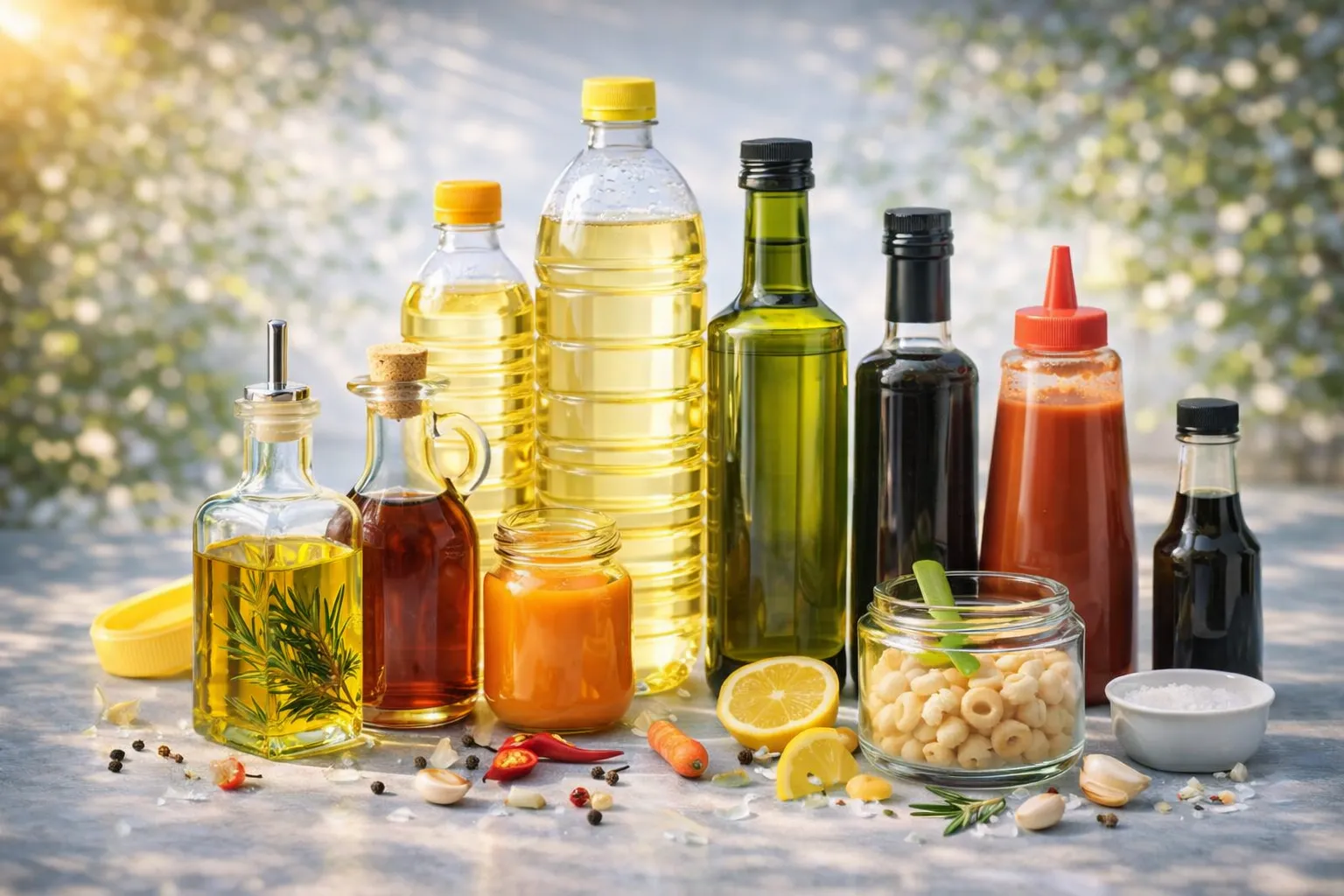
Kemasan bumbu Korea merupakan salah satu aplikasi ISBM yang paling menuntut secara teknis dalam industri makanan Korea. Produk-produk tersebut — gochujang (pasta cabai merah, pH 4,2–5,0, viskositas tinggi), doenjang (pasta kedelai fermentasi, pH 5,0–6,5, semi-padat), kecap asin (간장, pH 4,5–5,5, natrium tinggi, garam 17–20%), cuka (식초, asam asetat 4–6%), dan minuman cuka buah Korea (홍초, minuman asam campuran) — masing-masing menghadirkan tantangan kimia spesifik bagi kemasan plastik yang menampungnya.
Pertumbuhan ekspor saus dan bumbu Korea telah mendorong perubahan besar dalam format kemasan: botol kaca, yang mendominasi kemasan bumbu Korea hingga tahun 2018, dengan cepat digantikan oleh botol PET dan PP ISBM untuk saus Korea format ekspor. Alasannya adalah logistik — pecahnya kaca selama pengiriman udara dan kontainer laut ke pasar AS, Eropa, dan Asia Tenggara menghasilkan pengembalian barang, klaim asuransi, dan kerusakan reputasi merek di gudang importir makanan Korea. Merek saus Korea (CJ Bibigo, Sempio, Ottogi, Haechandle) sekarang menentukan PET dan PP ISBM untuk SKU ekspor mereka di hampir semua lini produk bumbu cair, sementara tetap mempertahankan kaca untuk beberapa posisi premium domestik.
Konteks ISBM (International Standards and Business Management) kemasan makanan Korea yang lebih luas — mencakup seluruh rangkaian kemasan ekspor makanan Korea dan kepatuhan kontak makanan KFDA (Kennel Food Authority) — didokumentasikan dalam Panduan produksi ISBM untuk kemasan makanan KoreaArtikel ini berfokus pada persyaratan khusus saus dan bumbu yang membedakan kategori ini dari produksi ISBM makanan atau minuman standar Korea.
2. Isi Panas vs Isi Dingin: Keputusan Utama untuk Botol Saus Korea
Metodologi pengisian saus dan bumbu Korea terbagi menjadi dua model produksi yang menentukan seluruh spesifikasi botol. Pengisian panas (열충전) — pengisian produk pada suhu 82–92°C untuk mencapai pasteurisasi melalui energi termal daripada pemrosesan retort terpisah — adalah metode produksi standar untuk sebagian besar saus cair, cuka, dan produk bumbu Korea dengan aktivitas air di atas 0,85. Pengisian dingin (냉충전) dengan sterilisasi retort digunakan untuk pasta asam rendah (doenjang, gochujang) di mana suhu pengisian panas tidak cukup untuk kombinasi pH dan aktivitas air yang dibutuhkan.
Pengisian Panas (82–92°C)
Kecap asin Korea, cuka, minuman cuka buah, saus gochujang cair. Membutuhkan PP ISBM (untuk pengisian suhu 92°C tanpa deformasi) atau PET yang diproses dengan pemanasan (HS-PET). PET standar mengalami deformasi di atas 65°C di bawah beban pengisian panas. Botol PP pengisian panas harus mempertahankan stabilitas dimensi selama pengisian dan mempertahankan integritas panel vakum saat pendinginan. Rekayasa pengisian panas PP Korea yang dirinci dalam Panduan botol pengisian panas PP Berlaku langsung untuk produksi botol saus Korea.
Resin ISBM: PP atau HS-PET | Kisaran Suhu: 82–92°C | Sistem Pengisian: Saluran yang kompatibel dengan pengisian panas
Isi Dingin dengan Retort / Suhu Ruangan
Saus Korea premium dengan viskositas tinggi atau kultur aktif fermentasi (doenjang hidup, gochujang artisanal) yang tidak dapat diisi panas tanpa menurunkan kualitas produk. Pengisian dingin menggunakan PET atau PETG bening — memungkinkan tampilan sejernih kaca yang mengkomunikasikan kualitas premium di tingkat ritel. Kinerja penghalang (oksigen, kelembapan) lebih penting untuk pengisian dingin daripada pengisian panas karena tidak ada proses sterilisasi termal untuk mengatur ulang jam mikroba.
Resin ISBM: PET atau PETG | Kisaran Suhu: Suhu Ruangan | Sistem Pengisian: Pengisian dingin atau kantong retort
3. Kategori Botol Saus Korea dan Spesifikasi Teknis
| Produk | Volume | Damar | Suhu Pengisian. | Leher | Persyaratan Utama |
|---|---|---|---|---|---|
| Kecap (간장) | 200ml–1,8L | PP | 85–90°C | 28–38 mm | Ketahanan kimia garam tinggi (18–20%); tutup dispenser rapat untuk mencegah tetesan. |
| Saus gochujang cair | 150–500 ml | PP | 82–88°C | 28–38 mm | Ketahanan terhadap noda pigmen; lebar tuang untuk produk kental. |
| Toples pasta gochujang (고추장) | 200–500g | PET atau PETG | Suasana sekitar | WM 63–86mm | Mulut lebar untuk akses sendok; permukaan tahan noda; penutup kedap udara. |
| Cuka beras (쌀식초) | 400ml–1.8L | PP | 88–92°C | 28–38 mm | Asam asetat 4–6% — PET dapat diterima, PP lebih disukai untuk pengisian panas pada tingkat keasaman ini. |
| Saus pedas Korea (고추소스) | 200–750 ml | PP atau PET | 82–88°C | 28–38 mm | Leher sempit untuk aliran terkontrol; penutup pelepas tekanan untuk varian fermentasi aktif. |
| Minuman cuka buah Korea (홍초) | 900ml, 1,5L | PELIHARAAN | Suhu ruangan (pengisian dingin) | 28 mm | PETG premium atau PET kristal; minuman konsumen langsung dari botol; botol berkualitas untuk pajangan. |
4. Ketahanan Terhadap Pewarnaan Gochujang: Tantangan ISBM Khusus Korea
Gochujang (고추장) — pasta cabai merah fermentasi Korea — mengandung senyawa kapsaisin dan pigmen karotenoid cabai merah (kapsantin, kapsorubin) yang lebih agresif menempel pada permukaan kemasan plastik dibandingkan hampir semua produk makanan Korea lainnya. Noda merah-oranye khas yang ditinggalkan gochujang pada botol PET setelah kontak yang lama disebabkan oleh molekul karotenoid non-polar yang terpisah dari matriks saus berair ke permukaan plastik (permukaan PET yang sedikit polar menyediakan tempat adsorpsi awal; karotenoid yang terserap kemudian berdifusi ke dinding selama beberapa hari hingga beberapa minggu).
Implikasi praktis pengemasan bagi produsen gochujang ISBM Korea: PET dan PP sama-sama dapat diterima untuk pasta gochujang dalam format toples bermulut lebar (produk berada di dasar dan tidak bersentuhan dengan seluruh dinding toples seperti halnya cairan), tetapi saus pedas gochujang cair dengan pengenceran tinggi (format tuang yang digunakan dalam saus dan bumbu perendam) bersentuhan dengan seluruh permukaan dinding bagian dalam dan menghasilkan noda yang terlihat pada PET bening dalam waktu 2–4 minggu setelah pengisian. Merek saus gochujang Korea telah mengatasi hal ini melalui dua pendekatan: menggunakan PP berwarna putih atau buram untuk botol saus (keburaman tersebut menutupi noda internal dari pandangan luar), atau menggunakan PETG untuk botol transparan (permukaan PETG yang dimodifikasi glikol yang lebih polar menunjukkan penyerapan karotenoid yang jauh lebih sedikit daripada PET standar). Pertimbangan pemilihan material yang menentukan resin mana yang sesuai untuk setiap format produk gochujang Korea merupakan aplikasi spesifik dari kerangka kerja dalam Panduan pemilihan resin PET vs PETG.
Stoples pasta gochujang bermulut lebar berbahan PET atau PETG merupakan format kemasan gochujang premium Korea yang paling cepat berkembang — bersaing dengan wadah plastik buram tradisional yang mendominasi pasar Korea hingga tahun 2020. Merek gochujang premium Korea (O'Food, Bibigo Premium, Sempio Natural) menggunakan stoples PETG bermulut lebar dalam format 200–500g karena kejernihan PETG yang seperti kaca memungkinkan konsumen untuk melihat warna pasta merah-coklat yang pekat melalui dinding stoples — sinyal kualitas premium yang tidak mungkin didapatkan dengan kemasan buram. Pengetahuan teknik untuk format bermulut lebar ini ada di Panduan produksi toples makanan bermulut lebar Korea.
5. Kepatuhan Pengemasan Ekspor Saus Korea
Kemasan ekspor saus dan bumbu Korea harus secara bersamaan mematuhi persyaratan domestik KFDA Korea dan peraturan pengemasan masing-masing pasar tujuan ekspor. Dimensi kepatuhan utama untuk kemasan ekspor ISBM saus Korea adalah:
AS (FDA 21 CFR) — Pasar Ekspor Saus Korea Terbesar
PET dan PP yang digunakan untuk kontak dengan makanan di AS harus mematuhi FDA 21 CFR Bagian 177.1630 (PET) dan 177.1520 (PP). Produsen ISBM Korea yang memasok botol saus format ekspor untuk distribusi pasar AS memerlukan dokumentasi kepatuhan kontak makanan FDA untuk resin dan kondisi pemrosesan spesifik mereka — berbeda dari dokumentasi KFDA. Korean Ever-Power menyediakan dokumentasi dukungan kepatuhan FDA untuk semua resin botol saus standar Korea dan konfigurasi produksi. Akurasi volume harus memenuhi standar FDA NIST Handbook 130 (kuantitas bersih yang dinyatakan pada label).
Uni Eropa (Peraturan EC 10/2011 + 1935/2004) — Pasar Saus Korea yang Berkembang
Bahan kontak makanan Uni Eropa untuk kemasan saus harus mematuhi Peraturan (UE) No. 10/2011 (plastik kontak makanan) dengan pengujian migrasi menggunakan simulasi makanan D1 (etanol 10% — untuk kecap) dan D2 (etanol 50% — untuk bumbu dengan kandungan alkohol lebih tinggi). Produsen ISBM Korea yang memasok kemasan saus Korea yang ditujukan untuk UE harus menyediakan dokumen Pernyataan Kepatuhan (DoC) yang ditandatangani oleh orang yang berkualifikasi di produsen — setara dengan sertifikat kontak makanan KFDA Korea di UE. Masuknya merek saus Korea ke pasar UE memerlukan dokumentasi DoC format UE dari pemasok kemasan utama.
Jepang (Undang-Undang Keamanan Pangan Jepang) — Pasar Saus Korea yang Berdampingan Secara Budaya
Peraturan kontak makanan Jepang (厚生省告示第370号, Pemberitahuan Kementerian Kesehatan dan Kesejahteraan 370) berlaku untuk plastik yang digunakan untuk kontak dengan makanan. Merek saus Korea yang mengekspor ke Jepang memerlukan dokumentasi kepatuhan kontak makanan format Jepang untuk botol ISBM mereka. Daftar positif Jepang untuk PET dan PP mencakup aplikasi kontak makanan standar; dokumentasi harus dalam format bahasa Jepang dan menentukan hasil uji migrasi aktual untuk simulasi lemak (n-heptana) dan simulasi asam (asam asetat 4% — yang secara langsung relevan dengan aplikasi cuka dan kecap Korea).
6. Desain Dispenser untuk Botol Saus Korea
Botol saus Korea memiliki pola penggunaan konsumen yang berbeda dari botol bumbu Barat. Kecap asin Korea, saus gochujang, dan cuka digunakan dalam jumlah terukur dalam masakan Korea — beberapa tetes sekaligus dari botol meja (소량 사용) daripada dituangkan secara bebas. Pola penggunaan ini menjadikan ketepatan takaran sebagai persyaratan desain botol yang sangat penting yang menentukan kepuasan konsumen dan loyalitas merek.
Fitur desain utama untuk botol saus Korea ISBM adalah: corong anti-tetes (ekstensi leher yang sempit dan sedikit miring yang menciptakan aliran terkontrol dan mencegah tetesan saat botol ditegakkan setelah menuang — prinsipnya identik dengan fitur anti-tetes yang digunakan pada botol minyak goreng Korea tetapi dioptimalkan untuk saus dengan viskositas rendah); sisipan aliran terkontrol (sisipan PE yang ditempatkan di dalam leher botol yang memiliki lubang terkalibrasi 4–8 mm tergantung pada viskositas produk, memastikan volume tuang yang konsisten dan mencegah penuangan berlebihan akibat kemiringan botol); dan penutup flip-top atau snap-cap (menghilangkan risiko corong tuang terkontaminasi di antara penggunaan karena leher botol terbuka).
Spesifikasi bentuk leher botol untuk desain dispenser saus Korea memerlukan koordinasi yang erat antara pemasok cetakan botol ISBM dan pemasok penutup/perlengkapan dispenser — diameter dalam leher botol harus sama persis dengan diameter luar perlengkapan dispenser agar terpasang dengan benar dan kedap udara. Ini adalah salah satu dari 9 faktor yang Panduan pemilihan cetakan ISBM Korea membahas hal ini dalam konteks pengadaan peralatan pembuatan botol saus Korea.
7. Lanskap Merek Saus Korea dan Kualifikasi Pasokan ISBM
Pasar saus dan bumbu Korea didominasi oleh lima kelompok merek utama yang menguasai lebih dari 751 TP3T volume domestik dan ekspor: CJ CheilJedang (Bibigo, Haechandle — gochujang, kecap, cuka), Sempio Foods (Sempio 양조간장, kecap dan bumbu premium), Ottogi (Ottogi 금빛참기름 dan rangkaian bumbu), Daesang (Chung Jung One — gochujang dan doenjang), dan SFC (rangkaian saus ekspor Korea SFC). Di bawah merek-merek utama ini, terdapat sejumlah merek saus artisanal premium Korea yang signifikan dan terus berkembang (gochujang produksi terbatas, doenjang yang sudah lama disimpan, saus bawang putih hitam premium) yang melayani pasar ekspor Hallyu makanan Korea melalui Coupang Global dan distributor makanan khusus Korea.
Kualifikasi pemasok ISBM merek saus Korea mengikuti proses yang mirip dengan kualifikasi kemasan makanan dan produk perawatan pribadi Korea: dokumentasi kepatuhan KFDA, persetujuan sampel, audit proses, dan uji coba sebelum pasokan komersial. Persyaratan tambahan khusus untuk kemasan saus Korea: validasi kompatibilitas pengisian panas (botol harus diisi pada suhu produksi aktual dan dievaluasi stabilitas dimensinya pada 24 jam, 72 jam, dan 7 hari setelah pengisian) sebelum pasokan produksi dapat dimulai. Produsen ISBM Korea yang baru terjun ke kemasan saus dan menjalankan validasi ini pada botol PET standar mereka pada suhu pengisian kecap 88°C biasanya akan menemukan bahwa PET standar menunjukkan deformasi bahu yang tidak dapat diterima — yang menegaskan bahwa PP adalah resin yang tepat untuk aplikasi pengisian saus panas dan membenarkan investasi kemampuan pemrosesan PP.
8. Ekonomi Produksi untuk Saus Korea ISBM
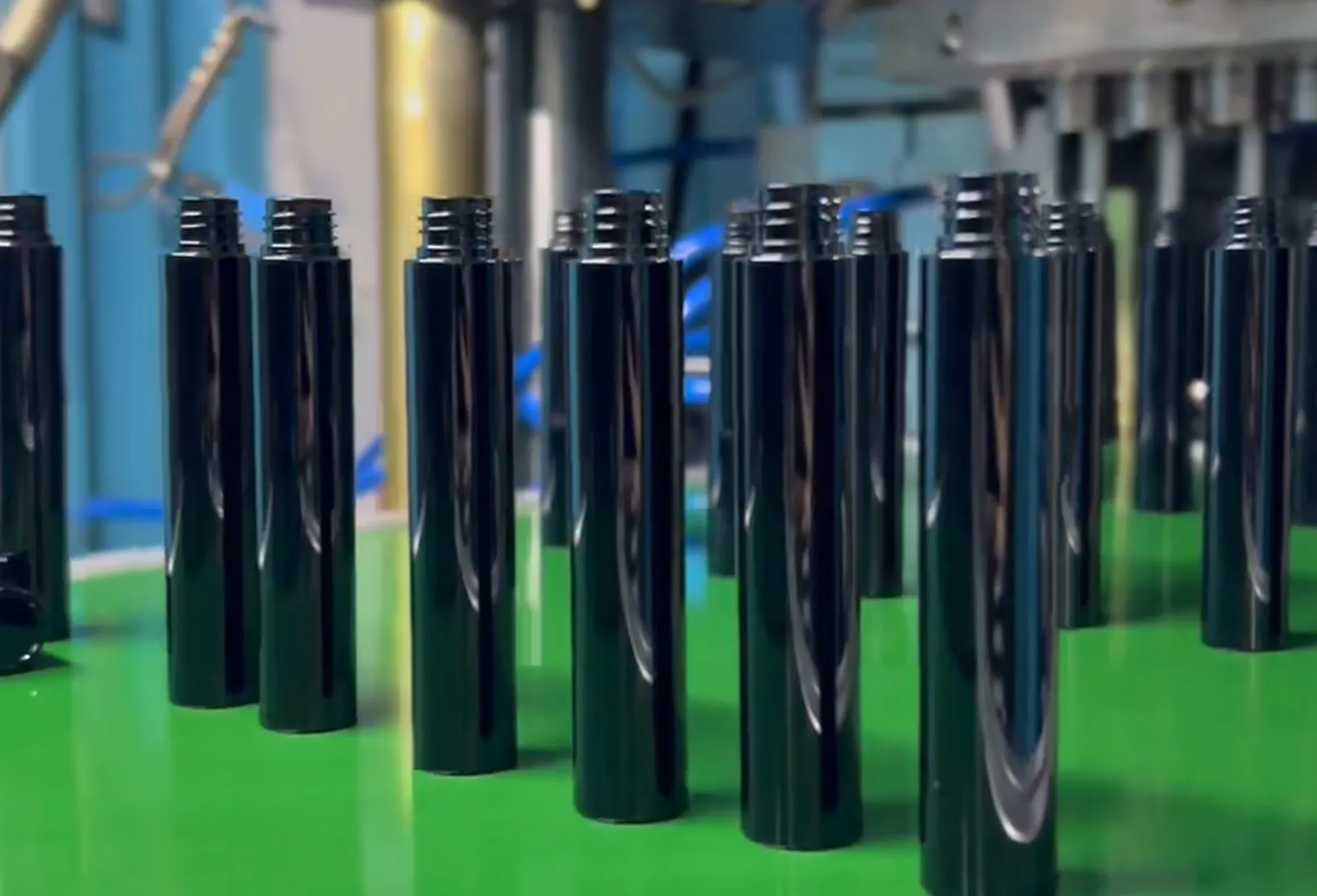
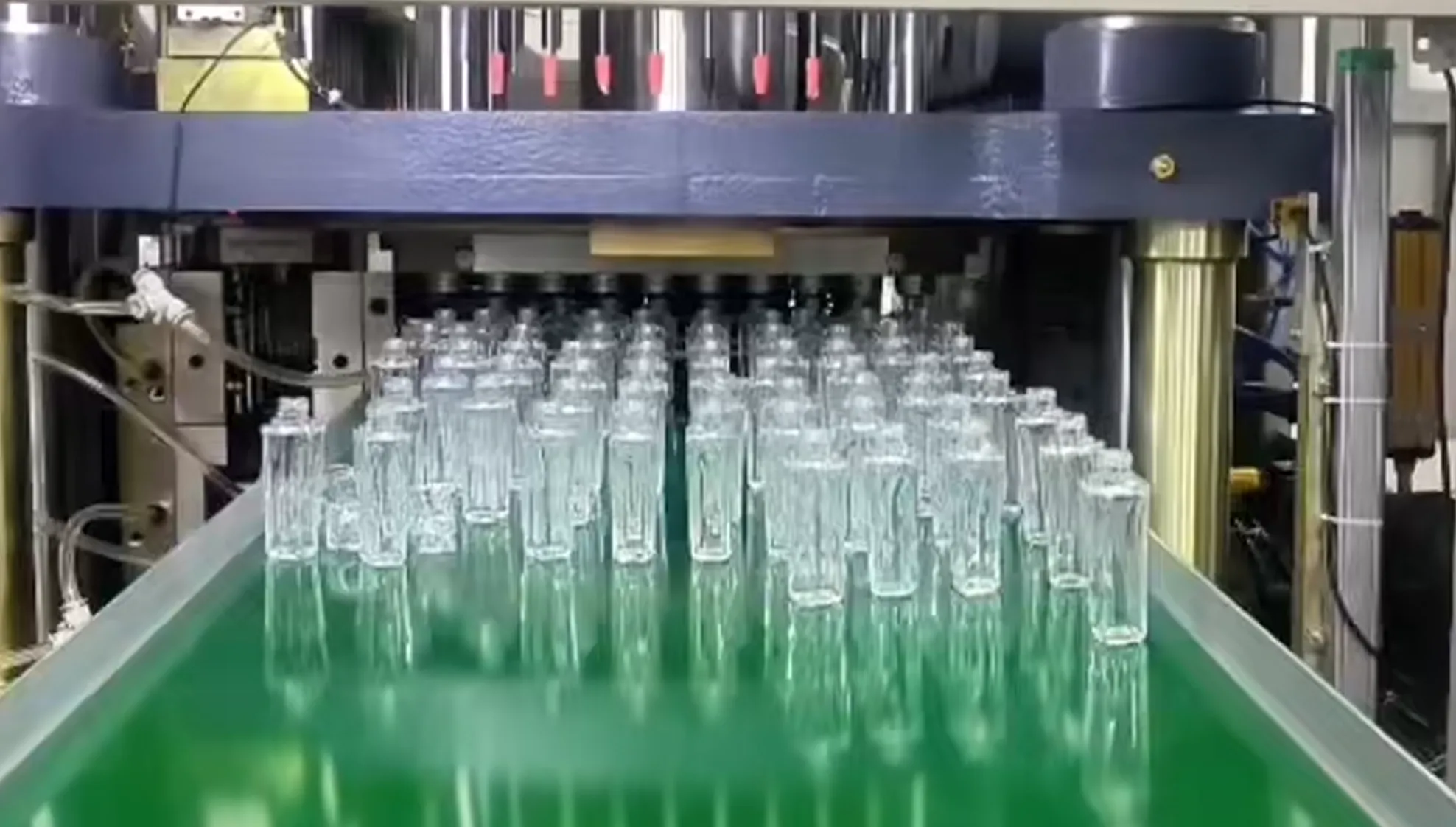
Ekonomi produksi botol saus Korea ISBM berbeda dari produksi minuman dan produk perawatan pribadi terutama karena persyaratan pemrosesan PP untuk aplikasi pengisian panas. Biaya resin PP (KRW 1.400–1.800/kg) sebanding dengan PET standar, tetapi waktu siklus PP ISBM biasanya 8–12% lebih lama daripada produksi PET yang setara (waktu penahanan pengkondisian lebih lama seperti yang dibahas dalam panduan suhu pengkondisian) — sedikit mengurangi output tahunan pada jumlah rongga yang setara. Harga kontrak untuk botol saus kedelai Korea PP ISBM (500ml–1L, format standar) adalah KRW 38–55 per botol — sedikit di atas harga botol minuman PET yang setara, mencerminkan biaya overhead pemrosesan PP dan biaya kualifikasi pengisian panas. Botol saus Korea premium (gochujang PETG toples bermulut lebar, 200–500g) dihargai KRW 65–95 per unit — sebanding dengan suplemen premium atau ISBM perawatan pribadi. Pemilihan platform mesin untuk ISBM saus Korea dimulai dengan HGY200-V4 untuk produksi kecap dan cuka standar (500ml–1,8L, 4–6 rongga) dan meluas ke HGY250-V4 untuk format saus curah layanan makanan (1,8L–5L) di mana pertimbangan teknik format besar yang sama berlaku seperti pada kategori ISBM format besar Korea lainnya.
Pertanyaan yang Sering Diajukan
Dukungan Pengemasan Saus & Bumbu
Mengembangkan Kemasan ISBM untuk Kecap Korea, Gochujang, atau Cuka?
Korean Ever-Power menyediakan rekayasa botol PP hot-fill, dokumentasi kepatuhan multi-pasar (KFDA + FDA + EU), pemilihan material tahan noda gochujang, dan konfigurasi platform HGY200-V4 untuk kemasan ekspor ISBM saus Korea.
Sumber Daya Terkait
Platform Saus
Ever-Power HGY200-V4 Korea
ISBM 4 stasiun dengan kemampuan pemrosesan pengisian panas PP — platform standar untuk botol kecap, cuka, dan gochujang cair Korea.
Rentang Mesin
Jangkauan ISBM 4 Stasiun
HGY200-V4 hingga HGY250-V4 untuk format saus Korea — kecap asin 200ml untuk meja makan hingga wadah bumbu 5L untuk layanan makanan.
Peralatan Saus
Desain Cetakan ISBM Kustom
Cetakan botol saus Korea — termasuk sisipan leher corong anti-tetes, desain lubang aliran terkontrol, dan geometri panel vakum pengisian panas.