
How to Choose an ISBM Machine — 8 Specifications Every Buyer Must Evaluate
Two buyers visit the same ISBM machine exhibition. One needs a machine for a 30 ml PETG cosmetic serum bottle with a 20/410 pump neck; the other needs a machine for a 500 ml PET water bottle at 900 bottles per hour. Both are looking at the same catalogue of machines, the same specifications on paper — and they will make entirely different purchasing decisions if they understand what the numbers actually mean for their production programme.
This ISBM machine buying guide — designed for anyone researching how to choose an ISBM machine for the first or second time — explains the eight specifications that determine whether an μηχανή χύτευσης με εμφύσηση με τέντωμα με έγχυση can produce your specific container, at your required output, in your production environment. For each specification, it explains how to calculate the value your programme requires, what happens when you get it wrong, and which machine features — in the Korea Ever-Power HGY range and in the broader market — address each requirement. At the end, there is a printable selection checklist and a list of questions to ask every supplier before placing an order.
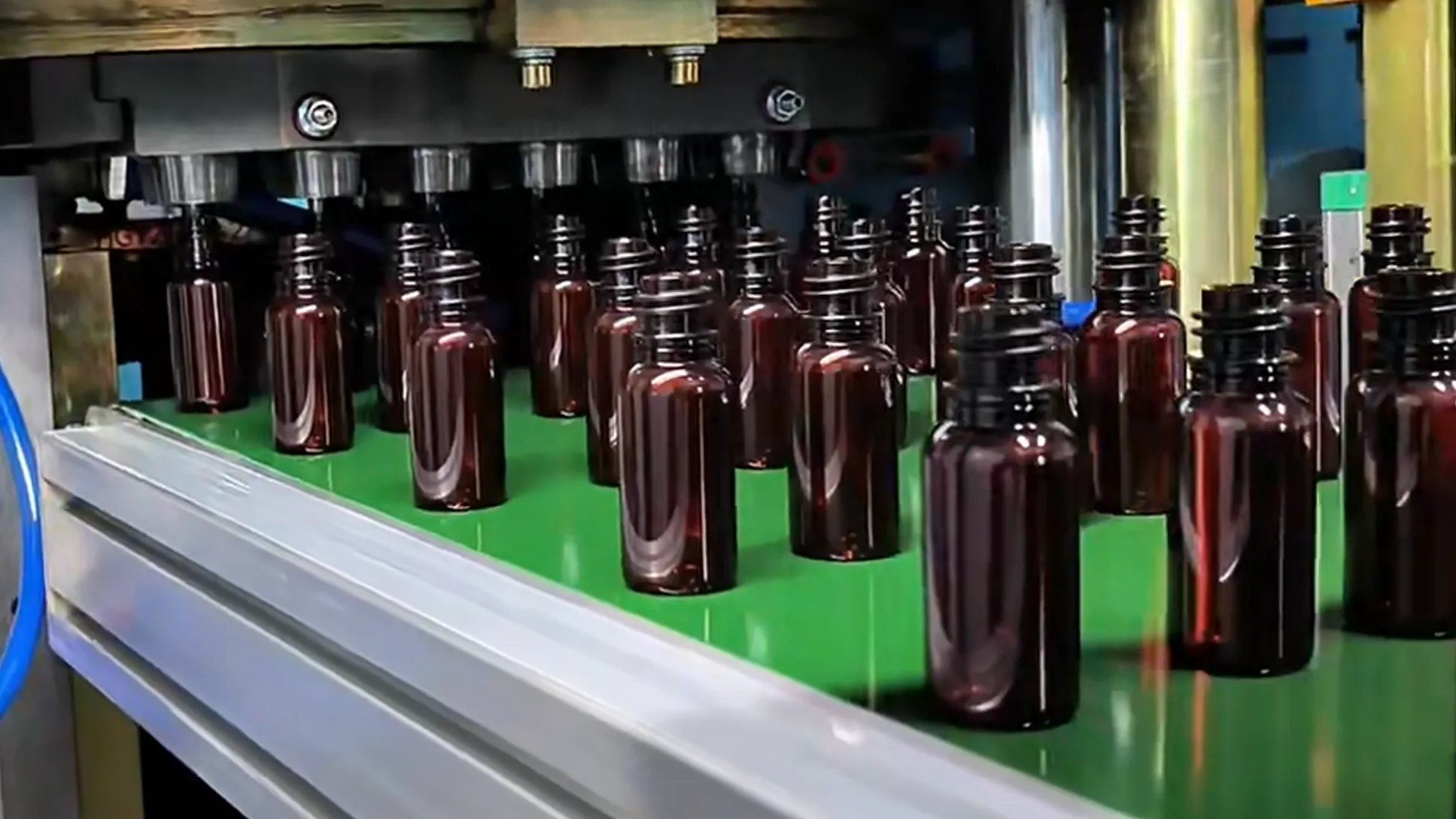
Why ISBM Machine Selection Is More Complex Than It Looks
Knowing how to choose an ISBM machine starts with understanding that an ISBM machine comparison based on headline BPH output and price alone leaves out the parameters that most commonly cause a post-purchase mismatch. An ISBM machine specification sheet typically lists twenty or more parameters — screw diameter, injection stroke, injection pressure, upper mould stroke, lower mould stroke, blowing clamping force, blow core stroke, blow moulding stroke, take-out stroke, oil tank capacity, servo motor power, heating power, machine dimensions, machine weight. Buyers who focus on the headline output figure (bottles per hour) and purchase price, without verifying the underlying parameters against their specific container requirements, frequently discover post-purchase that the machine they bought cannot run their target container format.
The reason this happens is that the same container can be produced on machines with very different specifications, and the specification sheet doesn’t tell you which ones matter for your particular bottle. A 500 ml PET water bottle on a 1-cavity machine can be produced by a small machine with 188 g injection capacity and 200 mm maximum bottle height. A 500 ml PETG cosmetic bottle that happens to be 220 mm tall requires a machine with at least 250 mm bottle height — and the 188 g machine cannot run it regardless of any other specification. This guide identifies the eight parameters that function as hard constraints for your programme and shows you how to evaluate each one before committing to a purchase.
Specification 1 — Injection Capacity (g)
What It Controls
The maximum mass of resin the injection unit can deliver per machine cycle, measured in grams. This is the total available resin for all cavities plus the hot-runner system — not the bottle weight alone.
How to Calculate the Injection Capacity You Need
The calculation is straightforward but frequently done incorrectly by buyers who confuse bottle weight with preform weight:
≈ [ Target bottle weight (g) × 1.08–1.12 ] × Cavity count
(The 1.08–1.12 multiplier accounts for sprue, runner, and gate material even with hot-runner systems)
Παράδειγμα: A 2-cavity programme producing a 60 g PETG cosmetic jar requires approximately 60 × 1.10 × 2 = 132 g theoretical injection capacity. A machine rated at 188 g covers this comfortably (188 g > 132 g). A 4-cavity programme on the same jar requires 60 × 1.10 × 4 = 264 g — which exceeds 188 g and requires a machine rated at 315 g or above.
Two common buyer errors on this specification: (1) Using finished bottle weight rather than preform weight — PETG jars with thick walls may have preforms heavier than the finished bottle due to material compaction during blowing; always calculate from preform weight confirmed by the mould manufacturer. (2) Not accounting for density differences — PETG has a density of approximately 1.27 g/cm³ versus PET’s 1.35 g/cm³; a 100 ml PETG jar has a higher gram weight preform than a 100 ml PET bottle of the same wall gauge.
Korea Ever-Power reference: Ο HGY50-V3 offers 188 g; the HGY150-V3 offers 315 g. For preform weights in the 100–188 g per cavity range on 1-cavity programmes, or multi-cavity programmes up to 188 g total, the HGY50 covers the requirement. Above 188 g total, specify the HGY150.
Specification 2 — Maximum Bottle Height (mm)
What It Controls
The tallest finished bottle the machine can physically eject from the blow station. This is governed by the upper mould stroke — the travel available to open the blow cavity around the bottle. A machine with 250 mm upper mould stroke can produce bottles up to approximately 200–210 mm tall.
Why This Is the Most Commonly Overlooked Hard Constraint
Maximum bottle height is the specification most frequently overlooked by buyers who focus on injection capacity and cavity count — and it is the one that most commonly produces a post-purchase discovery that the machine cannot run the intended container. The reason it is easy to miss: the upper mould stroke is listed in the specification sheet, but its relationship to maximum bottle height requires a calculation that many buyers do not perform.
The relationship is: Maximum bottle body height ≈ Upper mould stroke − (neck finish height + clearance). For a machine with 250 mm upper mould stroke, a standard 20/410 neck with 18 mm height leaves approximately 232 mm of blow stroke for the bottle body — but the practical maximum bottle body height for reliable ejection is approximately 200–210 mm, accounting for the mould parting line’s position and ejection clearance requirements. A bottle with a 220 mm body height will not reliably eject from a machine with 250 mm upper mould stroke — even though the arithmetic might suggest 232 mm is available.
Korea Ever-Power reference: The HGY50-V3 and V3-EV (250 mm upper mould stroke) reliably handle bottles up to 200 mm body height. The HGY150-V3 (460 mm upper mould stroke) handles bottles up to 250 mm — the specification required for tall slim luxury cosmetic bottles, elongated pharmaceutical containers, and sports beverage formats in the 200–250 mm height range.
Specification 3 — Cavity Count (1–12)
What It Controls
The number of bottles produced per machine cycle. Cavity count is the primary lever for adjusting output rate on a given machine platform — more cavities per cycle = more bottles per hour, at the cost of higher tooling investment and longer cycle time per shot.
How to Calculate the Cavity Count You Need
Work backwards from your monthly production target:
= Required output in bottles per second
Example: 200,000 bottles/month ÷ (22 days × 16 hours × 3,600 s/hr)
= 200,000 ÷ 1,267,200 = 0.158 bottles/second = 9.5 bottles/minute = 570 BPH
Required cavity count = BPH ÷ (3,600 ÷ Cycle time in seconds)
At 16 s cycle: 570 ÷ (3,600 ÷ 16) = 570 ÷ 225 = 2.5 → specify 3 cavities
The hidden cost of over-specifying cavity count: each additional cavity requires an additional complete preform mould insert, core pin, neck ring set, and blow cavity half-pair — tooling cost scales approximately linearly. A 4-cavity tool costs roughly 3.5–3.8× a single-cavity tool. For a brand launching a new SKU with production volume uncertainty in the first year, over-specifying cavities locks capital into tooling that runs at partial utilisation. The better approach: specify 2-cavity tooling for the launch, with the machine platform supporting 4-cavity upgrade tooling when volume is validated.
Specification 4 — Injection Clamping Force (kN)
What It Controls
The force holding the injection mould closed during the shot. Insufficient clamping force causes flash — excess resin forced into the mould parting line — which transfers to the preform and then to the blown bottle as a visible seam mark.
Injection clamping force requirement scales with the projected area of the preform cavity multiplied by the injection pressure. A typical 20 ml PET eye dropper preform cavity has a projected area of approximately 2–3 cm²; at 160 MPa injection pressure, the cavity-opening force is 32–48 kN. A machine with 50 kN injection clamping force handles this with adequate margin. A 4-cavity tool with the same preform geometry has a total projected area of 8–12 cm², requiring 128–192 kN of clamping — beyond the HGY50’s 50 kN, but within the HGY150’s 150 kN range.
The practical rule of thumb: injection clamping force scales linearly with cavity count. If a 1-cavity tool runs safely on 50 kN, a 4-cavity tool with the same preform geometry typically needs 150–200 kN. This is why wide-neck PETG jars in multi-cavity configurations almost always require a mid-range machine platform — the combination of large projected cavity area and high cavity count pushes the required clamping force above what entry-level machines provide.
Specification 5 — Drive System: Hydraulic vs Fully Electric
What It Controls
How the machine’s injection, clamping, and actuation systems are powered — either by a hydraulic pump and actuator system or by servo-electric motors. This choice affects energy consumption, cleanroom compatibility, injection precision, maintenance requirements, and purchase price.
This is the specification where the purchase price difference between options is most visible, and where buyers most often underestimate the total cost of ownership implications. The hydraulic drive has a lower sticker price; the fully electric drive has a lower 5-year total cost of ownership for most production profiles. Choosing between them requires honest assessment of three questions:
Question 1: Is oil contamination a compliance issue?
If you produce pharmaceutical containers in a GMP cleanroom, or premium cosmetics where the brand specifies oil-free packaging production, the answer is yes — and the fully electric machine is the correct choice regardless of price difference. If you produce commodity beverage bottles in a standard industrial environment, hydraulic is viable with appropriate maintenance controls.
Question 2: How many hours per day does the machine run?
A hydraulic pump runs continuously whether the machine is cycling or idle. A fully electric servo motor consumes power only during actuation. At 8 hours/day, the energy saving advantage of the electric machine is moderate. At 24 hours/day (three-shift pharmaceutical or cosmetic production), the 40% energy saving translates to a substantial annual cost reduction that typically recovers the price premium within 18–36 months.
Question 3: Is injection precision a quality differentiator?
The fully electric machine’s servo-controlled injection delivers shot weight repeatability of ±0.1 g versus the hydraulic machine’s ±0.3–0.5 g. For pharmaceutical containers where shot weight CV must be below 0.5% for GMP validation, or for thin-wall luxury cosmetics where preform weight variation produces visible wall thickness variation, the electric machine’s precision is a production quality requirement, not a preference.
Specification 6 — Mould Compatibility Standard
⚠ The Most Overlooked Specification — With the Highest Potential Cost
Operations with an existing ISBM mould library — 5, 10, or 20 mould sets accumulated over years of production — have a tooling asset that may equal 30–60% of a new machine’s value. If the new machine uses a different mould standard, every existing mould set must be rebuilt or adapted before it can run on the new machine. This hidden cost is rarely included in machine comparison spreadsheets and has caused operators to spend more on mould adaptation than the price difference between machine options that would have been compatible.
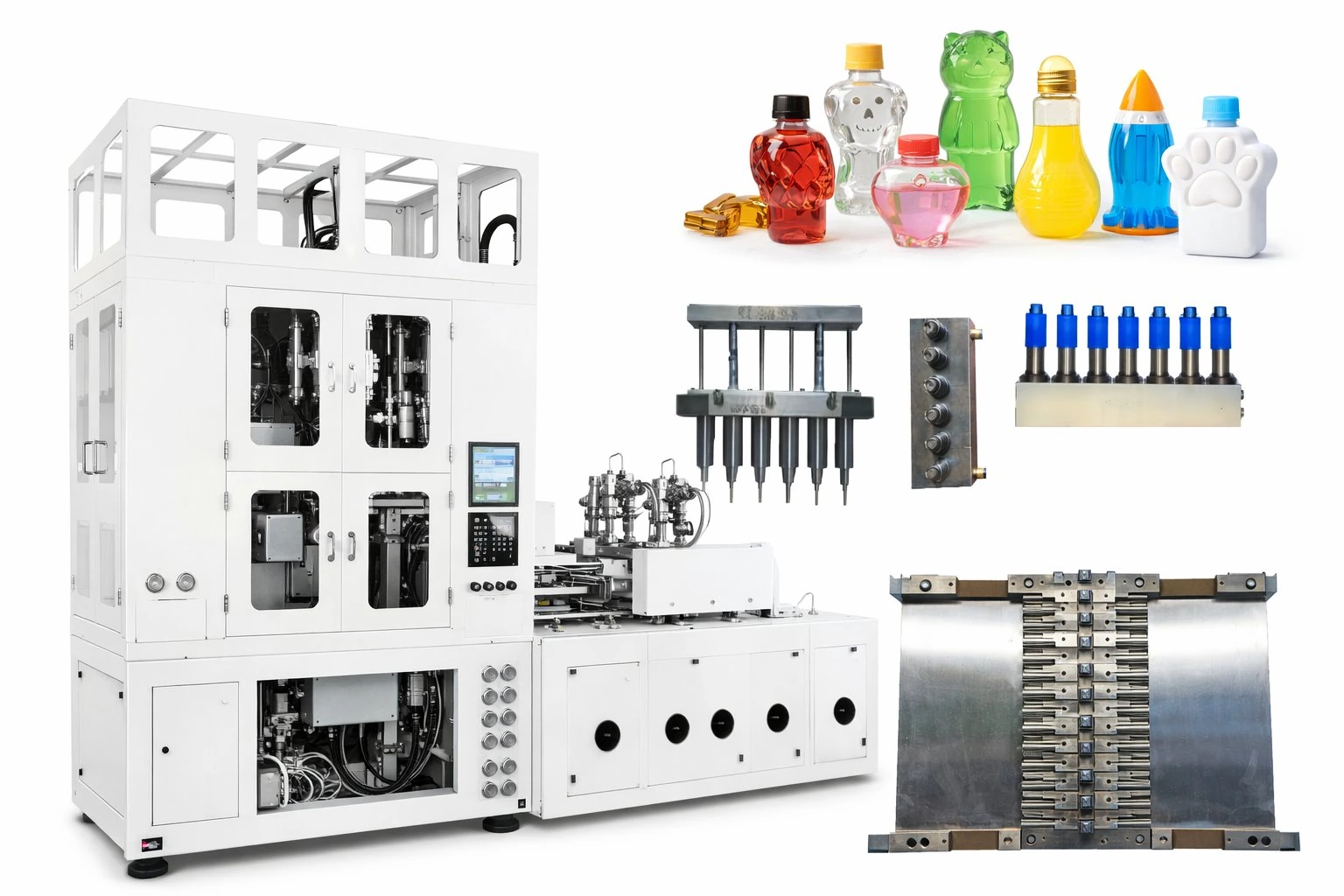
The two dominant mould standards in the Korean and Asian ISBM market are:
How to verify mould standard: Pull a mould drawing from your existing tooling library and check the cavity block mounting dimensions, core pin pitch, and neck ring mounting interface against the supplier’s machine interface drawing. Korea Ever-Power provides machine interface drawings at the quotation stage specifically so buyers can confirm compatibility with existing tooling before committing to an order.
Specification 7 — Number of Stations (3 vs 4)
What It Controls
The number of active positions the rotary table visits per cycle, and by extension, whether the injection cycle time and blow cycle time must be equal (3-station) or can operate independently (4-station).
For most buyers in the cosmetic, pharmaceutical, and specialty beverage segments, a 3-station machine is the correct choice. Three-station machines run all active stations simultaneously — injection, conditioning, and blow — with the cycle time governed by the slowest station. For containers up to 6 cavities in the typical cosmetic and pharmaceutical volume range, the 3-station architecture is fully efficient and simpler to operate.
4-station machines separate the take-out event into a dedicated station and allow injection and blow station timing to be independently configured. This is relevant when the injection cycle time for a large shot weight (above ~300 g total) differs significantly from the optimal blow station dwell time — a mismatch that on a 3-station machine would require either sacrificing injection quality (shortening the injection and hold phase to match the blow cycle) or sacrificing output (lengthening the blow cycle to match the injection phase). Operations producing large-format containers in 8–12 cavity configurations at very high volume are the appropriate users of 4-station equipment; cosmetic and pharmaceutical producers rarely need it.
Specification 8 — Resin Compatibility
What It Controls
Which plastic resins the machine can process, determined by barrel temperature range, screw geometry, injection pressure, and the conditioning station’s temperature control range. Not all ISBM machines can run all resins.
The four primary resins in ISBM each impose different requirements on the machine:
Key buying implication: If your programme will run PETG or Tritan in addition to PET, confirm that the machine’s conditioning station temperature control specification covers both resins’ target windows. A conditioning station calibrated for PET (105–115 °C) that lacks independent temperature zone control below 100 °C cannot reliably run PETG (90–100 °C). If your programme will run PC, confirm that the machine’s barrel and nozzle are rated for continuous operation at 310 °C and that the screw geometry is compatible with PC’s higher viscosity melt.
Printable ISBM Machine Specification Checklist
Complete this checklist from your container programme requirements before approaching any ISBM machine supplier. Use the “Required” column to define your specification; use the “Supplier A / B” columns to record each supplier’s specification for direct comparison.
Questions to Ask Every ISBM Machine Supplier
Once you have completed the specification checklist and confirmed that a supplier’s machine meets your eight core requirements, these questions will help you assess the supplier’s competence, transparency, and after-sales capability — which are often more important to production success than marginal specification differences between machines.
Can I witness the Factory Acceptance Test at your facility?
A supplier who refuses FAT witness visits, or who cannot schedule them within 60 days of order placement, is a significant risk indicator. The FAT is your last opportunity to verify performance before the machine ships. Korea Ever-Power actively encourages customer-witnessed FATs with standardised test protocols and English-language test reports.
Will you provide a DFM review of my bottle drawing before I commit to mould tooling?
A supplier who designs mould tooling without reviewing the bottle drawing for ISBM manufacturability — stretch ratio calculations, preform wall distribution, neck finish conformance — is likely to deliver a mould that requires expensive modification before it produces acceptable bottles. A DFM review is free to perform and eliminates the most expensive errors in the ISBM project. Its absence is a red flag.
Where are spare parts stocked, and what is the typical delivery time for critical components?
The critical wear items on an ISBM machine — barrel and screw, hydraulic seals (hydraulic machines), servo drive components (electric machines), conditioning station heater elements — have lead times that range from days (if locally stocked) to weeks (if air-freighted from the manufacturer). A machine that produces 800 bottles per hour has a downtime cost of approximately 800 × (your bottle selling price) per hour for every hour it is waiting for a spare part. Confirm where parts are stocked before ordering.
Can you provide reference customer contacts in my country for site visits?
A supplier with machines operating in Korea, and who is willing to connect you with existing customers running the same machine model for the same application type, is demonstrably different from a supplier offering only brochures and testimonials. A site visit to an existing installation running your container type tells you more about real-world performance than any specification sheet.
What is included in the commissioning service, and who pays for the second visit if the first doesn’t achieve specification?
Commissioning quality varies enormously between ISBM suppliers. Confirm the commissioning scope in the contract: how many days on-site, what the acceptance criteria are (specific dimensions and output rates), and who bears the cost if a second commissioning visit is required to achieve them. Korea Ever-Power’s standard commissioning scope includes first-article dimensional verification against the bottle drawing, production of a signed-off batch, and two-day operator training before the commissioning engineer leaves the site.
◆ Κλειδί για πακέτο
The eight specifications in this guide are not equally important — injection capacity, maximum bottle height, and mould compatibility standard are the three that most frequently produce post-purchase discoveries that a machine cannot run the intended programme. Calculate the injection capacity you need from your preform weight and cavity count before approaching any supplier. Measure the tallest bottle in your range and confirm the machine’s upper mould stroke covers it with margin. Check your existing mould library’s standard (ASB-12M or Aoki 100) and specify it as a hard requirement. Get everything else in the specification checklist confirmed in writing in the purchase order. Then ask the five supplier questions to assess whether the person selling you the machine can also support it after delivery.
Σύναψη
Choosing an ISBM machine is not a catalogue decision — it is an engineering calculation. The eight specifications in this guide provide the framework for making that calculation systematically, so that the machine you purchase is one that can actually produce your specific containers, at your required output, in your production environment, with your existing mould tooling. The printable checklist gives you a comparison tool to use with every supplier you evaluate; the five supplier questions give you a way to assess capability and transparency beyond the specification sheet.
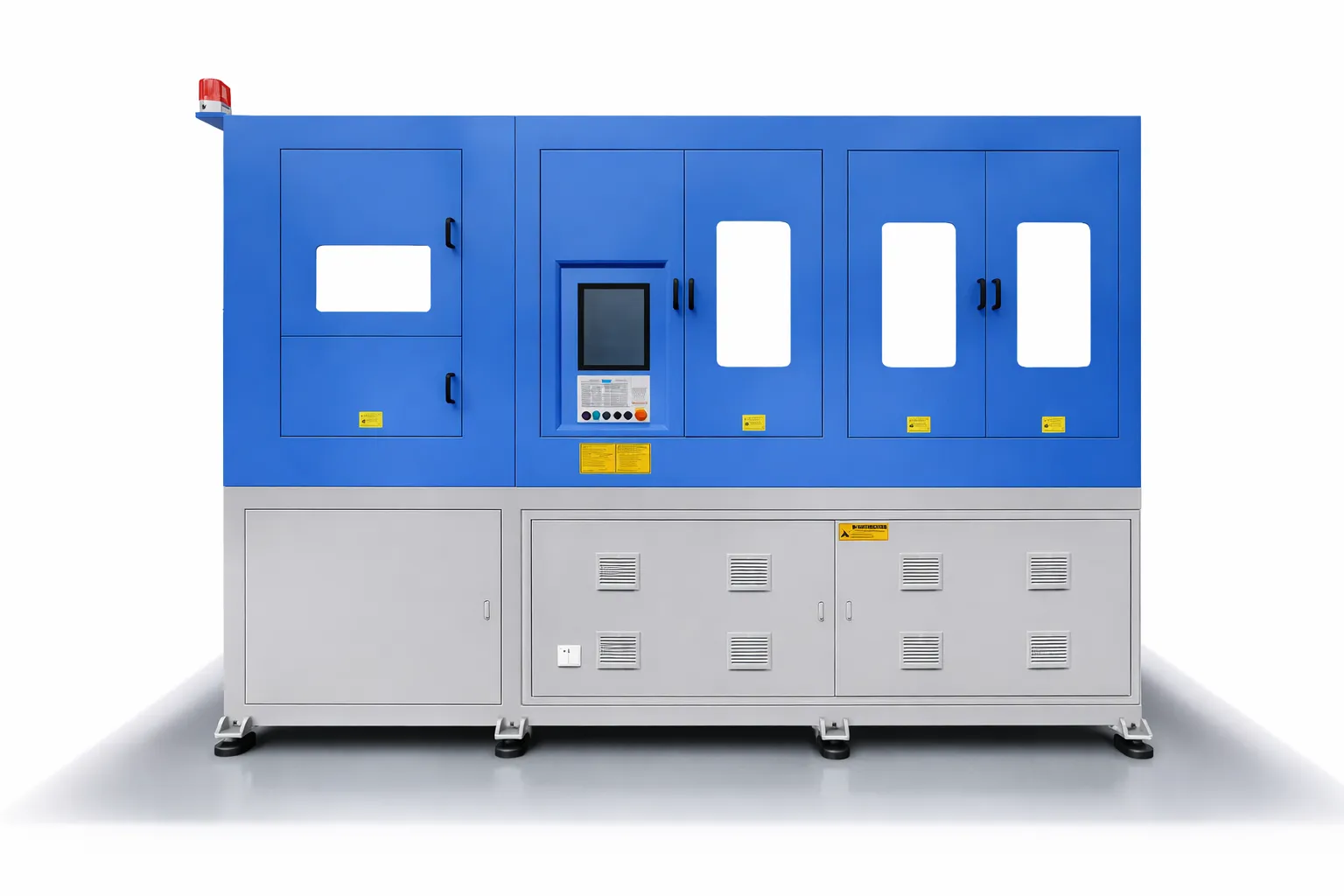
Κορέα Ever-Power's HGY series 3-station ISBM machines cover the specification range from 188 g to 315 g injection capacity, 200 mm to 250 mm maximum bottle height, hydraulic and fully electric drive options, ASB-12M and Aoki 100 mould standards, and PET/PETG/PC/Tritan resin compatibility. Submit your completed specification checklist and bottle drawing to receive machine recommendation, mould feasibility review, and a quote within two business days.
Σχετικά με αυτό το άρθρο: Prepared by the Korea Ever-Power Technical and Sales Teams. Specification calculations (injection capacity formula, cavity count calculation, clamping force estimation) are based on standard ISBM engineering practice and are provided as guidance values — actual requirements should be confirmed with the mould manufacturer and machine supplier for your specific container programme and resin specification.
Σχετική ανάγνωση: What Is Injection Stretch Blow Moulding? — Technical Guide | ISBM Mould Design — Preform, Blow Cavity, and Core Pin Engineering | ISBM Machine Price — What Drives the Cost
Επιμέλεια: Cxm