Τεχνική Εμβάθυνση · Μηχανική Καλουπιών · Κορεατικό ISBM 2026
Οδηγός χάλυβα καλουπιών ISBM:
P20, 718H & 2316 για Κορεάτες αγοραστές
Η επιλογή ποιότητας χάλυβα για ένα καλούπι ISBM καθορίζει τη διάρκεια ζωής της κοιλότητας, την ικανότητα στίλβωσης για οπτική διαύγεια, την αντοχή στις διαβρωτικές ρητίνες και το συνολικό κόστος ιδιοκτησίας σε έναν κύκλο παραγωγής 5-15 ετών. Μια λανθασμένη επιλογή χάλυβα δεν μπορεί να διορθωθεί μετά την κατεργασία του καλουπιού — αυτός ο οδηγός παρέχει στους Κορεάτες αγοραστές ISBM τη βάση της επιστήμης των υλικών για να καθορίσουν σωστά την πρώτη φορά.
Εύρος HRC 28–56
Διάρκεια ζωής σε κοιλότητα 500K–5M+
Γραφείο Μηχανικής Κορέας Ever-Power · Ansan-si · Μάιος 2026
Σύντομη αναφορά ποιότητας χάλυβα — Κορεατική προμήθεια καλουπιών ISBM 2026
| Βαθμός | Σκληρότητα | Θερμικός κλιματισμός. | Γυαλιστερότητα | Ζωή στην Κοιλότητα | Αντοχή στη διάβρωση. | Ιδανικό για |
|---|---|---|---|---|---|---|
| P20 (1.2311) | HRC 28–34 | 36 W/m·K | Καλό (A3) | 500.000–1 εκατομμύριο | Χαμηλός | Πρωτότυπο, χαμηλού όγκου, εμπορεύσιμο PET/PP |
| 718Η (1,2738) | HRC 36–42 | 34 W/m·K | Πολύ Καλό (A2) | 1,5 εκατ.–3 εκατ. | Χαμηλή–Μεσαία | Τυποποιημένο PET, PETG, K-Beauty, ποτό |
| 738H (1,2738M) | HRC 38–44 | 33 W/m·K | Άριστα (A1) | 2 εκατομμύρια–4 εκατομμύρια | Χαμηλή–Μεσαία | Premium K-Beauty, οπτική διαύγεια PETG |
| 2316 (1.2316) | HRC 30–36 | 15 W/m·K | Καθρέφτης (A1) | 3M–6M+ | Υψηλή (ανοξείδωτη) | Φαρμακευτικά, PVC, rPET με υψηλή περιεκτικότητα σε οξύ |
| H13 (1,2344) | HRC 48–56 | 25 W/m·K | Καλό (A2) | 2 εκατομμύρια–5 εκατομμύρια | Μέσον | Πολυπροπυλένιο θερμής πλήρωσης, εφαρμογές υψηλής θερμοκρασίας |
Βαθμολογίες στίλβωσης: A1=καθρέφτης/οπτική διαύγεια· A2=υψηλή γυαλάδα· A3=τυπική. Η διάρκεια ζωής σε κοιλότητα προϋποθέτει τυπική παραγωγή PET/PP με προληπτική συντήρηση — τα αποστειρωμένα περιβάλλοντα φαρμακευτικής ποιότητας ή το rPET με υψηλή περιεκτικότητα σε ανόργανα πληρωτικά μειώνουν τη διάρκεια ζωής κατά 30–40%.
1. Γιατί η ποιότητα χάλυβα ορίζει το συνολικό κόστος ιδιοκτησίας του καλουπιού ISBM
Οι αποφάσεις για την προμήθεια καλουπιών ISBM στην Κορέα λαμβάνονται συνήθως μόνο με βάση το κόστος των εργαλείων — η τιμή των 30–80 εκατομμυρίων KRW που αναφέρεται για ένα σετ καλουπιών αξιολογείται κυρίως ως στοιχείο κεφαλαιουχικών δαπανών, με την ποιότητα του χάλυβα να εμφανίζεται ως μια δευτερεύουσα λεπτομέρεια προδιαγραφών και όχι ως ο κύριος καθοριστικός παράγοντας για το εάν η επένδυση αποδίδει κατά τη διάρκεια της προβλεπόμενης παραγωγικής της ζωής. Αυτή η προσέγγιση παράγει σταθερά τα πιο ακριβά αποτελέσματα στην κορεατική βιομηχανία ISBM: καλούπια που φθείρονται πρόωρα, απαιτούν πρόωρη ανακαίνιση ή δεν επιτυγχάνουν την ποιότητα επιφάνειας που απαιτείται για εφαρμογές υψηλής ποιότητας — όλα αυτά επειδή η ποιότητα του χάλυβα καθορίστηκε για το κόστος και όχι για τις απαιτήσεις της εφαρμογής.
Ο υπολογισμός του συνολικού κόστους που θα πρέπει να εφαρμόσουν οι Κορεάτες αγοραστές ISBM είναι: (κόστος κεφαλαίου καλουπιού + κόστος συντήρησης καθ' όλη τη διάρκεια ζωής + κόστος ανακαίνισης) ÷ συνολικός αριθμός βολών κοιλότητας καθ' όλη τη διάρκεια ζωής = κόστος ανά βολή κοιλότητας. Σε αυτό το επίπεδο, η πριμοδότηση ποιότητας χάλυβα που διαχωρίζει το P20 από το 718H — περίπου 3–8 εκατομμύρια KRW ανά σετ καλουπιών — συνήθως αντιστρέφει την εξίσωση κόστους: ο χάλυβας υψηλής ποιότητας διαρκεί 2,5–3 φορές περισσότερο, μειώνοντας το ετήσιο κόστος καλουπιού κατά 40–60% σε σύγκριση με την φθηνότερη επιλογή. Για έναν Κορεάτη παραγωγό ISBM που λειτουργεί 8 εκατομμύρια μονάδες/έτος σε ένα καλούπι 4 κοιλοτήτων, η διαφορά μεταξύ του P20 (που απαιτεί επανεπεξεργασία ή αντικατάσταση σε 500.000 βολές) και του 718H (που διαρκεί έως 2 εκατομμύρια βολές) είναι 12–18 εκατομμύρια KRW σε αποφευκτέο κόστος καλουπιού σε διάστημα τεσσάρων ετών, σε ένα καλούπι που κόστισε 5 εκατομμύρια KRW περισσότερο κατά την αγορά.
Το πλαίσιο επιλογής καλουπιού που τοποθετεί την ποιότητα χάλυβα στην ευρύτερη αξιολόγηση 9 παραγόντων — συμπεριλαμβανομένου του αριθμού των κοιλοτήτων, του σχεδιασμού του καναλιού ψύξης, της προδιαγραφής του θερμού δρομέα και του χρόνου παράδοσης — τεκμηριώνεται στο Οδηγός επιλογής καλουπιού ISBM 9 παραγόντων για την Κορέα.
2. P20 (DIN 1.2311): Βαθμός Εισαγωγής και τα Ειδικά Όριά του
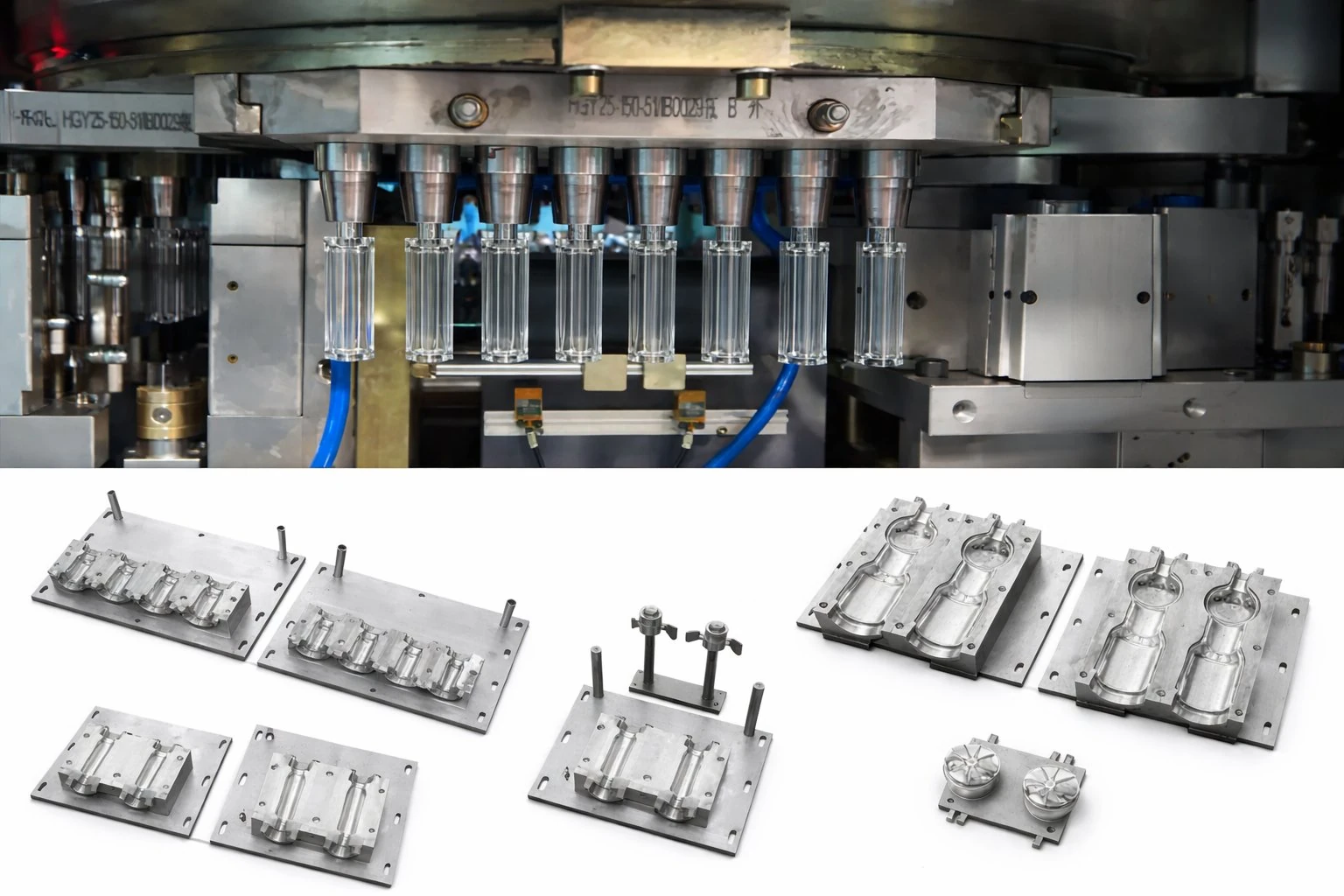
Το P20 (DIN 1.2311, διατίθεται επίσης με την κορεατική ονομασία SCM415M και παρόμοια ισοδύναμα) είναι ένας προ-σκληρυμένος χάλυβας εργαλείων με χρώμιο-μολυβδαίνιο που παραδίδεται σε HRC 28–34. Η θέση του στην κορεατική παραγωγή καλουπιών ISBM είναι ως πρωτότυπο ή χαμηλού όγκου εμπορική ποιότητα — κοστίζει το λιγότερο από τους σοβαρούς χάλυβες εργαλείων, κατεργάζεται εύκολα χωρίς περαιτέρω θερμική επεξεργασία και επισκευάζεται εύκολα στις συγκολλήσεις όταν οι κοιλότητες απαιτούν διόρθωση μετά την αρχική δοκιμή. Για αυτούς τους λόγους, το P20 είναι κατάλληλο για κορεατικές εφαρμογές καλουπιών ISBM όπου οι προβλέψεις όγκου παραγωγής δεν υπερβαίνουν τις 500.000–700.000 βολές κοιλότητας ή όπου το καλούπι είναι ένα εργαλείο ανάπτυξης που προορίζεται για την επικύρωση του σχεδιασμού της φιάλης πριν από τη δέσμευση σε χάλυβα παραγωγικής ποιότητας.
Ο κύριος περιορισμός του P20 για την κορεατική παραγωγή ISBM είναι η σχετικά χαμηλή σκληρότητά του (HRC 28–34 σε σύγκριση με το 718H σε HRC 36–42). Σε αυτό το επίπεδο σκληρότητας, η φθορά από λειαντικά σωματίδια ρητίνης PET και PETG — ιδιαίτερα σε κύκλους παραγωγής που περιλαμβάνουν χρωστικές masterbatch με περιεκτικότητα σε ανόργανα σωματίδια (TiO₂, οξείδιο του σιδήρου) — εξελίσσεται ταχύτερα από ό,τι σε σκληρότερες ποιότητες. Η τραχύτητα της επιφάνειας της κοιλότητας αυξάνεται κατά τη διάρκεια της παραγωγής, εκδηλούμενη ως προοδευτική αύξηση της θολότητας στις φιάλες K-Beauty PETG ή ως ορατή διεύρυνση της γραμμής συγκόλλησης στη ζώνη φινιρίσματος του λαιμού καθώς η επιφάνεια της κοιλότητας χάνει την αρχική της στιλβωτική όψη. Η υποβάθμιση της ποιότητας της επιφάνειας συνήθως καθίσταται εμπορικά σημαντική στις 400.000–600.000 βολές για το P20 στην κορεατική παραγωγή K-Beauty PETG — σημαντικά νωρίτερα από τα 1,5–2,0 εκατομμύρια βολές που θα επιτύγχανε μια κοιλότητα 718H σε ισοδύναμη ποιότητα.
Το P20 έχει καθοριστεί σωστά για κορεατικές εφαρμογές ISBM όπου ο όγκος παραγωγής είναι πραγματικά χαμηλός (φαρμακευτικές εξειδικευμένες εφαρμογές <200.000 μονάδες/έτος, προσαρμοσμένες μορφές συμπληρωμάτων, πιλοτικές δοκιμές εξαγωγών), όπου ο προϋπολογισμός για την ανάπτυξη εργαλείων δεν καλύπτει την πριμοδότηση για το 718H ή όπου αναμένονται αναθεωρήσεις σχεδιασμού κοιλότητας κατά τη φάση πιστοποίησης του προϊόντος. Ο καθορισμός του P20 για ένα κορεατικό πρότυπο καλούπι παραγωγής ποτών ή προϊόντων προσωπικής φροντίδας που αναμένεται να εκτελέσει 2+ εκατομμύρια δόσεις είναι το σφάλμα προδιαγραφής που κατά πάσα πιθανότητα δημιουργεί αποφευκτέο κόστος αντικατάστασης καλουπιού στην κορεατική βιομηχανία ISBM.
3. 718H και 738H: Το Κορεατικό Πρότυπο Παραγωγής ISBM
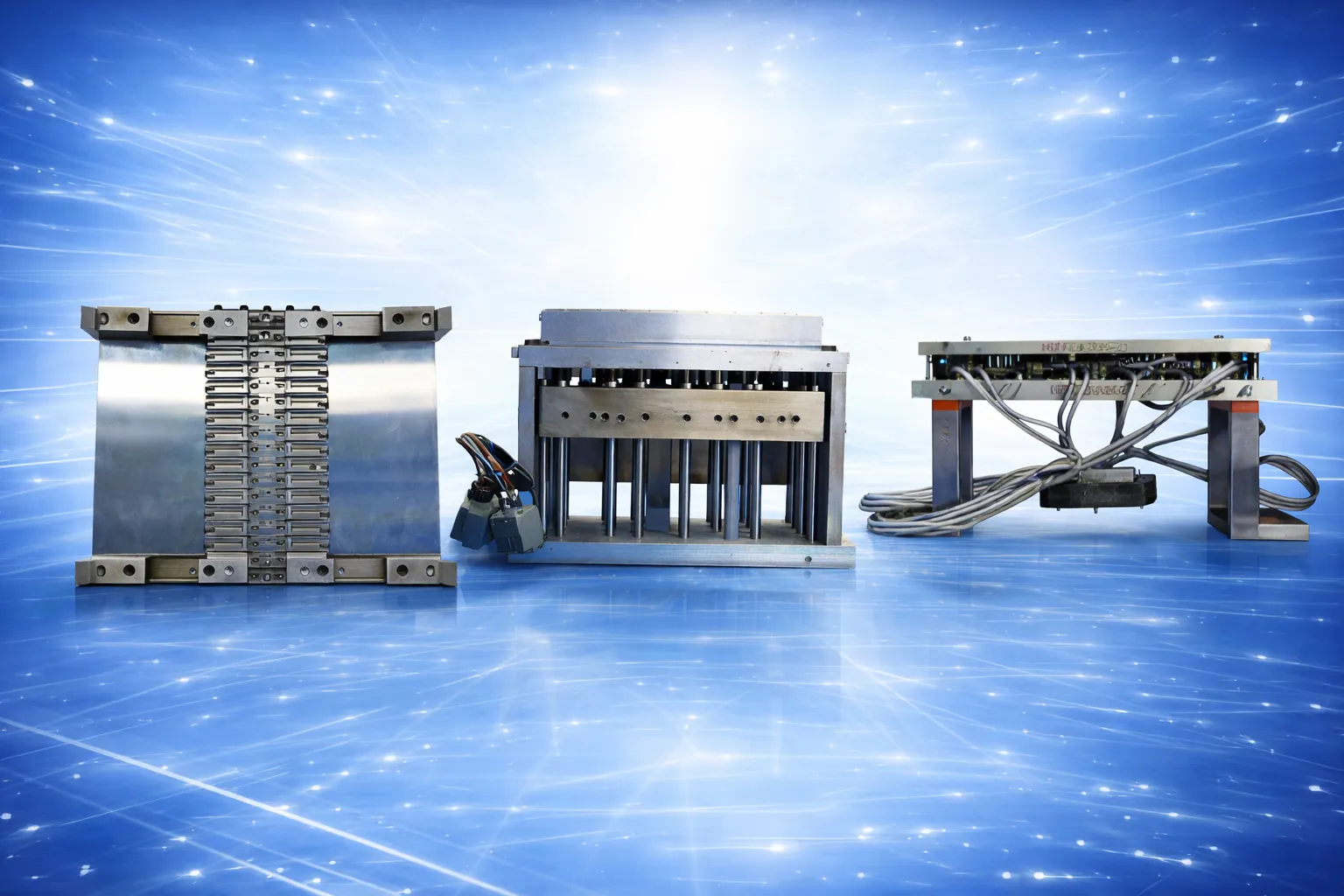
Το 718H (DIN 1.2738, που ονομάζεται επίσης P20+Ni σε ορισμένους κορεατικούς καταλόγους προμηθευτών) είναι το βασικό πρότυπο παραγωγής για κορεατικά καλούπια ISBM σε τυπικές εφαρμογές PET, PETG, K-Beauty και ποτών. Είναι ένας προ-σκληρυμένος χάλυβας νικελίου-χρωμίου-μολυβδαινίου που παραδίδεται σε HRC 36–42 — σκληρότερος από τον P20, πιο γυαλίσιμος και με περίπου 2,5–3 φορές μεγαλύτερη διάρκεια ζωής στην κοιλότητα σε ισοδύναμα προγράμματα συντήρησης. Η προσθήκη νικελίου στο 718H σε σύγκριση με το P20 παρέχει δύο οφέλη παραγωγής: υψηλότερη σκληρότητα πυρήνα (μειωμένος κίνδυνος ρωγμών σε καλούπια με σύνθετες γεωμετρίες καναλιών νερού) και καλύτερη απόκριση γυαλίσματος, επιτυγχάνοντας συνεπείς επιφάνειες υψηλής στιλπνότητας A2 που απαιτούν οι ελεγκτές ποιότητας της μάρκας K-Beauty.
Το 738H (DIN 1.2738M) είναι ένα τροποποιημένο 718H με βελτιωμένη καθαριότητα (χαμηλότερα επίπεδα προσμίξεων θείου και φωσφόρου) και εκλεπτυσμένη δομή κόκκων, προσφέροντας ανώτερη δυνατότητα στίλβωσης σε φινίρισμα οπτικής διαύγειας A1 — την απαιτούμενη ποιότητα για φιάλες PETG υψηλής ποιότητας K-Beauty όπου ορίζεται γυαλάδα ≥92 GU. Η διαφορά μεταξύ 718H και 738H είναι πιο ορατή στην οπτική απόδοση της φιάλης στη ζώνη διαχωριστικής γραμμής κοιλότητας: Οι κοιλότητες 718H ενδέχεται να εμφανίζουν μια πολύ αμυδρή εντύπωση διαχωριστικής γραμμής σε φιάλες K-Beauty υψηλής στιλπνότητας σε υψηλή μεγέθυνση υπό άμεσο φωτισμό LED. Οι κοιλότητες 738H που γυαλίζονται στο πρότυπο A1 είναι ουσιαστικά αόρατες στη ζώνη διαχωριστικής γραμμής. Στην premium τιμή που πληρώνουν οι κορεάτικες μάρκες K-Beauty για φιάλες PETG με διαύγεια γυαλιού, αυτή η διαφορά οπτικής ποιότητας δικαιολογεί την premium τιμή 738H περίπου 2–5 εκατομμυρίων KRW ανά σετ καλουπιών.
Για την τυπική κορεατική παραγωγή ποτών, τροφίμων και προϊόντων προσωπικής φροντίδας, όπου οι προδιαγραφές γυαλάδας είναι ≤90 GU (υψηλή γυαλάδα αλλά όχι οπτική διαύγεια), η σωστή προδιαγραφή είναι η 718H. Η αναβάθμιση σε 738H για αυτές τις εφαρμογές προσθέτει κόστος χωρίς να προσφέρει εμπορικά σημαντικό ποιοτικό όφελος. Η προδιαγραφή του συστήματος θερμού αγωγού που συνοδεύει τα μπλοκ κοιλότητας 718H — και η συμβατότητα μεταξύ των βαθμών χάλυβα θερμού αγωγού και των βαθμών χάλυβα κοιλότητας στη διεπαφή του συλλέκτη — καλύπτεται στο οδηγός μηχανικής συστημάτων hot runner.
4. 2316 Ανοξείδωτο: Φαρμακευτική, Διαβρωτικές Ρητίνες και Παραγωγή rPET
Ο 2316 (DIN 1.2316, μαρτενσιτικός ανοξείδωτος χάλυβας εργαλείων με περιεκτικότητα σε χρώμιο 16–17%) είναι ο κορεατικός χάλυβας καλουπιών ISBM για εφαρμογές όπου η αντοχή στη διάβρωση είναι η κυρίαρχη απαίτηση. Η ανοξείδωτη σύνθεσή του παρέχει εγγενή προστασία από τη διάβρωση έναντι των τριών κύριων φορέων διαβρωτικής επίθεσης στην κορεατική παραγωγή ISBM: υγρασία συμπύκνωσης σε περιβάλλοντα παραγωγής υψηλής υγρασίας (κορεατικές εγκαταστάσεις παραγωγής κατά τη διάρκεια του καλοκαιριού, 85–95% RH), όξινα προϊόντα αποικοδόμησης από PVC ή ορισμένες χρωστικές masterbatch και την υψηλότερη περιεκτικότητα σε οργανικά οξέα ορισμένων πρώτων υλών ρητίνης rPET.
Για την κορεατική φαρμακευτική παραγωγή ISBM — φιαλίδια οφθαλμικών σταγόνων, δοχεία υγρών για πόσιμο διάλυμα — ο χάλυβας 2316 χρησιμοποιείται ολοένα και περισσότερο ως ο χάλυβας με κοιλότητα που καθορίζεται, επειδή οι ελεγκτές GMP των φαρμακευτικών προϊόντων αξιολογούν τα πρότυπα καθαριότητας κοιλότητας που οι τυπικοί χάλυβες εργαλείων δεν μπορούν να πληρούν με συνέπεια χωρίς επεξεργασίες παθητικοποίησης της επιφάνειας. Μια κοιλότητα από ανοξείδωτο χάλυβα 2316 μπορεί να καθαριστεί με οξειδωτικά φαρμακευτικής ποιότητας (διαλύματα υπεροξειδίου του υδρογόνου, υπεροξικό οξύ) μεταξύ των παρτίδων παραγωγής χωρίς να προκληθεί ζημιά στην επιφάνεια της κοιλότητας, ενώ ο χάλυβας 718H θα απαιτούσε εκ νέου στίλβωση μετά το ίδιο πρωτόκολλο καθαρισμού. Αυτό το πλεονέκτημα καθαριότητας, σε συνδυασμό με την ικανότητα στίλβωσης με φινίρισμα καθρέφτη του 2316, τον καθιστά τον χάλυβα με την ποιότητα που καθορίζεται στη σειρά καλουπιών ISBM της κορεατικής Ever-Power για φαρμακευτικά προϊόντα — σύμφωνα με το Οδηγός παραγωγής φαρμακευτικών προϊόντων GMP ISBMαπαιτήσεις προδιαγραφών.
Το κύριο μειονέκτημα του 2316 έναντι του 718H είναι η θερμική αγωγιμότητα: το 2316 άγει θερμότητα περίπου στα 15 W/m·K έναντι των 34 W/m·K του 718H. Αυτή η χαμηλότερη θερμική αγωγιμότητα του 55% σημαίνει ότι τα μπλοκ κοιλότητας του 2316 απαιτούν σημαντικά πιο επιθετικό σχεδιασμό καναλιού ψύξης για να επιτύχουν ισοδύναμους χρόνους ψύξης κύκλου καλουπιού - συνήθως 40–55% μεγαλύτερη επιφάνεια καναλιού ψύξης, με κανάλια μικρότερης διαμέτρου τοποθετημένα πιο κοντά στην επιφάνεια της κοιλότητας. Οι Κορεάτες σχεδιαστές καλουπιών ISBM που καθορίζουν το 2316 και χρησιμοποιούν την ίδια διάταξη καναλιού ψύξης με το σχέδιο καλουπιού 718H θα παράγουν σταθερά χρόνους κύκλου 25–40% μεγαλύτερους από το αντίστοιχο 718H, καθιστώντας τα οικονομικά της παραγωγής ανά μονάδα σημαντικά χειρότερα, εκτός εάν ο σχεδιασμός καναλιού ψύξης βελτιστοποιηθεί κατάλληλα για τη χαμηλότερη αγωγιμότητα του 2316.
Οι επιπτώσεις στη συντήρηση του 2316 έναντι του 718H διαφέρουν επίσης: η σκληρότητα του 2316 (HRC 30–36, ελαφρώς χαμηλότερη από το 718H) σημαίνει ότι η επιφάνεια της κοιλότητας είναι πιο ευάλωτη σε μηχανικές βλάβες από τον χειρισμό κατά την αλλαγή καλουπιού. Τα κορεατικά προγράμματα συντήρησης ISBM για τα καλούπια 2316 θα πρέπει να περιλαμβάνουν πρακτικές αποθήκευσης προστατευτικών ενθεμάτων κοιλότητας (ένθετα αφρού πολυαιθυλενίου ειδικά για κοιλότητες) και αυστηρή απαγόρευση επαφής μεταλλικών εργαλείων με τις επιφάνειες της κοιλότητας κατά την αλλαγή — απαιτήσεις που τεκμηριώνονται στο κορεατικό πλαίσιο συντήρησης 5 επιπέδων του ISBM στο Λίστα ελέγχου προληπτικής συντήρησης ISBM της Κορέας για ISBM.
5. H13 (1.2344): Πολυπροπυλένιο θερμής πλήρωσης και εφαρμογές αυξημένης θερμοκρασίας
Το H13 (DIN 1.2344) είναι ένας χάλυβας εργαλείων θερμής κατεργασίας που σκληρύνεται σε HRC 48–56 μέσω κύκλου θερμικής επεξεργασίας κενού μετά από χονδρική κατεργασία. Το κύριο πλεονέκτημά του για τα κορεατικά ISBM είναι η αντοχή στη θερμική κόπωση: η κυκλική θέρμανση και ψύξη της χύτευσης με εμφύσηση ISBM — από τη θερμοκρασία επαφής του θερμού προπλάσματος (~110–140°C στην επιφάνεια της κοιλότητας κατά τη διάρκεια της εμφύσησης) έως τη θερμοκρασία του νερού ψύξης του καλουπιού (~10–25°C) — αντιπροσωπεύει έναν κύκλο θερμικής κόπωσης που συσσωρεύει ζημιές από μικρορωγμές σε μαλακότερους χάλυβες εργαλείων με την πάροδο του χρόνου. Για τυπικές εφαρμογές PP και PET, το 718H χειρίζεται καλά αυτόν τον θερμικό κύκλο. Για την παραγωγή ISBM PP θερμής πλήρωσης σε θερμοκρασίες καλουπιού 130–160°C (καλούπια θερμικής σκλήρυνσης για φιάλες θερμής πλήρωσης), η ανώτερη αντοχή στη θερμική κόπωση του H13 παρατείνει σημαντικά τη διάρκεια ζωής του καλουπιού σε σύγκριση με το 718H σε ισοδύναμους κύκλους θερμοκρασίας καλουπιού.
Το H13 είναι ειδικά η σωστή ποιότητα για τα κορεατικά καλούπια φυσήματος ISBM με θερμική σκλήρυνση (όχι για το εξάρτημα του καλουπιού έγχυσης — το καλούπι έγχυσης εξακολουθεί να χρησιμοποιεί 718H ή 738H) όπου το σώμα του καλουπιού πρέπει να διατηρεί θερμοκρασία λειτουργίας 130–160°C κατά την παραγωγή. Το σφάλμα προδιαγραφών που κάνουν συχνότερα οι Κορεάτες αγοραστές με το H13 είναι η εφαρμογή του σε ολόκληρο το συγκρότημα του καλουπιού και όχι μόνο στο σώμα του καλουπιού φυσήματος — η πολλαπλή θερμού δρομέα, τα ένθετα λαιμού και τα εξαρτήματα της κοιλότητας έγχυσης δεν απαιτούν αντοχή στην κόπωση υψηλής θερμοκρασίας του H13 και η χρήση του H13 για αυτά τα εξαρτήματα προσθέτει περιττό κόστος και πολυπλοκότητα κατεργασίας χωρίς όφελος απόδοσης. Τα εξαρτήματα του καλουπιού H13 θα πρέπει να τεκμηριώνονται σαφώς ξεχωριστά από τα εξαρτήματα 718H στην προδιαγραφή του κορεατικού καλουπιού ISBM και μόνο το σώμα του καλουπιού φυσήματος θα πρέπει να φέρει την ονομασία H13.
6. Κορεατικές προμήθειες: Εγχώριος έναντι εισαγόμενου χάλυβα για καλούπια ISBM
Ο κορεατικός χάλυβας ISBM προέρχεται από δύο κανάλια: την εγχώρια σειρά προϊόντων χάλυβα εργαλείων της POSCO και τις εισαγόμενες ευρωπαϊκές ποιότητες από τις Böhler (Αυστρία), Uddeholm (Σουηδία) και Assab. Η απόφαση ποιότητας μεταξύ εγχώριου κορεατικού και ευρωπαϊκού εισαγόμενου χάλυβα για το 718H είναι λιγότερο σαφής από ό,τι ήταν πριν από πέντε χρόνια — οι προ-σκληρυμένοι χάλυβες NAK80 και S-STAR της POSCO πληρούν πλέον τα πρότυπα καθαρότητας και συνέπειας που απαιτούνται για τη στίλβωση K-Beauty A2 σε ανταγωνιστικές τιμές. Η πρακτική διαφορά στην κορεατική αγορά καλουπιών 2026:
Κορεατική POSCO / Εγχώρια
Παράδοση 2–4 εβδομάδων για τυπικές ποιότητες (718H-ισοδύναμο NAK80, P20-ισοδύναμο DHA1). 10–25% χαμηλότερο κόστος υλικού από τις ευρωπαϊκές εισαγωγές. Κατάλληλο για τυπικά καλούπια ISBM ποτών, τροφίμων και βασικών προϊόντων. Κάποια διακύμανση στην ομοιομορφία σκληρότητας σε μεγάλα μπλοκ κοιλότητας (>400 mm) σε σύγκριση με τις κορυφαίες ευρωπαϊκές ποιότητες. Προτιμάται από τα κορεατικά καταστήματα καλουπιών μεσαίας κατηγορίας για ανταγωνιστικές τιμές προσφοράς.
Εισαγωγή Böhler / Uddeholm
Παράδοση σε 4–8 εβδομάδες από τον διανομέα της Κορέας· υψηλότερη τιμή 180–420K KRW/kg σε σχέση με τα εγχώρια ισοδύναμα για τις ποιότητες 738H και 2316. Ανώτερη μικροκαθαριότητα (χαμηλότερος αριθμός θειούχων ενώσεων) στο 738H (Böhler M238 ISOPLAST, Uddeholm STAVAX για το 2316) — μετρήσιμα καλύτερη στιλβωσιμότητα A1 για εφαρμογές K-Beauty υψηλής ποιότητας και φαρμακευτικές εφαρμογές. Απαιτείται από τους ελεγκτές ποιότητας κορεατικών φαρμακευτικών επωνυμιών για ένθετα κοιλοτήτων ποιότητας GMP. Προδιαγράφεται από την Korean Ever-Power για όλα τα φαρμακευτικά και premium σετ καλουπιών K-Beauty.
Η πρακτική σύσταση προμήθειας για τους Κορεάτες αγοραστές καλουπιών ISBM: χρήση εγχώριου χάλυβα ποιότητας POSCO για τυπικά καλούπια παραγωγής ποτών και τροφίμων PET με προδιαγραφές ισοδύναμες με 718H. προσδιορισμός ευρωπαϊκού χάλυβα εισαγωγής Böhler ή Uddeholm για καλούπια PETG K-Beauty που απαιτούν στίλβωση A1 και για ένθετα κοιλοτήτων φαρμακευτικών προϊόντων 2316. Η πριμοδότηση απόδοσης σε τυπικούς όγκους παραγωγής ποτών δεν δικαιολογεί το κόστος εισαγόμενου χάλυβα. Στην τιμολόγηση υψηλής ποιότητας K-Beauty και φαρμακευτικών προϊόντων, το πλεονέκτημα της στίλβωσης είναι εμπορικά ανακτήσιμο κατά την πρώτη παραγωγική περίοδο.
7. Θερμική επεξεργασία και σταθερότητα διαστάσεων κοιλότητας
Οι προ-σκληρυμένοι χάλυβες (P20, 718H, 738H) παρέχονται σε κατάσταση πλήρους σκλήρυνσης από τον κατασκευαστή χάλυβα — δεν απαιτείται περαιτέρω θερμική επεξεργασία μετά την κατεργασία, γεγονός που εξαλείφει τον κίνδυνο διαστατικής παραμόρφωσης από τους κύκλους θερμικής επεξεργασίας που θα επηρέαζε τις αυστηρές διαστατικές ανοχές της γεωμετρίας της κοιλότητας ISBM. Αυτός είναι ο κύριος λόγος για τον οποίο οι Κορεάτες κατασκευαστές καλουπιών ISBM προτιμούν τις προ-σκληρυμένες ποιότητες έναντι των ποιοτήτων πλήρους σκλήρυνσης: οι διαστάσεις της κοιλότητας ISBM (ανοχή ±0,05 mm στην κρίσιμη γεωμετρία του ενθέματος λαιμού) δεν μπορούν να διατηρηθούν αξιόπιστα μέσω της θερμικής επεξεργασίας μετά την κατεργασία, επειδή ο χάλυβας παραμορφώνεται ανομοιόμορφα κατά την απόσβεση και την επαναφορά σε αναλογία με τις διακυμάνσεις του πάχους της διατομής.
Τα καλούπια H13 απαιτούν σκλήρυνση και επαναφορά σε κενό μετά την κατεργασία — συνήθως στους 1.020–1.050°C ωστενιτοποίηση, σβέση με αέριο, διπλή επαναφορά στους 530–580°C — και η διαστατική παραμόρφωση 0,05–0,15 mm πρέπει να αναμένεται και να λαμβάνεται υπόψη στο επίδομα κατεργασίας. Τα κορεατικά εργαστήρια καλουπιών ISBM με εμπειρία στη σκλήρυνση σε κενό H13 διατηρούν αξιόπιστα τις τελικές διαστάσεις της κοιλότητας εντός ±0,08 mm μετά τη θερμική επεξεργασία, αλλά αυτό απαιτεί σκόπιμη διαχείριση των επιτρεπόμενων διαστάσεων και επαληθευμένες προδιαγραφές θερμικής επεξεργασίας. Οι Κορεάτες αγοραστές που παραγγέλνουν καλούπια H13 ISBM από εργαστήρια χωρίς τεκμηριωμένη ικανότητα σκλήρυνσης σε κενό διατρέχουν τον κίνδυνο μη συμμόρφωσης στις διαστάσεις που δεν μπορεί να διορθωθεί μετά τη σκλήρυνση χωρίς πλήρη επανακατεργασία της κοιλότητας. Η σύνδεση μεταξύ της ακρίβειας διαστάσεων του καλουπιού και της κατάντη επίδρασής της στον ρυθμό απόρριψης τεκμηριώνεται στο Οδηγός μείωσης του ποσοστού απόρριψης κορεατικών ISBM για όπλα από ISBM στην Κορέα.
8. Επιλογή Ποιότητας Χάλυβα με Κορεατική Εφαρμογή ISBM
| Εφαρμογή | Κοιλότητα σώματος | Ένθετο λαιμού | Ράβδοι πυρήνα | Αιτιολόγηση |
|---|---|---|---|---|
| Τυπικό ποτό PET (νερό, χυμός) | 718Η | 718Η | 718Η | Διάρκεια ζωής 1,5–3M πληροί τις τυπικές απαιτήσεις όγκου ποτών της Κορέας |
| K-Beauty PETG premium (>90 GU) | 738Η | 718H ή 738H | 718Η | Υποχρεωτική η δυνατότητα στίλβωσης A1. Η οπτική διαύγεια PETG απαιτεί ελάχιστη κοιλότητα 738H. |
| Φαρμακευτική KFDA-GMP | 2316 | 2316 | 718H ή 2316 | Τα πρωτόκολλα φαρμακευτικού καθαρισμού απαιτούν ανοξείδωτο χάλυβα σε όλες τις επιφάνειες επαφής. |
| Σικχί / μπορί-τσα από πολυπροπυλένιο με θερμή πλήρωση | H13 (πλήγμα) | 718Η | H13 | Το σώμα του καλουπιού με εμφύσηση στους 130–160°C απαιτεί αντοχή σε θερμική κόπωση H13 |
| Ένταξη rPET ≥30% | 2316 ή 718H | 2316 | 718Η | Τα ανόργανα υπολείμματα rPET επιταχύνουν την τριβή του ενθέματος λαιμού. Συνιστώνται 2316 ενθέματα λαιμού. |
| Πρωτότυπο / ανάπτυξη | P20 | P20 | P20 | Χαμηλού κόστους, επισκευάσιμο με συγκόλληση — αποδεκτό για επικύρωση σχεδιασμού σε <300.000 βολές |
Συχνές ερωτήσεις
Υποστήριξη προδιαγραφών καλουπιού
Προμηθεύεστε ένα νέο καλούπι ISBM και δεν είστε σίγουροι ποια ποιότητα χάλυβα να προσδιορίσετε;
Η ομάδα μηχανικών καλουπιών της Korean Ever-Power εξετάζει την εφαρμογή της φιάλης σας, την ετήσια πρόβλεψη όγκου, τον τύπο ρητίνης και τις απαιτήσεις ποιότητας επιφάνειας — και παρέχει μια σύσταση ποιότητας χάλυβα με την αναμενόμενη διάρκεια ζωής της κοιλότητας και τη μοντελοποίηση του κόστους ανά βολή, προτού δεσμευτείτε για επένδυση σε εργαλεία.
Σχετικοί Πόροι
Προσαρμοσμένα εργαλεία
Σχεδιασμός και Προμήθεια Καλουπιών ISBM κατά Παραγγελία
Όλα τα ειδικά κατασκευασμένα καλούπια της Korean Ever-Power καθορίζουν την ποιότητα χάλυβα ανά εφαρμογή — P20, 718H, 738H, 2316 ή H13 ανάλογα με τις απαιτήσεις σας για όγκο και ποιότητα.
Γκάμα καλουπιών
Σειρά καλουπιών ISBM — Όλες οι ποιότητες
Τυπικά ένθετα συμβατά με ASB-12M και σετ προσαρμοσμένων κοιλοτήτων — όλα με τεκμηριωμένη πιστοποίηση ποιότητας χάλυβα.
Προϊόν αναφοράς
Συναρμολόγηση καλουπιού ISBM 150ml ASB-12M
Σετ ένθετων κοιλοτήτων 718H 12 κοιλοτήτων — που παρουσιάζει τις τυπικές προδιαγραφές χάλυβα για τους όγκους παραγωγής κορεατικών φαρμακευτικών προϊόντων και της K-Beauty.