
TECHNICAL DEEP-DIVE · 12 MIN READ
Biaxial Molecular Orientation: The Science Behind PET Bottle Strength
Why can a 15-gram PET bottle survive a 1.5-meter drop while a 15-gram HDPE bottle cracks on the first impact? The answer is biaxial molecular orientation — the invisible crystalline lattice created during stretch-blowing that gives PET its characteristic drop resistance, top-load strength, and oxygen barrier. This guide explains the polymer physics behind every successful ISBM bottle and shows why the 2.5× axial by 4.0-4.5× hoop stretch window is non-negotiable.
In This Guide
- What Is Molecular Orientation? The Foundation
- How Biaxial Stretching Creates the Crystalline Lattice
- The Stretch Ratio Mathematics: Why 2.5× by 4.0-4.5× Is Non-Negotiable
- Measurable Property Gains: Drop, Top-Load, Barrier, Lightweighting
- The Process Window: When Orientation Fails
- Orientation Across Different Resins
- Practical Applications in Korean Production
- Conclusion: Why This Matters for Your Bottle Economics
1. What Is Molecular Orientation? The Foundation
Every PET bottle in your hand, on your retail shelf, or running down a Korean filling line owes its strength to a phenomenon you cannot see with the naked eye. Polyethylene terephthalate, in its raw resin-pellet form, is a long-chain polymer with molecular chains that coil randomly like cooked spaghetti in a pot. In this amorphous state, the plastic is relatively weak, brittle, and optically clear only because the random coil pattern does not scatter light uniformly. A bottle blown from amorphous PET without any stretching would crack on the first drop, fail under minor top-load pressure, and offer essentially no barrier to oxygen or carbon dioxide.
Biaxial molecular orientation changes all of this. When PET is heated to its rubbery plateau (between its glass transition temperature of approximately 72 Celsius and its melt temperature of 245 Celsius) and then mechanically stretched in two perpendicular directions simultaneously, the randomly coiled polymer chains unwind and align themselves along the stretch axes. This aligned molecular arrangement forms an interwoven crystalline lattice structure that delivers dramatic improvements in every mechanical property that matters for packaging: drop resistance, top-load strength, impact toughness, oxygen barrier, and dimensional stability under thermal stress.
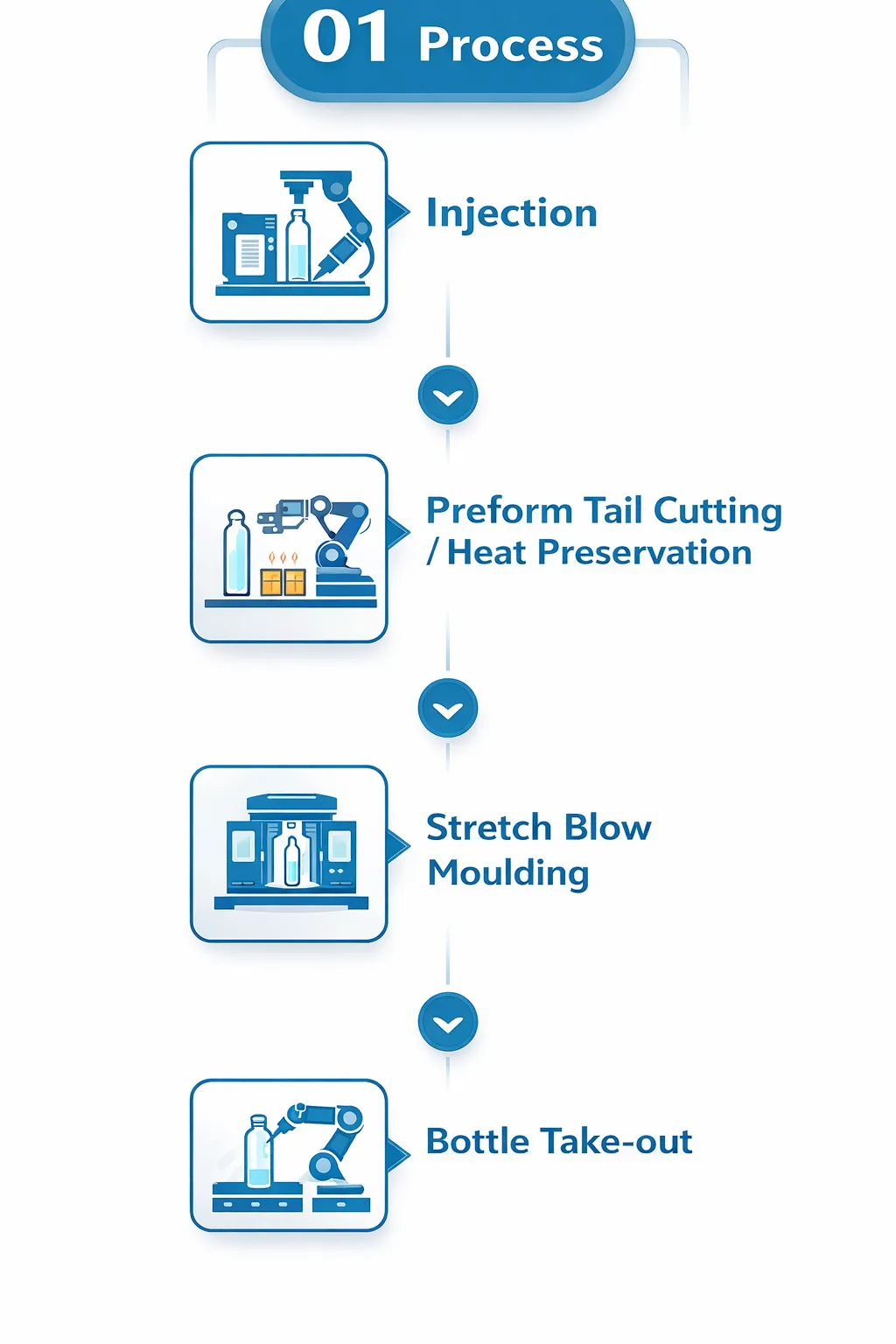
The key word is biaxial. Uniaxial stretching — pulling in only one direction — creates oriented material that is strong along one axis but weak perpendicular to it, similar to how wood is strong along its grain but splits easily across it. Biaxial stretching creates strength in two perpendicular directions simultaneously, giving the finished bottle balanced properties around its entire circumference and along its full height. This is why the injection stretch blow moulding process uses a mechanical stretch rod for axial elongation simultaneously with high-pressure air for radial (hoop) expansion. Both directions must happen together, in a narrow temperature window, to produce genuinely biaxial orientation.
2. How Biaxial Stretching Creates the Crystalline Lattice
Inside the blow cavity of an ISBM machine, three simultaneous forces act on the preform to produce biaxial orientation. Understanding how each force contributes is essential for process engineers troubleshooting bottle quality issues on the production floor.
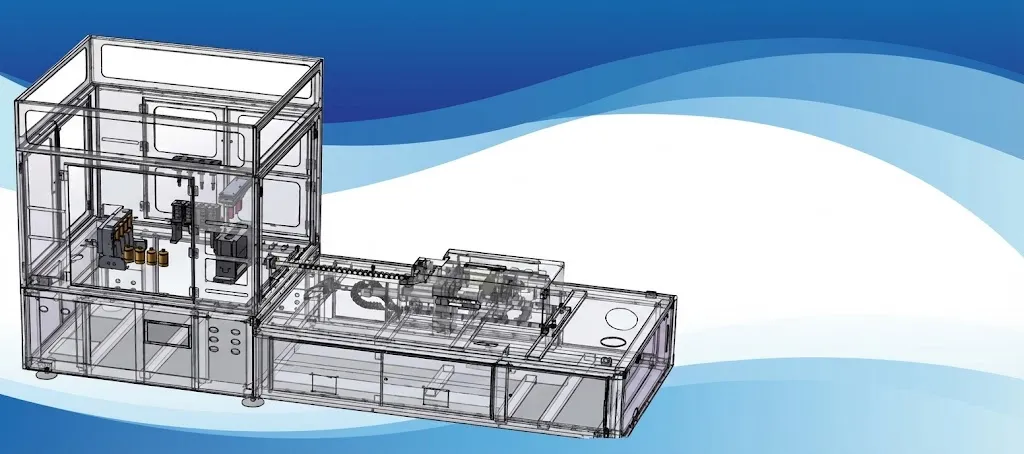
The first force is axial stretching, delivered by the servo-controlled stretch rod that descends into the preform at velocities between 0.8 and 1.2 meters per second. The rod elongates the preform lengthwise, stretching the polymer chains along the bottle’s vertical axis. On modern machines like the HGY150-V4 4-Station ISBM Machine, the stretch rod motion profile is programmable through the PLC, allowing process engineers to tune the axial velocity curve to match the specific resin and bottle geometry being produced.
The second force is radial (hoop) expansion, driven by high-pressure air between 2.0 and 3.5 MPa injected into the preform through the stretch rod tip or a separate blow port. As the compressed air inflates the preform outward against the chilled blow cavity walls, the polymer chains stretch circumferentially around the bottle’s diameter. The ratio between final bottle diameter and original preform diameter determines the hoop stretch ratio, typically between 4.0 and 4.5 times for well-designed bottles.
The third force is thermal quenching from the chilled cavity walls. The blow mould is cooled through conformal channels circulating chilled water at 10 to 18 Celsius, which rapidly quenches the stretched polymer below its glass transition temperature within milliseconds of contact. This rapid cooling locks the aligned molecular chains in their oriented positions before they can relax back to their random coil state. Without effective cavity cooling, the orientation dissipates and the finished bottle reverts to amorphous behavior, explaining why cooling water supply is one of the most common root causes of poor bottle performance in Korean production lines.
All three forces must occur within the same 150 to 200 millisecond window for biaxial orientation to develop properly. Too slow and the preform cools below the stretch window before inflation completes. Too fast and the polymer chains do not have time to fully align. This is why the stretch rod velocity profile, air pressure ramp timing, and mould cooling flow are all interdependent process variables that must be tuned together, never individually.
3. The Stretch Ratio Mathematics: Why 2.5× by 4.0-4.5× Is Non-Negotiable
Stretch ratio is the single most important specification in preform design. It is calculated by dividing the final bottle dimension by the corresponding preform dimension in each direction. For axial stretching, divide finished bottle height by preform body length. For hoop stretching, divide bottle body diameter by preform body diameter. The product of these two ratios gives the total area stretch ratio, which determines how much the original preform wall thins during blowing.
Decades of ISBM engineering have converged on a narrow optimal window for PET: axial stretch ratios between 2.5 and 3.0, and hoop stretch ratios between 4.0 and 4.5, yielding total area ratios of 10.0 to 13.5. The table below summarizes the practical outcomes at different stretch ratios, based on field data from Korean beverage, cosmetic, and pharmaceutical installations over the past five years.
| Axial Ratio | Hoop Ratio | Area Ratio | Outcome |
|---|---|---|---|
| < 2.0 | < 3.5 | < 7 | Under-stretched. Partial orientation only. Bottle exhibits stress whitening under impact. |
| 2.5 – 3.0 | 4.0 – 4.5 | 10.0 – 13.5 | Optimal window. Full biaxial orientation. Maximum mechanical properties. |
| > 3.2 | > 4.8 | > 15 | Over-stretched. Pearlescent haze at base. Material fatigue risk. |
Why 2.5 to 3.0 axial specifically? Below 2.5, insufficient polymer chain alignment means mechanical properties plateau at roughly 70 percent of their maximum potential. Above 3.0, the strain-hardening effect that stabilizes the oriented structure begins to induce crystallinity, which causes the pearlescent haze characteristic of over-stretched bottles. The narrow 0.5-ratio window between 2.5 and 3.0 is where PET achieves its peak balance of transparency, strength, and dimensional stability.
Hoop ratios follow similar constraints. The 4.0 to 4.5 range represents the sweet spot where polymer chains fully orient circumferentially without inducing crystallization hazing. For Korean beverage bottlers producing 500 ml water bottles with a typical 90 mm finished diameter, this means the preform must have an outer diameter of approximately 20 to 22 mm — and this single specification drives the entire preform tooling design. Our engineering team runs stretch-ratio simulation on every new bottle project before cutting mould steel, which is detailed in our preform design guide.
4. Measurable Property Gains: Drop, Top-Load, Barrier, Lightweighting
Biaxial orientation is not an abstract polymer-science concept. It delivers concrete, measurable improvements in the mechanical and barrier properties that Korean packaging buyers care about, and the gains compound into real economic advantages when brand owners evaluate PET against competing packaging materials.
Top-Load Strength: +30 Percent
Top-load strength is the vertical compression force a bottle can withstand before buckling or collapsing. This matters enormously for retail palletization, where bottles stack 12 to 15 layers high during distribution. Oriented PET delivers approximately 30 percent higher top-load strength versus non-oriented PET of identical wall thickness. A 500 ml oriented PET bottle typically withstands 18 to 22 kg of vertical load before first buckling, which is what allows Korean regional beverage bottlers to palletize their finished product for distribution without secondary packaging reinforcement.
Drop Impact Resistance
Drop testing from 1.5 meters onto a concrete floor is a standard Korean retail packaging qualification. Biaxial orientation is specifically what allows a 15 to 18 gram PET bottle to survive this test — the aligned polymer chains absorb and dissipate impact energy through elastic deformation rather than brittle fracture. Korean K-beauty cosmetic contract fillers in Ansan and Suwon routinely specify 1.5-meter drop-test compliance for their 150 to 300 ml PETG bottles, and the 150ml ISBM mould assembly is designed specifically to deliver the stretch ratios required for reliable drop-test performance.
Oxygen Barrier: +20 Percent
Oxygen permeability through PET drops by up to 20 percent when the material is biaxially oriented, because the aligned crystalline regions create a more tortuous diffusion path for oxygen molecules. This matters directly for shelf life of oxygen-sensitive products: carbonated beverages, juices, pharmaceutical syrups, and K-beauty serums containing vitamin C or other oxidation-sensitive actives. A 20 percent improvement in oxygen barrier often translates to 3 to 6 additional weeks of shelf life for vitamin-enriched drinks, which is significant commercial value for Korean health beverage brands.
Lightweighting: 10-15 Percent Material Savings
The single largest economic benefit of biaxial orientation is lightweighting. Because oriented PET is substantially stronger per unit wall thickness, brand owners can reduce their bottle gram weight by 10 to 15 percent while maintaining identical drop-test and top-load performance. For a Korean beverage bottler producing 10 million 500ml water bottles per year, a 12 percent gram-weight reduction translates to approximately 6 tonnes of PET resin saved annually — representing both direct material cost savings and reduced carbon footprint for brand owner sustainability targets.
Optical Clarity
Biaxially oriented PET maintains 90 to 92 percent light transmission through the bottle wall, which is glass-equivalent transparency. Non-oriented or partially-oriented PET drops to 75 to 85 percent transmission due to light scattering at the boundaries between amorphous and semi-crystalline regions. For premium K-beauty brand owners who specify glass-clarity appearance as a non-negotiable brand standard, proper biaxial orientation is what makes PETG the viable alternative to actual glass packaging.
5. The Process Window: When Orientation Fails
Biaxial orientation only develops within a narrow thermal and mechanical window. Fall outside this window in any variable — temperature, stretch ratio, timing, cooling — and the finished bottle exhibits visible defects that betray incomplete orientation. Here are the four most common failure modes seen on Korean production lines and their diagnostic signatures.
Stress Whitening (Under-Orientation)
When stretch ratios fall below the optimal window — typically because the preform is too thin-walled or the bottle geometry requires excessive expansion — the polymer chains do not fully align during stretching. The resulting bottle looks acceptable off the machine but develops visible white streaks or patches under subsequent mechanical stress, such as squeezing or impact. Stress whitening is the telltale sign of under-orientation and indicates the bottle will fail drop testing or top-load compliance.
Pearlescent Haze (Over-Orientation)
When stretch ratios exceed the optimal window — often because operators try to lightweight bottles beyond the physics limits — the polymer undergoes strain-induced crystallization. This creates a pearlescent or milky haze typically visible at the bottle base or heel where stretch ratios are highest. Pearlescent haze is irreversible and instantly disqualifies the bottle from premium cosmetic or beverage applications, which is why attempting extreme lightweighting without proper engineering support routinely produces unsellable inventory.
Thin Corners (Asymmetric Orientation)
Oval, flat-sided, or asymmetric bottles present a specific challenge: different regions of the bottle require different stretch ratios to reach the finished geometry. Without differential preform temperature conditioning — the dedicated Station 2 thermal conditioning step on 4-station ISBM machines — the corners of the bottle stretch excessively thin while the flat sides stretch insufficiently. This is why premium K-beauty brands producing complex oval serum bottles specifically require 4-station architecture rather than the simpler 3-station alternative. For round bottle production, 3-station machines like the BPET-94V3 work excellently.
Base Crystallinity (Thermal Failure)
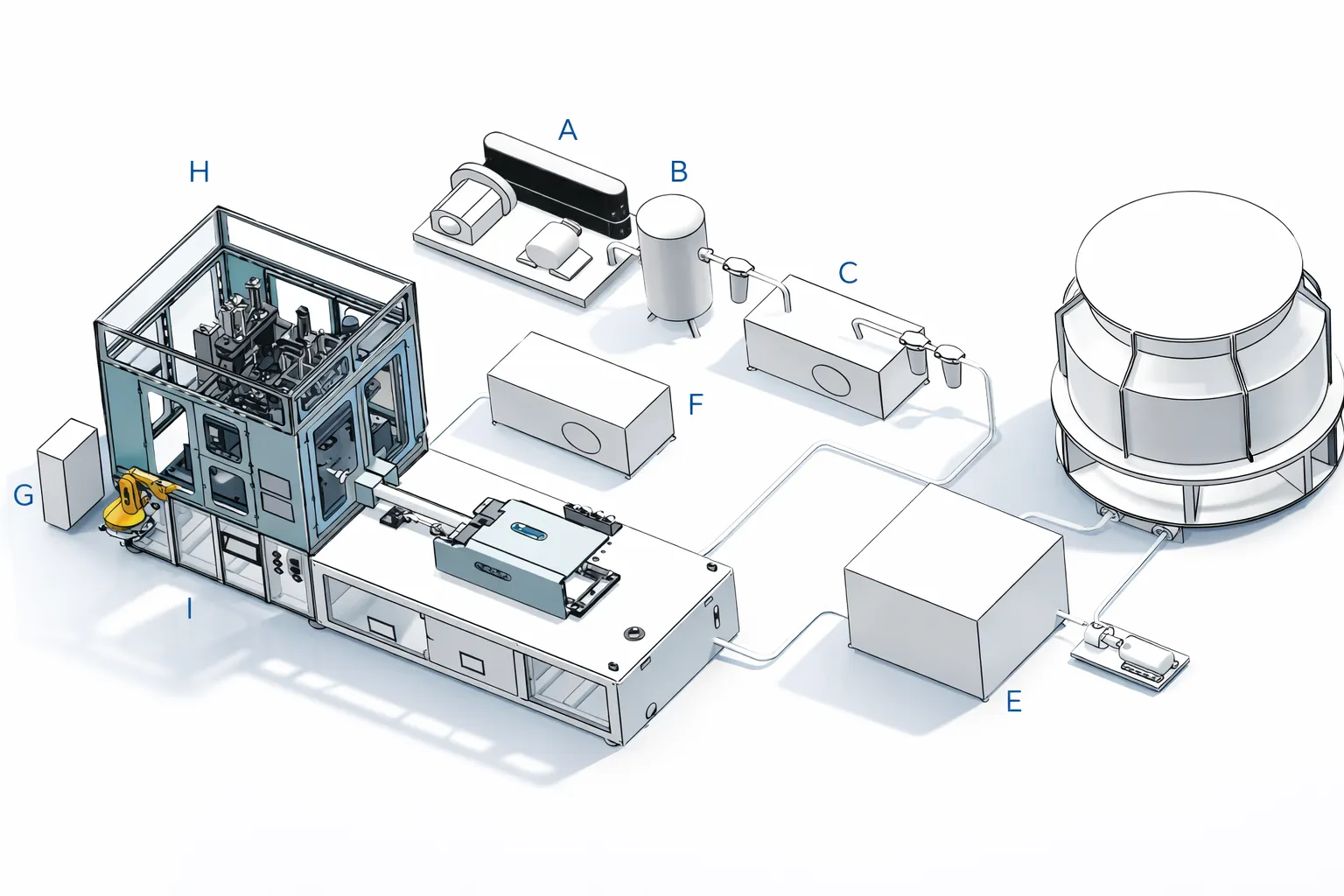
If the preform base region cools too slowly after injection — typically due to undersized chiller capacity or incorrect mould cavity cooling design — the polymer forms spherulitic crystals in the gate area before blowing. These crystals are visible as white cloudy patches at the bottle base and cannot be removed by subsequent processing. This failure mode is especially common in Korean factories that buy ISBM machines but undersize the accompanying chiller and cooling tower capacity, a mistake our engineering team specifically flags during every new installation scoping.
6. Orientation Across Different Resins
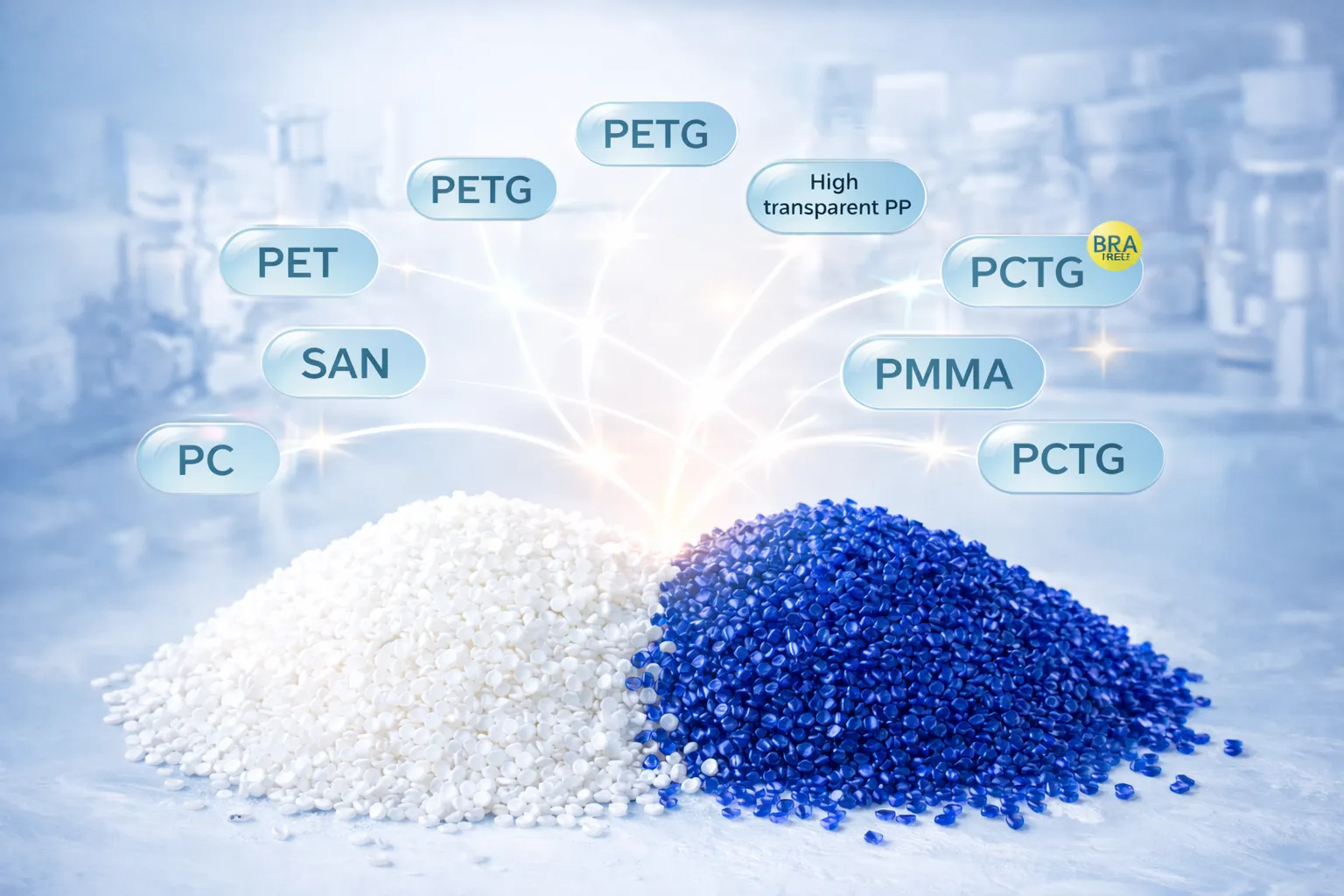
Not every polymer processed on ISBM machines develops biaxial orientation the same way. The polymer chemistry, glass transition temperature, and crystallization behavior of each resin dictate its unique stretching behavior. Korean contract fillers who switch resin grades between product campaigns need to adjust process parameters accordingly, or risk transferring problems from one production run to the next.
| Resin | Optimal Axial Ratio | Optimal Hoop Ratio | Orientation Behavior |
|---|---|---|---|
| PET | 2.5 – 3.0 | 4.0 – 4.5 | Classic biaxial orientation. Narrow temperature window (95-115°C). Universal standard. |
| PETG | 2.2 – 2.8 | 3.5 – 4.2 | Amorphous copolymer. Lower stretch tolerance. Wider temperature window (85-110°C). |
| PCTG | 2.0 – 2.5 | 3.2 – 3.8 | Even lower stretch capability. Prioritized for heavy-wall cosmetic jars. |
| PC | 2.0 – 2.5 | 3.5 – 4.0 | Amorphous polymer. Orients differently. Strength comes partly from molecular weight. |
| Tritan | 2.2 – 2.7 | 3.8 – 4.3 | Copolyester. Good orientation. BPA-free baby bottle standard. |
PET remains the gold standard for biaxial orientation because its semi-crystalline nature allows the polymer chains to form stable oriented structures that lock in place during cooling. PETG and PCTG are fully amorphous copolymers that orient differently — they develop molecular alignment under stretching but cannot form crystalline lattices the way PET does. This is why PETG is chosen for cosmetic clarity but PET is chosen for sports drink bottles that need maximum mechanical strength. For a deeper dive into resin selection trade-offs, see our PET vs PETG vs PCTG vs Tritan comparison guide.
7. Practical Applications in Korean Production
Understanding orientation physics is academic until you connect it to the bottles actually running on Korean production lines. Four representative applications show how orientation mathematics translates into practical process parameters.
500 ml Water Bottle (Daegu Regional Bottler)
Preform outer diameter 22 mm, length 95 mm, wall thickness 3 mm. Finished bottle body diameter 90 mm, height 220 mm, wall 0.3 mm. Axial stretch ratio 2.3, hoop stretch ratio 4.1, area ratio 9.4. At 17 gram finished weight, this bottle survives 1.5-meter drops on concrete and withstands 18 kg top-load. Cycle time 14 seconds on 6-cavity tooling.
150 ml K-Beauty Serum Bottle (Suwon Contract Filler)
PETG resin, preform outer diameter 18 mm, finished bottle body 48 mm, height 140 mm. Axial ratio 2.4, hoop ratio 2.7, area ratio 6.5. Lower stretch ratios than beverage PET because PETG cannot tolerate the higher values without whitening. Glass-clarity finish achieved through S136 mirror-polished blow cavity plus careful thermal conditioning on 4-station architecture.
240 ml Tritan Baby Bottle (Ulsan Baby Care Producer)
Tritan resin, preform outer diameter 21 mm, finished bottle body 65 mm, height 160 mm. Axial ratio 2.5, hoop ratio 3.1, area ratio 7.75. Tritan’s copolyester chemistry delivers BPA-free compliance for Korean KFDA baby product regulations while achieving drop-test compliance for typical accidental drops during infant feeding.
5-Liter Water Gallon (Gimhae Bulk Bottler)
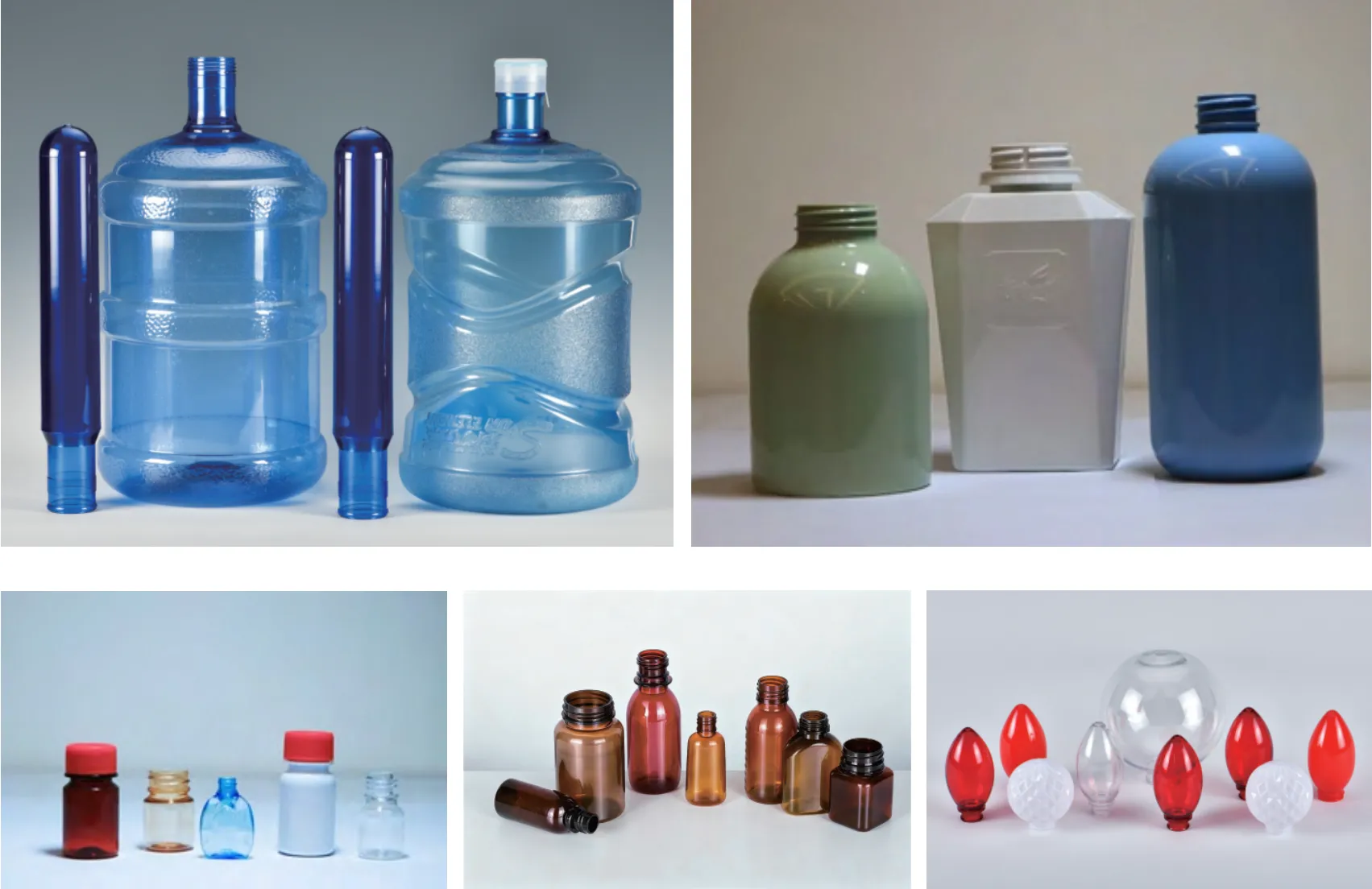
Heavy-wall PET, preform outer diameter 65 mm, finished bottle body diameter 204 mm, height 280 mm. Axial ratio 2.1, hoop ratio 3.1, area ratio 6.5. Lower stretch ratios because the larger bottle wall thickness requires thicker preforms that cannot stretch as dramatically. Requires heavy-duty 4-station machines like the BPET-125V4 Heavy-Duty 4-Station ISBM Machine with 685 KN injection clamping force to hold the large cavity closed during blowing.
8. Conclusion: Why This Matters for Your Bottle Economics
Biaxial molecular orientation is the invisible foundation of every successful PET bottle in the Korean and East Asian packaging market. It is the reason a 15-gram water bottle can survive shipping across the country on a pallet, the reason K-beauty serum bottles match glass clarity at a fraction of the weight, and the reason 5-liter bulk water gallons do not buckle under hydrostatic pressure during stacking. Every bottle specification — drop test compliance, top-load strength, oxygen barrier, lightweighting target — traces back to how well the ISBM process achieves optimal biaxial orientation within the narrow 2.5 by 4.0-4.5 stretch ratio window.
For Korean packaging buyers evaluating ISBM machine purchases, this physics has three practical implications. First, the machine must deliver precise, programmable stretch rod motion profiles through servo control rather than pneumatic actuation, because uniform axial stretching at 0.8 to 1.2 meters per second is what distinguishes commercial-grade bottles from prototype samples. Second, the blow air pressure capability must reach 3.5 MPa to deliver adequate hoop expansion on thick-wall geometries, which is why Ever-Power specifies this pressure class across our entire 4-station ISBM range. Third, and most overlooked, the chiller and cooling tower capacity must be sized correctly to quench oriented molecular chains before relaxation — typically 80 L/min at 12 Celsius for the mould cavity circuit, a specification that undersized auxiliary equipment frequently fails to meet.
Ever-Power’s engineering team runs stretch-ratio simulation on every new bottle project before any mould steel is cut, verifying that the proposed preform geometry will deliver proper biaxial orientation for the target bottle specification. If you are evaluating an ISBM machine purchase, or troubleshooting quality issues on an existing line, we would be happy to share the benchmark data and process analysis frameworks we use with every Korean customer.
Key Takeaways
- Biaxial molecular orientation is the physical phenomenon that gives PET bottles their strength, clarity, and barrier properties — without it, PET would be useless as packaging material.
- The optimal stretch window for PET is 2.5-3.0× axial and 4.0-4.5× hoop, producing total area ratios of 10-13.5 and peak mechanical properties.
- Property gains from proper orientation include 30% top-load strength, 20% oxygen barrier improvement, reliable 1.5m drop-test compliance, and 10-15% lightweighting capability.
- Under-orientation causes stress whitening; over-orientation causes pearlescent haze. Both failure modes are visual and instantly identifiable.
- Different resins (PET, PETG, PCTG, PC, Tritan) have different optimal stretch ratios. Switching resins without re-tuning process parameters produces predictable defects.
- Proper biaxial orientation requires three synchronized forces within 150-200ms: axial stretch rod motion, high-pressure air expansion, and chilled cavity quenching.
Need Help Tuning Biaxial Orientation on Your Line?
Share your bottle geometry, target weight, and resin specification. Our Korean engineering team runs stretch-ratio simulation and returns a detailed process recommendation within 48 hours, including preform design parameters, recommended machine specification, and projected cycle time.
Editor: Cxm