
Pharmaceutical PET Bottle Manufacturing — GMP-Compliant ISBM Production
A 10 ml eye dropper bottle that leaks is not a quality defect — it is a patient safety incident. An oral solution bottle with inconsistent wall thickness produces unreliable dose volume measurements. A nasal spray bottle whose neck finish is 0.15 mm out of specification allows the actuator to rock during use, delivering variable spray patterns. Pharmaceutical packaging is the one industry where every blow moulding quality parameter that other sectors treat as a specification to meet is, in pharmaceuticals, a regulatory requirement to document, validate, and prove.
Pharmaceutical PET bottle manufacturing requires a process that produces consistently precise containers without contaminating the production environment. Selecting the right pharmaceutical packaging machine — one that is inherently compatible with GMP environmental requirements, generates the documentation a validated production site needs, and delivers the dimensional precision that pharmaceutical closures and dispensing components require — is a decision with direct patient safety implications. For the Korean and Asian pharmaceutical packaging industry — operating under the Korea Ministry of Food and Drug Safety (MFDS) GMP framework and increasingly under WHO and EU GMP guidelines for export — injection stretch blow moulding has become the dominant process for PET pharmaceutical bottles precisely because its one-step closed-loop architecture aligns with GMP requirements in ways that two-step processes structurally cannot match. This guide covers the specific GMP requirements that a pharmaceutical bottle machine must meet, which container formats ISBM handles, how to select and configure an ISBM machine for a pharmaceutical production environment, and what the validation process — IQ/OQ/PQ — requires from equipment and process documentation.
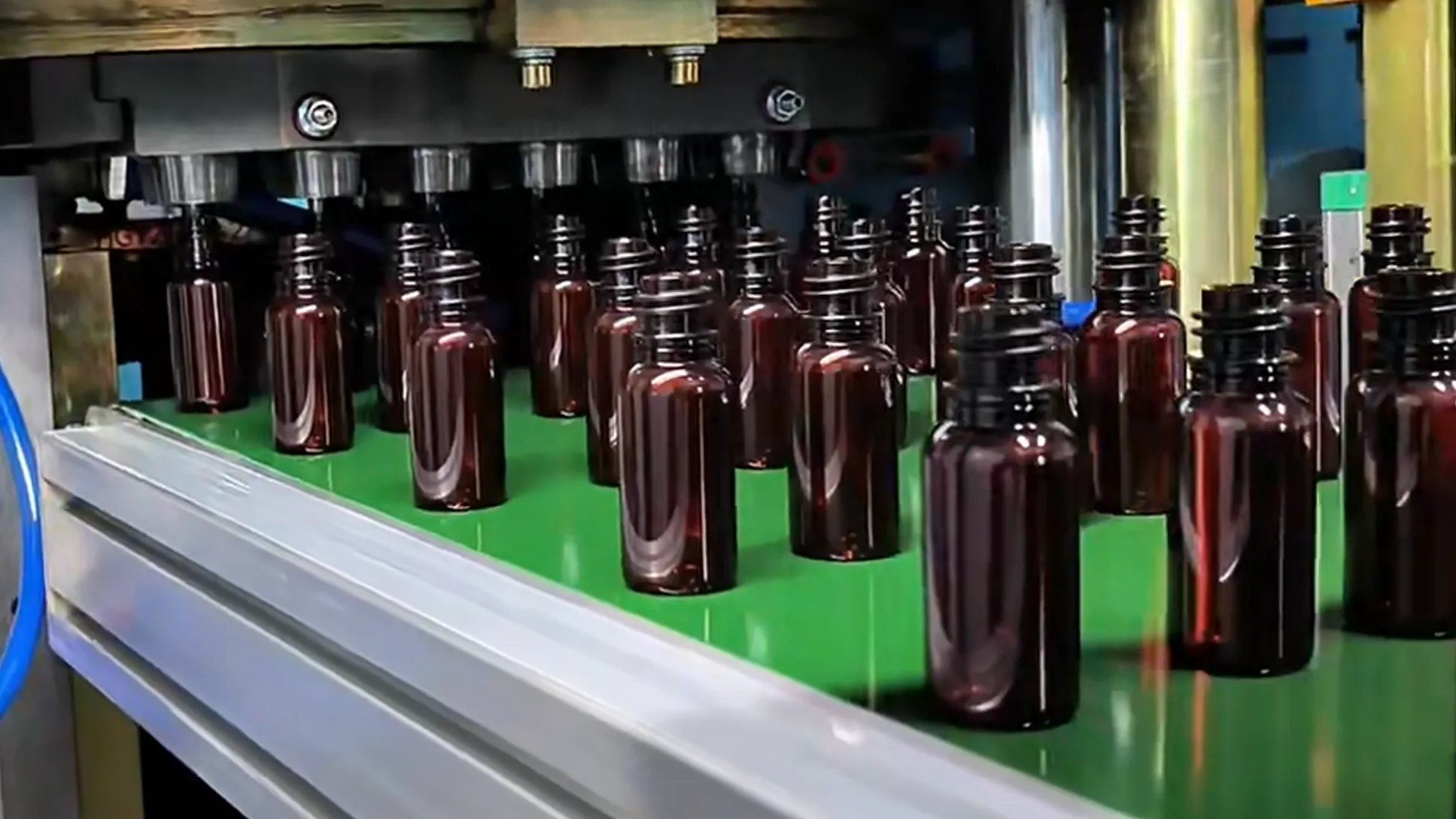
Pharmaceutical Packaging Requirements Blow Moulding Must Meet
Pharmaceutical packaging is governed by national and international GMP frameworks — in Korea by MFDS GMP, internationally by ICH Q7, EU Annex 1 (for sterile products), and WHO GMP guidelines. Each framework imposes requirements on the packaging container that go beyond the typical quality specifications of cosmetic or beverage packaging. The four requirements that most directly determine blow moulding process and equipment selection are:
Neck Seal Integrity — Zero Tolerance for Leakage
A pharmaceutical container that leaks is an immediate regulatory non-conformance — not a rework candidate. Neck finish dimensional accuracy (outer diameter, inner diameter, thread form, height from support ledge) must be within ±0.05 mm to guarantee seal integrity across the closure torque range. In two-step processes where the neck is exposed to reheating, thermal distortion can take neck dimensions outside specification on a random basis that is not detectable by visual inspection — which is why GMP-compliant pharmaceutical packaging operations increasingly specify one-step ISBM for all injection-blown PET containers.
Wall Thickness Uniformity — Dose Volume Accuracy
For unit-dose oral liquid containers and eye droppers, the internal volume of the bottle is the primary dose measurement reference. A 5 ml eye dropper bottle with a 10% wall thickness variation at the base produces a volume deviation of approximately 0.05 ml per bottle — which, at a typical dosing frequency of 1–2 drops per application, represents a clinically significant dose variation across a batch. GMP specifications for pharmaceutical containers typically require wall thickness variation below ±0.05 mm throughout the bottle body, a target consistently achieved by ISBM and rarely by two-step methods on small-volume pharmaceutical formats.
Surface Cleanliness — No Particulate, No Oil Contamination
Pharmaceutical containers filled with aqueous or oil-based pharmaceutical formulations are subject to visible particulate inspection in the final filled product. Any particulate contamination that originates from the container production process — oil film from hydraulic systems, airborne dust from preform storage, contact surface particles from handling equipment — becomes a visible defect in the filled product and a regulatory non-conformance requiring batch investigation and potential recall.
Material Traceability — Resin Lot to Container Lot
GMP batch records require traceability from every finished container batch to the resin lot number, machine parameter records, mould identification, and operator qualification records. The container manufacturing process must generate and retain the documentation that supports this traceability chain for the duration of the container batch’s shelf life plus statutory retention period — typically 5–10 years in Korean and EU pharmaceutical regulations.
Why ISBM Is the Preferred Process for Pharmaceutical Bottles
The case for using ISBM for pharmaceutical packaging rests on three structural process advantages that align directly with GMP requirements — not process optimisations that can be replicated on alternative equipment, but inherent characteristics of the one-step architecture.
Closed-Loop Process — No External Preform Handling
The fundamental GMP advantage of ISBM over two-step reheat blow moulding is structural: in a one-step ISBM machine, the preform is injected, temperature-conditioned, and blown into the finished bottle inside a single enclosed machine, without the preform ever being ejected into a storage container, transported, or loaded into a second machine. This closed-loop architecture eliminates the contamination exposure window that exists in two-step production between preform injection and blowing — a window in which preforms are handled by bulk conveyors, stored in open gaylords, transported through non-classified production areas, and loaded into the blow machine’s infeed system.
In a GMP-classified cleanroom, introducing two-step preform handling is not merely inconvenient — it requires either installing the entire preform injection machine inside the classified space (prohibitively expensive and impractical for room size), or establishing a validated preform transfer protocol between a non-classified injection area and the classified blowing area (complex, requires validated packaging, environmental monitoring at both points, and batch documentation for the transfer). ISBM eliminates this problem by making it unnecessary: one machine, one process step, one cleanroom installation, one set of environmental monitoring points.
Neck Finish Precision — Critical for Dropper and Sprayer Assemblies
In pharmaceutical ISBM, the neck finish is the most safety-critical dimension on the container. An eye dropper neck that is 0.1 mm oversized on outer diameter will accept the dropper assembly with apparent fitment but insufficient thread engagement — producing a closure that meets no-torque-off specification at factory but loosens during patient use, potentially contaminating the dropper tip or exposing the eye medication to ambient contamination. An undersized neck inner diameter prevents the dropper’s internal tube seal from seating correctly, producing an assembly that passes torque inspection but leaks at the patient’s use angle.
ISBM produces neck finish dimensions to ±0.05 mm — the same tolerance as injection moulding, because the neck IS injection-moulded: it is formed at the injection station and never deformed by the stretch-blow cycle. This consistency is achievable in production because it is built into the process mechanics, not achieved by sorting. Two-step REHB processes where the preform neck is exposed to reheat infrared lamps can produce thermal dimensional drift in the neck zone — a 2–3 °C temperature variation in the lamp array creates measurable neck diameter variation of 0.02–0.05 mm across a production batch, which for a 10 mm inner diameter eye dropper neck represents a functionally significant variation in dropper fitment.
GMP Environment Compatibility — Oil-Free Operation
Hydraulic blow moulding machines generate oil mist from hydraulic actuator cycling and from small internal leaks that develop over the machine’s operating life. In a classified pharmaceutical production area, hydraulic oil mist is an unacceptable contamination source — it deposits a near-invisible oil film on container surfaces that is not detectable by standard visual inspection, is not removed by standard bottle washing procedures, and can interact with pharmaceutical formulations, particularly protein-based biologics and oil-sensitive actives. The Korea MFDS GMP framework and EU Annex 1 both require pharmaceutical manufacturing equipment to be free of contamination sources — for blow moulding, this means either oil-free drive systems or validated containment measures that are expensive and difficult to maintain.
Pharmaceutical Container Types Produced by ISBM

Among these formats, the eye dropper bottle is the most specification-demanding and represents the strongest case for ISBM over any alternative process. Its small volume (typically 5–15 ml), extremely precise neck inner diameter requirement (dropper tube seal tolerance ±0.03–0.05 mm), and the sterility implications of any contamination in the bottle interior make it the container format where the ISBM process’s structural advantages — closed-loop production, injection-formed neck, and oil-free operation — are most directly and measurably valuable.
GMP Compliance for ISBM Machines
Oil-Free Operation — The Non-Negotiable Requirement
For pharmaceutical blow moulding in a GMP-classified environment, oil-free machine operation is not a specification preference — it is a regulatory baseline in most national GMP frameworks. The Korea MFDS cosmetic and pharmaceutical GMP guidelines, the EU Annex 1 requirements for sterile or near-sterile pharmaceutical products, and WHO GMP guidelines all require that pharmaceutical manufacturing equipment does not introduce contamination into the product contact environment.
Fully electric ISBM machines eliminate the hydraulic system entirely — no hydraulic tank, no pump, no hydraulic lines or actuators, no hydraulic oil — removing the root cause of oil contamination. The drive system uses servo motors with enclosed windings and grease-sealed bearings; there are no oil reservoirs, no oil seals that can fail, and no oil mist generation under normal operating conditions. This makes the fully electric ISBM platform inherently compatible with the pharmaceutical GMP environment requirement without additional containment engineering.
Hydraulic ISBM machines used in pharmaceutical facilities require a risk assessment that documents the contamination risk, installation of oil drip trays under all hydraulic actuators, regular inspection of hydraulic seals under the maintenance programme, and monitoring records showing no evidence of oil contamination on containers or in the production environment. This is achievable but adds ongoing compliance burden; the fully electric machine eliminates this burden by eliminating the contamination source.
Cleanroom Installation — Room Classification and Machine Footprint
Pharmaceutical ISBM machines in Korea typically operate in ISO Class 7 (EU Grade C) or ISO Class 8 (EU Grade D) cleanrooms, depending on whether the container will be used for sterile primary packaging (Class 7) or non-sterile oral and topical products (Class 8). The machine installation must not compromise room classification — which means:
- Air supply and return: The machine must be positioned to avoid disrupting the room’s laminar airflow pattern. Large flat surfaces (the machine top) that intercept downward airflow require baffle planning in consultation with the room’s HVAC designer.
- Surface cleanability: All external machine surfaces in the classified area must be smooth, non-shedding, and cleanable with pharmaceutical-grade disinfectants. Korea Ever-Power machines are finished with powder-coated surfaces on exterior panels; stainless steel contact surfaces in bottle-handling areas.
- Utility penetrations: Compressed air, cooling water, and electrical connections entering the classified room through the room envelope must be gasketed and sealed to prevent air infiltration from non-classified areas.
- Personnel access: Machine service access panels must be inside the classified room if the machine is operated continuously; or the machine must be designed to allow service from a lower-classification area through a cleanroom-compatible service hatch arrangement.
Factory Acceptance Testing — What the FAT Must Cover
A pharmaceutical ISBM machine’s FAT is the documented evidence that the machine has been built to specification and performs correctly before it leaves the manufacturer’s facility. Unlike a cosmetic machine FAT, a pharmaceutical machine FAT must generate documentation that will subsequently be referenced in the site validation (IQ/OQ/PQ) — meaning FAT records must be formatted, signed, and retained to GMP documentation standards.
● Pharmaceutical ISBM Machine FAT — Required Test Items
✓ Machine identification (serial number, model, year)
✓ Safety system function testing (guards, emergency stops)
✓ Barrel temperature control accuracy verification (±1 °C per zone)
✓ Shot weight repeatability test (min. 30 consecutive shots; CV < 0.5%)
✓ Neck finish dimensional verification (OD, ID, height — vs. specification)
✓ Wall thickness mapping on representative container (5 heights × 4 positions)
✓ Cycle time verification at rated BPH
✓ Hydraulic system leak test (or oil-free system verification)
✓ Compressed air supply verification (ISO 8573-1 Class 1)
✓ Alarm and alarm logging function test
✓ Calibration certificates for all measuring instruments
✓ Documentation package completeness review (drawings, BOM, manuals)
Machine Selection — Hydraulic vs Fully Electric for Pharmaceutical Lines
For most pharmaceutical ISBM applications — eye droppers, oral solution bottles, nasal spray containers — the container sizes and production volumes fall within the capability of the HGY50-V3 platform (188 g injection capacity, 1–6 cavities, maximum 200 mm bottle height). The selection decision is primarily between the hydraulic HGY50-V3 and the fully electric HGY50-V3-EV, and for pharmaceutical applications, the operating environment almost always determines this choice.
For a new pharmaceutical ISBM installation in a GMP cleanroom, the HGY50-V3-EV is the recommended platform. Its oil-free architecture eliminates the primary GMP contamination risk; its 210 MPa injection pressure delivers the shot weight consistency (< 0.5% CV) that pharmaceutical FAT specifications require; and its lower energy consumption reduces cleanroom heat generation, which reduces HVAC load and operating cost in a controlled environment. The larger footprint versus the hydraulic V3 must be accommodated in room design — typically a 4,200 × 2,000 mm clear floor area for the machine plus operator access — but this is standard planning in pharmaceutical production facility design.
For pharmaceutical operations where the GMP environment is a non-sterile ISO Class 8 room and the contamination risk assessment for hydraulic systems is acceptable, the HGY50-V3 hydraulic machine remains a viable choice — with lower capital cost and the same container quality capability as the EV on non-sterile oral solution and veterinary bottle programmes where the additional GMP burden of hydraulic oil management is manageable within the site’s quality system.
Resin Selection for Pharmaceutical ISBM
Pharmaceutical container resins must be approved for their intended use under the applicable regulatory framework — in Korea under MFDS, internationally under USP <661> Plastic Packaging Systems or equivalent. The three resins most commonly used in pharmaceutical ISBM are PET, PC, and PETG, each with distinct regulatory status, material properties, and processing requirements:
PET — The Standard Pharmaceutical Resin
Regulatory status: Widely approved for pharmaceutical primary packaging under USP <661>, EU Ph. Eur. 3.1.5, MFDS approved materials list.
Processing IV: 0.72–0.80 dl/g for non-sterile oral solutions; 0.76–0.84 dl/g for eye droppers (higher IV for better barrier). Moisture specification: < 0.004% before processing to prevent IV degradation. Key advantage: excellent chemical inertness to most aqueous pharmaceutical formulations, good oxygen barrier after ISBM biaxial orientation.
PC — For High-Clarity, High-Temperature Applications
Regulatory status: Approved for pharmaceutical packaging under USP <661> with appropriate extractable and leachable testing documentation. BPA migration risk requires documentation for direct patient-contact applications.
Key properties: تيز ≈ 147 °C — autoclave-compatible at 121 °C; exceptional optical clarity (haze < 0.5%); impact-resistant. طلب: Eye dropper bottles where steam sterilisation is required; laboratory containers that are autoclaved between uses.
PETG — For Chemical-Resistant Pharmaceutical Packaging
Regulatory status: Approved under USP <661> for pharmaceutical packaging with extractable testing. Eastman Spectar™ and GN071 grades have regulatory drug master file (DMF) support documentation available.
Key advantage over PET: better resistance to concentrated disinfectant formulations, alcoholic drug solutions, and certain organic solvent vehicles. طلب: Veterinary formulations with alcohol or solvent vehicles; disinfectant concentrate packaging; dermatological preparations with penetration enhancers.
Validation Protocol — IQ / OQ / PQ for Pharmaceutical ISBM
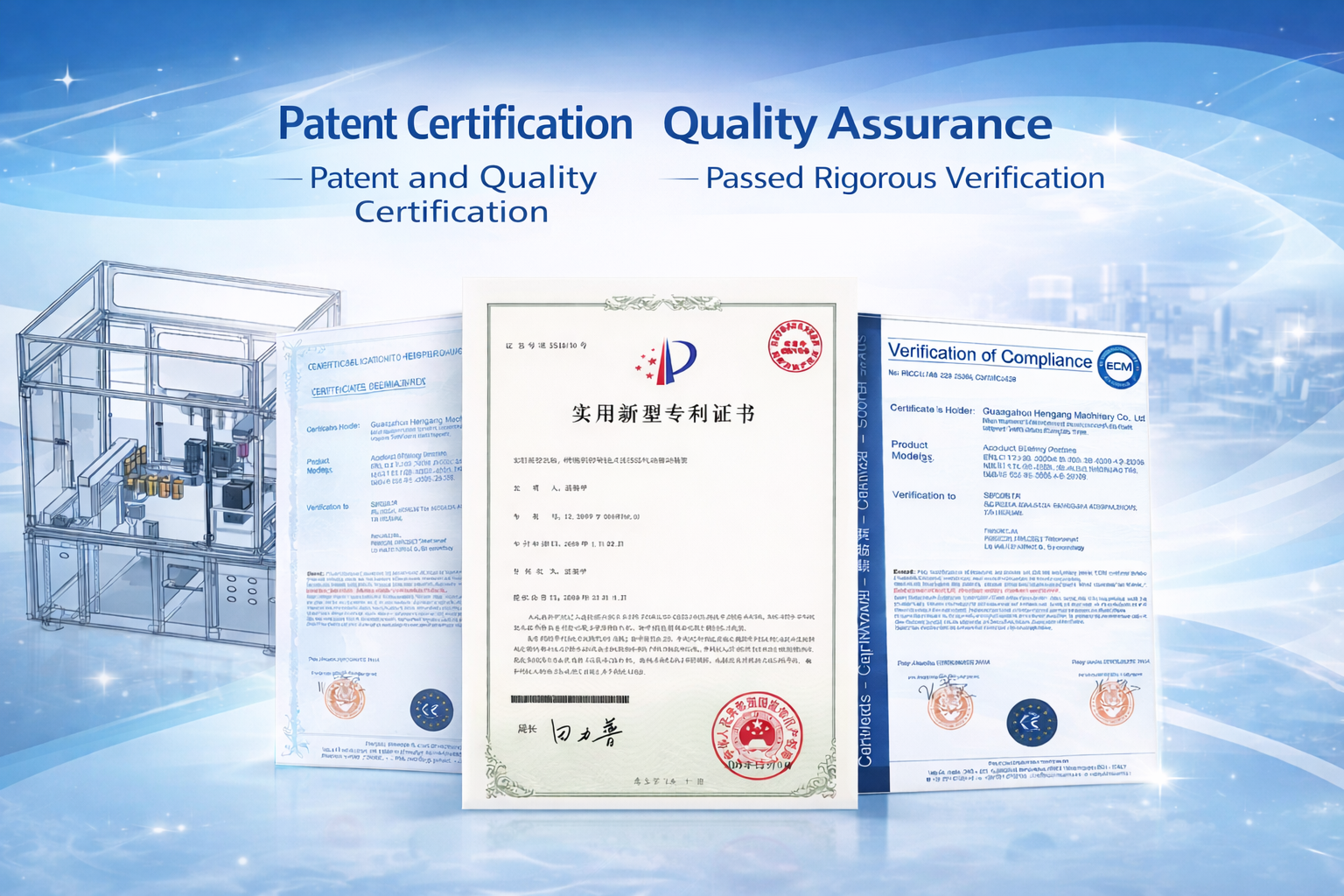
Pharmaceutical equipment qualification follows a three-stage framework — Installation Qualification (IQ), Operational Qualification (OQ), and Performance Qualification (PQ) — that is required by GMP regulations in all major markets. For an ISBM machine in a pharmaceutical container production facility, the qualification protocol covers the following activities at each stage:
Korea Ever-Power provides the following documentation to support the site’s IQ/OQ/PQ validation for pharmaceutical ISBM machines: machine-specific URS template, factory acceptance test (FAT) report with all measurement data, calibration certificates for all machine-mounted measuring instruments (temperature sensors, pressure transducers, load cells), material certificates for product-contact surfaces, detailed technical drawings with GMP-relevant dimensions, and an electronic copy of the machine manual in Korean and English. The site’s own qualification team or contract CRO conducts the site IQ/OQ/PQ protocols; Korea Ever-Power’s commissioning engineer is available on-site during the OQ and PQ phases to resolve any process parameter questions that arise during the qualification batches.
Production Case Study — Eye Dropper Bottle Line
◆ أهم النقاط الرئيسية
ل pharmaceutical PET bottle manufacturing, the choice of ISBM is almost always correct — and the choice between hydraulic and fully electric is almost always determined by the GMP environment classification. A GMP cleanroom producing sterile or near-sterile pharmaceutical containers requires oil-free operation; a fully electric ISBM machine is the practical solution. For non-sterile oral solution and veterinary bottle production in ISO Class 8 environments, the hydraulic machine with appropriate oil contamination controls remains a viable option at lower capital cost. Both platforms support the IQ/OQ/PQ validation protocol that pharmaceutical container production requires — with Korea Ever-Power providing the complete FAT documentation package that anchors the site qualification.
خاتمة
Pharmaceutical container production is the application where ISBM’s structural advantages — closed-loop process, injection-formed neck, oil-free operation in the electric variant, and documented process consistency — align most precisely with regulatory requirements. The neck finish precision that eliminates leakage risk, the wall thickness uniformity that supports dose volume accuracy, and the absence of contamination introduction paths between production steps are not quality aspirations in pharmaceutical packaging — they are documented GMP requirements that must be validated and maintained.
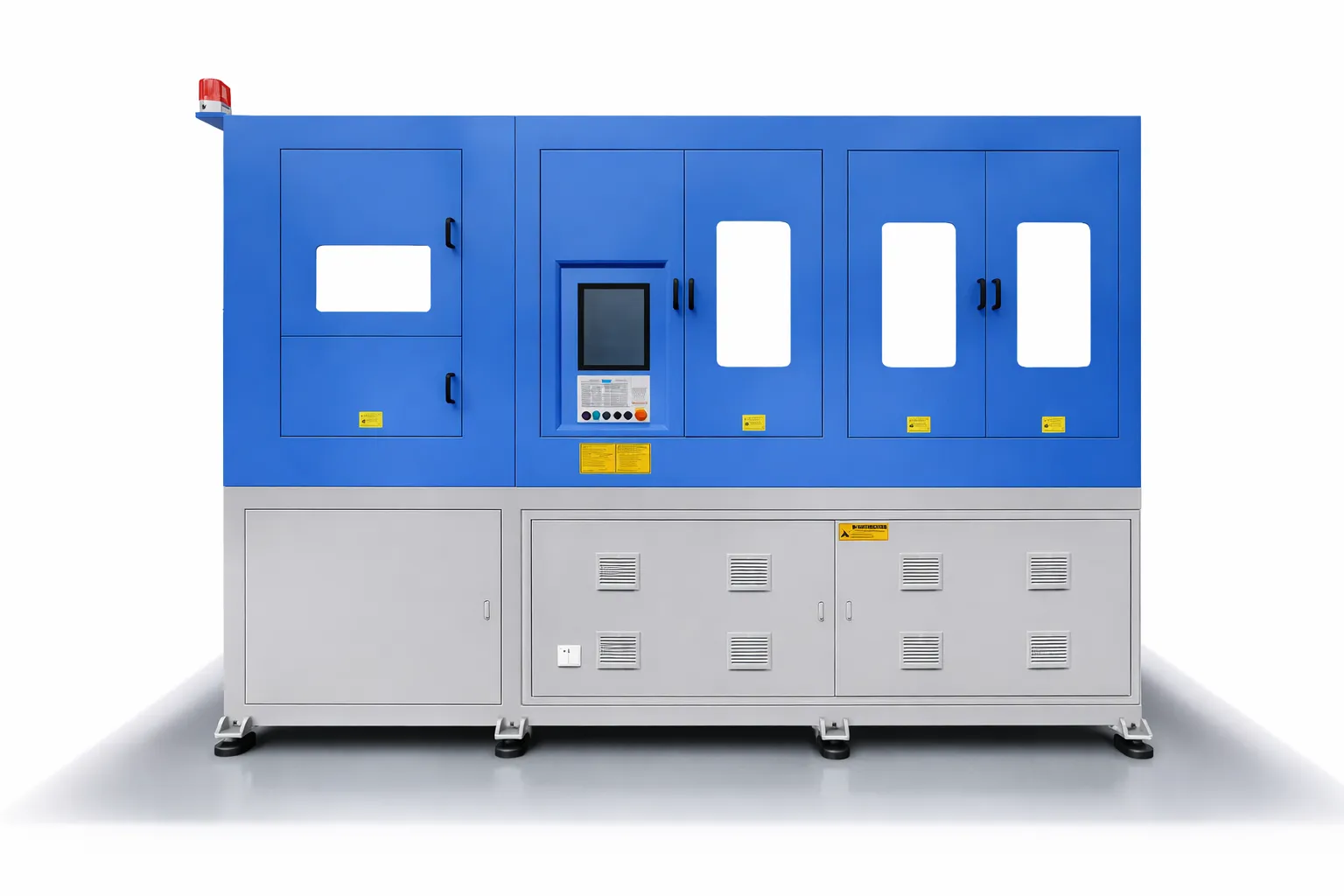
كوريا إيفر باور HGY series 3-station ISBM machines are supplied with the complete FAT documentation package required to support pharmaceutical site qualification, including calibration certificates, technical drawings, material certificates for product-contact surfaces, and Korean-language equipment manuals. Contact Korea Ever-Power with your container specification, resin selection, GMP environment classification, and target production volume to receive machine recommendation, mould feasibility review, and FAT documentation scope confirmation.
حول هذه المقالة: Prepared by the Korea Ever-Power Technical Team. GMP framework references (MFDS, ICH Q7, EU Annex 1, WHO GMP) are cited for context; interpretation of GMP requirements for specific products and facilities should be confirmed with the site’s qualified person (QP) or regulatory affairs team. IQ/OQ/PQ protocol scope reflects Korea Ever-Power’s standard pharmaceutical qualification support package; site-specific validation requirements may differ based on product classification and regulatory authority.
قراءات ذات صلة: What Is Injection Stretch Blow Moulding? — Technical Guide | Cosmetic PET Bottle Manufacturing — K-Beauty ISBM Guide | ISBM Mould Design — Preform, Blow Cavity, and Core Pin Engineering
المحرر: Cxm