
ISBM Industry 4.0 Automation:
Korean Production Guide
Korean ISBM producers who measure OEE systematically and act on the data achieve 78–86% OEE. Those who rely on operator experience and production log paper records average 58–68% OEE — a 20-percentage-point gap that at 20M units/year production represents 4M additional bottles of annual revenue from the same machine. Industry 4.0 in Korean ISBM is not about robots or digital transformation strategy — it is about connecting the data your EV servo machine already generates to the decisions that reduce downtime, scrap, and quality failures.
EV Servo Data Logging
Korean GMP Digital Compliance
Korean Ever-Power Engineering Desk · Ansan-si · May 2026
Korean ISBM OEE Benchmark — Industry 4.0 vs Conventional Operation
World-Class ISBM OEE
≥ 85%
Industry 4.0 equipped Korean ISBM
Korean ISBM Average
63–71%
Without systematic data monitoring
OEE Gap (20M units/yr)
4.4M
Additional bottles/year from same machine
Korean Gov’t I4.0 Subsidy
30–50%
Of smart manufacturing investment (스마트공장 지원)
1. What Industry 4.0 Actually Means for Korean ISBM Operations
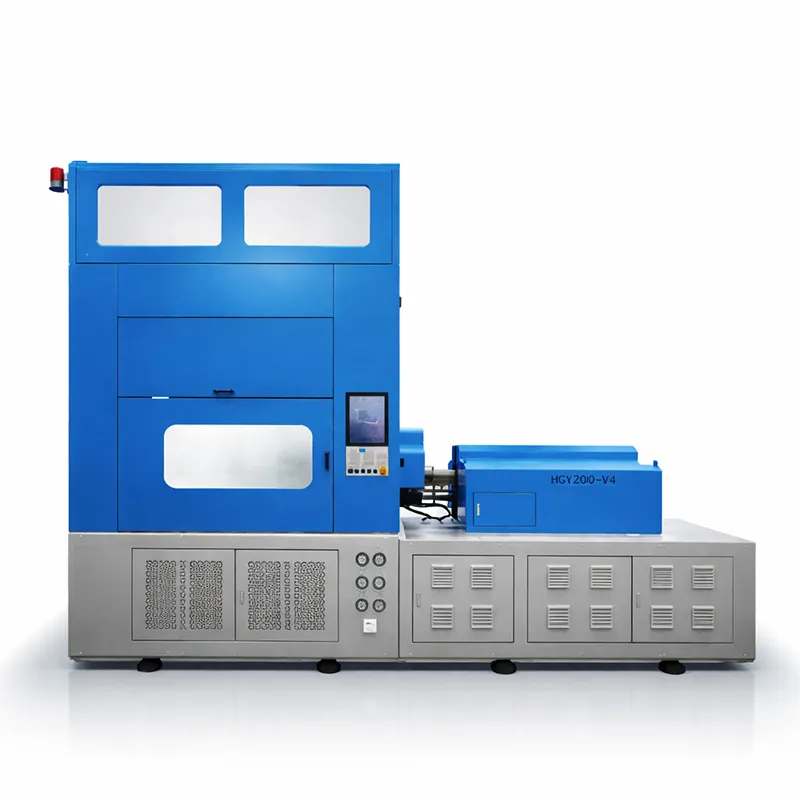
Industry 4.0 applied to Korean ISBM production means exactly three things in practice: measuring what matters (OEE, process parameters, quality outcomes) continuously rather than at sample intervals; acting on the measurements before failures occur rather than after; and documenting the measurements in formats that satisfy Korean brand quality audit requirements and Korean regulatory compliance (KFDA GMP, K-ETS) without additional manual data collection effort. Korean ISBM Industry 4.0 does not require new machines — it requires connecting the data outputs of existing EV servo machines to analytics software and acting on the results.
The Korean government’s Smart Factory (스마트공장 보급·확산) programme, operated through the Korea Smart Manufacturing Industry Association (스마트제조혁신추진단), provides cost support for Korean manufacturers implementing manufacturing execution systems (MES), IoT sensor integration, and real-time process monitoring — directly applicable to Korean ISBM operations. As of 2026, the programme supports 30–50% of qualifying investment costs up to KRW 100M per Korean SME facility, with enhanced support rates for Korean ISBM producers supplying Korean pharmaceutical or K-Beauty brand customers under Korean GMP compliance requirements.
The practical Industry 4.0 implementation pathway for Korean ISBM does not require a digital transformation consultant or a multi-year technology roadmap. It requires four sequential decisions: (1) connect the EV servo machine’s existing data output to a logging system; (2) display OEE in real time at the machine; (3) build SPC charts for the three most commercially important quality variables; (4) add predictive maintenance alerts for the five highest-cost failure modes. Each decision can be implemented independently, delivers immediate measurable value, and builds toward the full Industry 4.0 capability that Korean brand customers increasingly require from primary packaging suppliers as part of annual supplier qualification audits.
2. OEE: Measuring the Three Loss Categories That Limit Korean ISBM Output
OEE (Overall Equipment Effectiveness) is the product of three independently measured ratios: Availability × Performance × Quality. Each ratio captures a distinct category of production loss — and each requires different corrective action. Korean ISBM operations that track only total production output miss the diagnostic information that OEE’s three-component structure provides.
| OEE Component | Definition | Korean ISBM Benchmark | Primary Loss Driver |
|---|---|---|---|
| Availability | Run time ÷ Planned production time | World-class: ≥ 92% Korean avg: 78–84% |
Unplanned stoppages, changeover, startup time |
| Performance | Actual output ÷ Theoretical output at ideal cycle time | World-class: ≥ 95% Korean avg: 86–92% |
Micro-stoppages, speed reduction, hesitations |
| Quality | Good units ÷ Total units produced | World-class: ≥ 99% Korean avg: 95–98% |
Startup scrap, quality defects, rework |
At Korean ISBM average component values (Availability 81% × Performance 89% × Quality 96.5%), the composite OEE is 69.5%. At world-class targets (92% × 95% × 99%), composite OEE is 86.5% — a 17-percentage-point gap. For a Korean ISBM line producing 4,000 bottles/hour at 16-hour shifts on 300 production days/year, this gap represents (86.5% − 69.5%) × 4,000 × 16 × 300 = 32.6M bottles of theoretical production that current Korean average OEE fails to achieve. Even capturing 25% of this gap — moving from 69.5% to 73.8% OEE — adds 8.2M bottles/year of production capacity from the same machine.
Korean ISBM OEE loss attribution: across Korean ISBM plants tracked in 2025, Availability losses account for 48% of total OEE loss (dominated by unplanned stoppages averaging 3.2 per shift at 18 minutes each), Performance losses account for 31% (dominated by micro-stoppages under 5 minutes that operators do not log individually but accumulate to 45–60 minutes per shift), and Quality losses account for 21% (dominated by startup scrap and parameter-drift quality events). This attribution identifies Availability (unplanned stoppages) as the highest-value improvement target — which aligns directly with predictive maintenance as the highest-ROI Industry 4.0 investment for Korean ISBM.
3. EV Servo Data Logging: What Your Korean ISBM Machine Already Records
Korean EV servo ISBM platforms are data-rich by design — the servo drive controller logs axis position, motor current, and process timing at every cycle to enable the precise motion repeatability that is the servo’s core production advantage. The data that enables ±0.05s timing precision is the same data that enables OEE monitoring, SPC quality control, predictive maintenance, and GMP process documentation — it is already being generated and temporarily stored in the machine controller on every EV servo Korean Ever-Power platform.
Korean EV servo ISBM data outputs available per cycle (100ms resolution, all Korean Ever-Power HGY-V4 platforms):
- Injection data: Peak injection pressure (bar), fill time (s), hold pressure (bar), hold time (s), shot weight proxy (from screw position displacement). Cycle-to-cycle injection pressure variation above ±3 bar is the leading predictor of hot runner partial blockage — detectable 2,000–5,000 cycles before the blockage causes a production-visible preform weight deviation.
- Conditioning data: All zone temperatures at cycle trigger (°C), zone duty cycle (%), conditioning dwell time (s). Zone duty cycle trending above 80% at the same setpoint indicates heater element degradation — the element is working harder to maintain temperature as its resistance increases. Detection typically occurs 4–8 weeks before element failure.
- Stretch rod data: Rod position profile (mm vs time), peak rod drive current (A), rod speed at trigger (mm/s), end-point position (mm). Peak rod drive current increase above 15% from baseline at equivalent cycle conditions indicates stretch rod linear bearing wear — detectable 3–6 weeks before bearing failure causes rod hesitation and wall distribution failures.
- Blow station data: Pre-blow trigger position (% rod travel), pre-blow pressure (bar), high-blow pressure (bar), blow dwell time (s), exhaust duration (s). High-blow pressure drop-rate during dwell (pressure decay rate) indicates blow nozzle PTFE seal wear — a detectable early warning of seal failure 1–3 weeks before pressure loss causes bottle wall contact failure and haze defects.
- Production count data: Cycle number (total shots since last reset), cycle time (s), alarm code and duration if any alarm occurred during the cycle, cavity-specific rejection signal if auto-reject is configured. These fields directly enable OEE Availability and Performance calculation without any additional instrumentation.
Data access methods on Korean Ever-Power EV servo platforms: (1) Internal HMI display — trend graphs for the last 200 cycles, accessible to the operator at the machine; (2) USB export — shift log export as CSV file for offline analysis; (3) Ethernet TCP/IP output — real-time streaming to a connected PC or MES system at configurable intervals (1-cycle to 60-cycle averaging). The Ethernet output is the foundation of Industry 4.0 connectivity — it enables the machine data to flow to OEE dashboards, SPC software, and the Korean ISBM preventive maintenance framework trigger systems without requiring any additional machine-side hardware.
4. Statistical Process Control for Korean ISBM Quality Management

Statistical Process Control (SPC) applied to Korean ISBM quality monitoring enables detection of process drift before it causes specification failure — the difference between catching a conditioning temperature drift at +1.5°C (before haze exceeds the Korean K-Beauty specification limit) versus discovering the drift at the Korean brand’s incoming inspection (after the full production lot has been delivered). Korean ISBM SPC is not statistically complex — it requires choosing the right control variables, setting correct control limits, and responding to signals consistently.
Korean ISBM SPC control variable selection — three variables covering the most commercially critical quality dimensions:
- Bottle weight per cavity (g): The most sensitive process indicator for Korean ISBM — bottle weight integrates injection fill consistency, hot runner balance, and shot-size stability into a single measurable output. Target: ±0.4g control limits (Xbar chart); target Range: ≤ 0.8g within-sample range (R chart). Measurement frequency: 5 consecutive bottles per cavity every 30 minutes in production. Process capability target: Cpk ≥ 1.33 for Korean pharmaceutical and K-Beauty; Cpk ≥ 1.00 for Korean commodity production.
- Neck OD per cavity (mm): Tracks dimensional drift from mould wear and hot runner thermal expansion — the variable that determines Korean brand fill-line compatibility and closure torque consistency. Target: ±0.04mm control limits for Korean K-Beauty (GPI 24/410 and 28/410 premium application); ±0.08mm for Korean commodity. Measurement frequency: 3 bottles per cavity per 2 hours; measure at 3 points around the neck circumference and record the maximum deviation.
- Haze % per body zone (for PETG and crystal PET): Tracks conditioning temperature drift and blow air dewpoint variation — the variable that determines Korean K-Beauty brand shelf quality. Target: ±0.3% control limits around the production mean (not around the specification limit). Measurement frequency: 2 bottles per cavity per 2 hours; measure at mid-body zone with ASTM D1003 hazemeter coupon. Haze measurement on the Xbar chart provides earlier drift detection than visual inspection, which typically identifies haze problems only after the process has drifted 0.6–1.0% above the baseline — often at or beyond the Korean brand’s specification limit.
Korean ISBM SPC control limit setting: always set control limits from actual production data (minimum 30 consecutive samples from a stable production run) — never from the specification tolerance. Control limits calculated from production variation data are typically 40–70% tighter than specification limits for Korean ISBM processes, meaning out-of-control signals trigger investigation at 40–70% of the way to the specification limit — providing the response time window needed to identify and correct the root cause before product leaves the facility. SPC software for Korean ISBM: Microsoft Excel with the SPC add-in provides adequate functionality for Korean SME operations; dedicated MES-integrated SPC platforms (Minitab, InfinityQS, or Korean-developed systems such as DAQ systems from Korean companies like Daemyung and Sebang) provide automatic data collection from EV servo Ethernet output and are recommended for Korean pharmaceutical and K-Beauty high-volume operations above 10M units/year.
5. Predictive Maintenance: Moving Korean ISBM from Reactive to Anticipatory
Korean ISBM maintenance is currently reactive at most Korean operations — maintenance is performed when a component fails or when a scheduled calendar interval arrives, whichever comes first. Reactive maintenance creates unpredictable unplanned downtime (the dominant Availability loss in Korean ISBM OEE). Predictive maintenance uses the machine’s existing data outputs to identify the early warning signals of component degradation — allowing maintenance to be scheduled at the next planned production stop rather than occurring as an unplanned shutdown during peak production.
Five Korean ISBM predictive maintenance signatures detectable from EV servo data:
① Stretch rod bearing wear — rod drive current trending
Signal: peak rod drive current (A) trending upward ≥ 12% above baseline over 7-day moving average at equivalent production conditions. Mechanism: as the rod linear bearing wears, friction increases, requiring higher motor torque (current) to achieve the same rod speed profile. Early detection window: 3–5 weeks before bearing failure causes rod hesitation and wall distribution failures. Action threshold: schedule bearing inspection at next planned changeover when 12% current increase observed; replace if bearing shows measurable wear at inspection.
② Conditioning heater element degradation — zone duty cycle trending
Signal: a specific conditioning zone’s duty cycle (% time heater is energised) trending upward ≥ 15 percentage points from baseline over 14-day moving average at same ambient temperature and setpoint. Mechanism: as the heater element’s resistance increases with age, it generates less heat per unit time at the same voltage — the PID controller compensates by running the heater for longer (higher duty cycle) to maintain setpoint. Early detection: 4–10 weeks before element failure causes zone temperature collapse. Action: schedule replacement at next planned production stop above 15% duty cycle increase.
③ Hot runner nozzle partial blockage — injection pressure trending
Signal: peak injection fill pressure (bar) trending upward ≥ 8% from baseline over 5-day moving average at same shot weight and injection speed. Mechanism: polymer deposit at the hot runner gate tip increases flow resistance — the injection system compensates by increasing pressure to maintain fill time and shot weight. If undetected, gate restriction progresses to cavity weight imbalance (detectable as weight variation between cavities on SPC chart) and ultimately to short-shot at the most restricted cavity. Early detection: 1,000–4,000 cycles before visible preform weight deviation. Action: schedule gate tip inspection and cleaning at next changeover.
④ Blow nozzle PTFE seal wear — high-blow pressure decay rate
Signal: high-blow pressure decay rate during blow dwell (bar/second pressure drop with nozzle sealed) trending from baseline ≤ 0.5 bar/s toward ≥ 1.5 bar/s. Mechanism: PTFE seal groove wear allows progressive air leakage past the nozzle seal face during dwell — initially imperceptible to visual inspection, detectable only by pressure decay rate analysis. Blow pressure leakage above 1.5 bar/s during dwell reduces effective blow pressure enough to prevent complete parison-to-mould-wall contact, producing haze patches and wall distribution failure. Detection: 2–5 weeks before visible quality impact. Action: measure seal groove depth with calliper at next changeover; replace if above 0.20mm.
⑤ Rotary table index bearing wear — table index time trending
Signal: rotary table index time (ms from index command to position confirmation sensor) trending upward ≥ 20ms from baseline per 30-day moving average. Mechanism: as index bearing races wear, the table’s rotational inertia increases and the index motor requires more time to decelerate to the stop position within the servo controller’s position confirmation window. Index time drift above 20ms typically precedes index position repeatability failure (±0.2mm position variation) by 6–12 weeks. Detection with servo position log analysis — requires only the table position data already in the EV servo log.
6. Korean GMP Digital Data Integrity: What KFDA Requires from Korean ISBM Producers

Korean pharmaceutical and medical device packaging under KFDA GMP (한국 의약품 제조 및 품질관리 기준) requires primary packaging producers to maintain process records demonstrating that validated manufacturing conditions were maintained throughout each production lot. Korean KFDA GMP Annex 11 — the Korean equivalent of EMA’s Computerised Systems guideline and FDA’s 21 CFR Part 11 — establishes requirements for electronic records that Korean ISBM producers supplying pharmaceutical packaging must meet: data integrity (records cannot be altered without a traceable audit trail), time-stamping (each record has a verified creation timestamp), access control (only authorised personnel can modify records), and backup (records are duplicated to prevent loss).
Korean ISBM EV servo data logging meets KFDA Annex 11 requirements when implemented with three additional controls beyond the machine’s standard data output:
- Tamper-evident log architecture: The EV servo production log must be exported to a write-once or append-only data storage system (not a standard Excel file that can be edited). Korean pharmaceutical ISBM producers implement this through either a dedicated MES with SQL database and user-access-controlled write permissions, or through daily automated CSV export to a network-attached storage (NAS) device with write-protection enabled after the production shift ends.
- Time synchronisation: The EV servo controller’s internal clock must be synchronised to a Korean NTP (Network Time Protocol) server — or verified daily against a KRISS-traceable reference clock — to ensure that the cycle timestamps in the process log are accurate to within ±5 seconds. Clock drift above ±60 seconds creates timestamp discrepancies between the machine process log and the quality laboratory test timestamps that Korean KFDA auditors flag as a data integrity deficiency.
- Validated parameter range alerts: The logging system must generate a documented alert when any recorded parameter exceeds its validated range — not just when the machine alarm activates. Machine alarms are set for process protection (typically 10–20% outside nominal); KFDA validated ranges are set for product quality assurance (typically ±3–5% around nominal). A production cycle where conditioning temperature was 2°C above the validated range but below the machine alarm threshold is a GMP deviation that requires documentation even if the machine produced no alarm — a distinction that requires validated parameter limits in the logging system separate from machine hardware alarm limits.
7. Energy Monitoring and K-ETS Documentation Through Industry 4.0 Data Integration
Korean ISBM energy consumption monitoring — specifically kWh per 1,000 bottles at production conditions — is the data foundation for Korean K-ETS (Emissions Trading Scheme) carbon credit documentation and for Scope 3 emission reporting that Korean conglomerate brand customers increasingly require from packaging suppliers. Industry 4.0 data integration creates this documentation automatically from the EV servo production log without additional manual data collection.
Korean ISBM energy monitoring integration methodology: the EV servo controller logs servo motor energy consumption per cycle (calculated from servo current × voltage × time integral). When this per-cycle energy data is combined with the production count data in the same log, the system automatically calculates kWh per 1,000 bottles at current production conditions — updated every cycle. This real-time energy efficiency metric enables three Korean production improvements that are not possible with monthly electricity bill analysis alone:
- Real-time production shift optimisation: The operator can see immediately whether a cycle time change (e.g., extending blow dwell by 0.3s to address a quality issue) has changed the kWh/1,000 bottle metric — enabling the minimum necessary parameter adjustment rather than conservative over-adjustment. Korean ISBM operations with real-time energy monitoring consistently operate 8–12% closer to their theoretical minimum energy per bottle than operations without it.
- Process degradation detection: A Korean ISBM machine whose energy per 1,000 bottles has increased by 8% over 6 months at the same production parameters is showing a mechanical degradation signal — typically increased friction from bearing wear or increased hydraulic resistance from contaminated servo actuator circuits. Energy trending catches these degradation signals 4–8 weeks before they cause production quality impact, exactly the predictive maintenance window needed to schedule preventive repair.
- Verified K-ETS documentation: Korean ISBM cycle-by-cycle energy logs aggregated to shift and lot level provide the production-verified energy intensity data (kWh/tonne of output, or kWh/1,000 bottles) that Korean K-ETS monitoring plans require for greenhouse gas emission reporting. This data, combined with the Korean grid emission factor (0.43 kg CO₂/kWh, 2025 Korean Ministry of Environment), generates the verified emissions per production lot that Korean pharmaceutical and K-Beauty brand suppliers submit as Scope 3 emission data to their Korean conglomerate brand customers.
The energy savings quantification that motivates Korean ISBM EV servo investment and underpins K-ETS documentation strategy is detailed in the Korean ISBM EV servo vs hydraulic energy saving guide.
8. Korean Smart Factory Policy and Industry 4.0 Investment Support
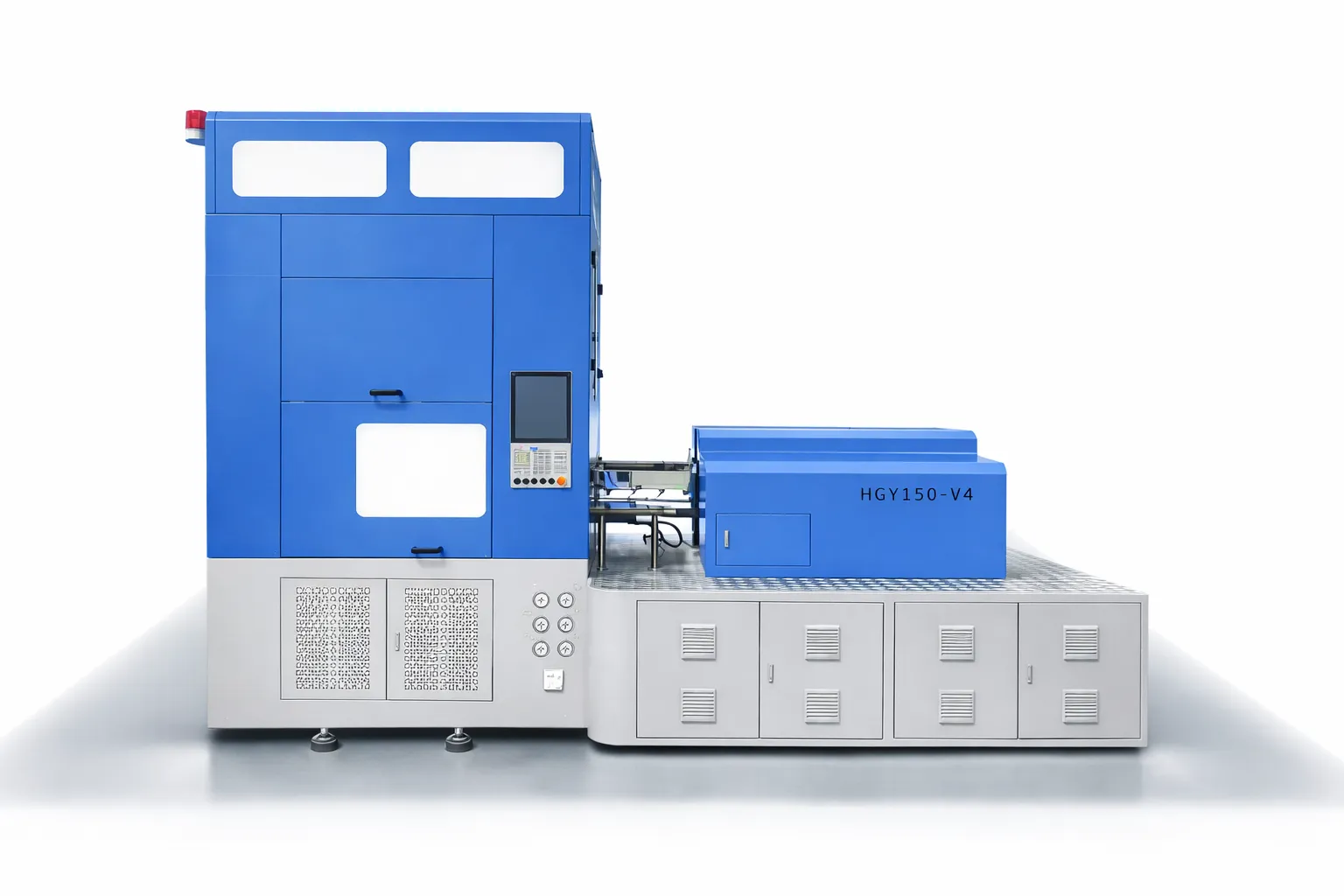
Korea’s national Smart Factory programme (스마트공장 보급·확산 사업) is the most directly applicable government support for Korean ISBM Industry 4.0 investment. The programme provides financial support for Korean manufacturers implementing Level 2 (Basic Smart Factory: real-time process monitoring + basic MES) through Level 4 (Advanced Smart Factory: AI-driven predictive quality and maintenance) digital manufacturing capabilities. Korean ISBM producers supplying pharmaceutical or K-Beauty brand customers — who require GMP digital process records and increasingly require Scope 3 emissions documentation — qualify for enhanced support rates under the healthcare and precision manufacturing preferential categories.
Korean Smart Factory Level 2 — the practical starting point for Korean ISBM Industry 4.0 — requires: real-time production monitoring (OEE display), process parameter logging (EV servo Ethernet connection to MES), and basic quality management (SPC for 2+ key variables). Investment cost for Korean SME ISBM operation: KRW 15–35M for Level 2 implementation (MES software + EV servo Ethernet connectivity + OEE dashboard). Korean government subsidy: KRW 4.5–17.5M (30–50% of investment). Net Korean producer investment: KRW 10.5–17.5M. Payback: with OEE improvement of 5–8 percentage points (achievable within 12 months of Level 2 implementation at a typical Korean ISBM SME), the additional production value at 10M units/year Korean beverage at KRW 30/bottle margin exceeds KRW 50M/year — payback in 3–4 months.
Korean ISBM producers qualifying for the Smart Factory programme must submit a digitisation plan specifying the current state (manual production tracking, paper-based QC records), the target state (real-time OEE, EV servo SPC, predictive maintenance alerts), and the investment itemisation. Korean Ever-Power supports Korean producers in preparing this documentation and connecting the machine’s EV servo Ethernet output to qualifying MES platforms. The complete Korean Ever-Power 4-Station ISBM Machine Range supports all three Smart Factory connectivity methods (USB export, Ethernet TCP/IP, and OPC-UA industrial IoT protocol on request) as standard EV servo platform features.
Frequently Asked Questions
Industry 4.0 Implementation Support
Korean ISBM OEE Below 75%? EV Servo Data Not Connected to Your Quality System?
Korean Ever-Power provides OEE baseline assessment, EV servo Ethernet connectivity configuration, SPC control chart setup, predictive maintenance threshold calibration, and Korean Smart Factory programme subsidy application support.