
Scaling Up: Korean Ever-Power’s HGY650-V4 for 5L–20L Water Jugs, Edible Oil Containers, and Large-Format Food Packaging
Producing a flawless 12-litre water jug or 5-litre edible oil container is genuinely difficult engineering. Preform weight crosses 200 g. Neck-finish diameter approaches 60 mm. Mould pressure-drop across the cavity becomes a thermodynamic challenge no compact machine can overcome. The HGY650-V4 — Korean Ever-Power’s 28-tonne heavy-duty 4-station platform — is the dedicated answer for Korean producers serving large-format water, edible oil, and food packaging at scale.
Large-format ISBM (5L–20L containers, 200–900 g preforms, neck diameters up to 140 mm) is a fundamentally different engineering domain than standard bottle production. Required clamping force scales with cavity projected area — a single 12L water jug cavity at 3.0 MPa blow pressure imposes 240 kN of separation force. A 4-cavity 5L edible oil mould easily approaches 400 kN. Compact ISBM platforms simply cannot deliver this clamping safely.
Korean Ever-Power’s HGY650-V4 is the dedicated 4-station heavy-duty platform: 400 kN dual-servo clamping with high-pressure compensation, 43 kW total servo power, screw plasticizing capacity for 200+ gram preforms, integrated thermal architecture supporting wide neck-finish geometries, and a 28-tonne machine mass that absorbs the dynamic loads of large-bottle production without vibration drift. Korean F&B majors — CJ CheilJedang, Sajo, Ottogi, Daesang, Sempio, Lotte Chilsung — produce their large-format SKUs on this class of platform.
1. The Korean Large-Format Packaging Market
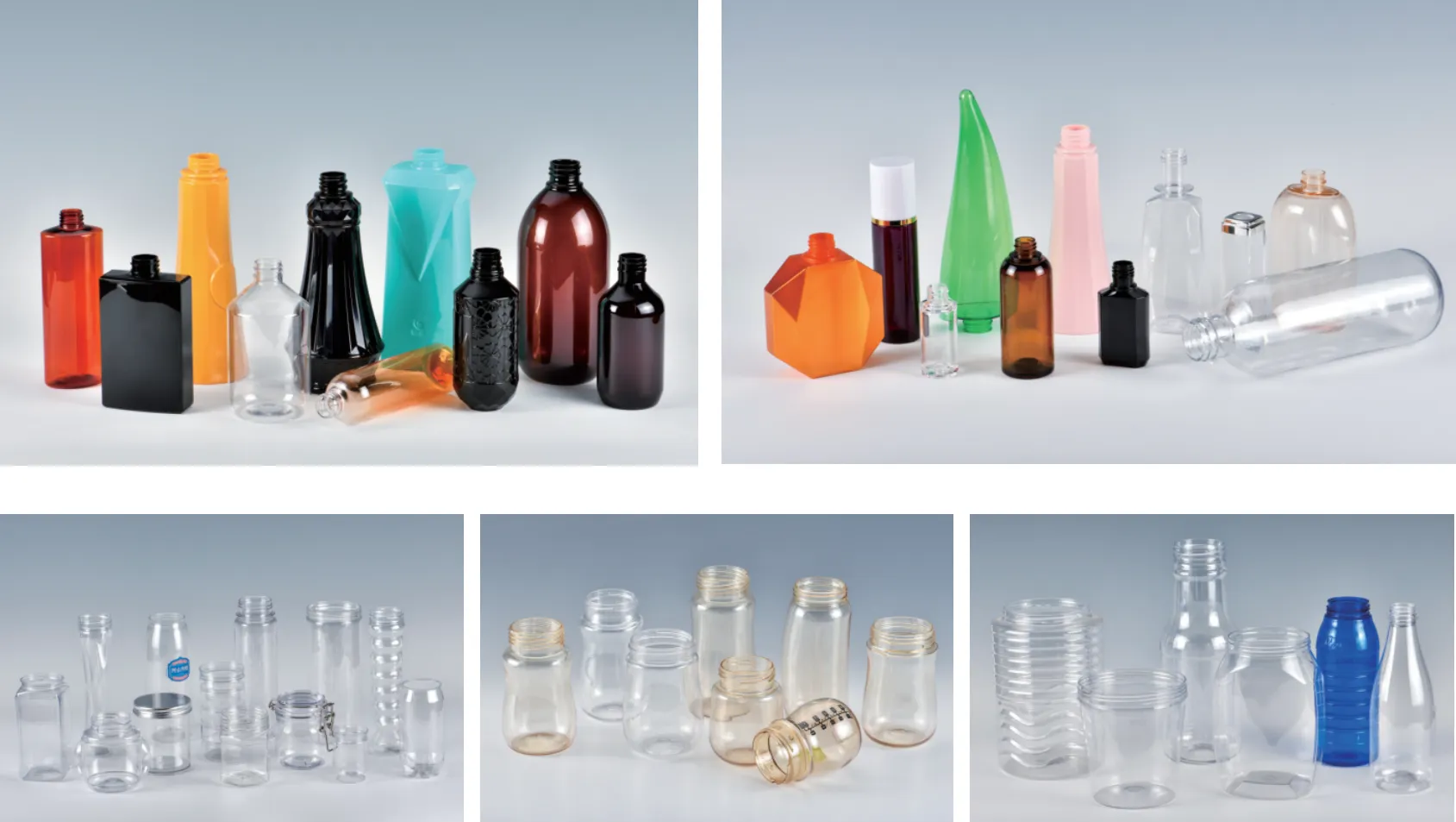
Korean large-format plastic packaging — containers above 5 litres — serves three distinct industrial segments, each with its own technical requirements but sharing a common machinery floor: only heavy-duty ISBM platforms can produce these containers economically with the surface quality and dimensional precision Korean buyers demand.
Bulk Water and Beverage Bottling
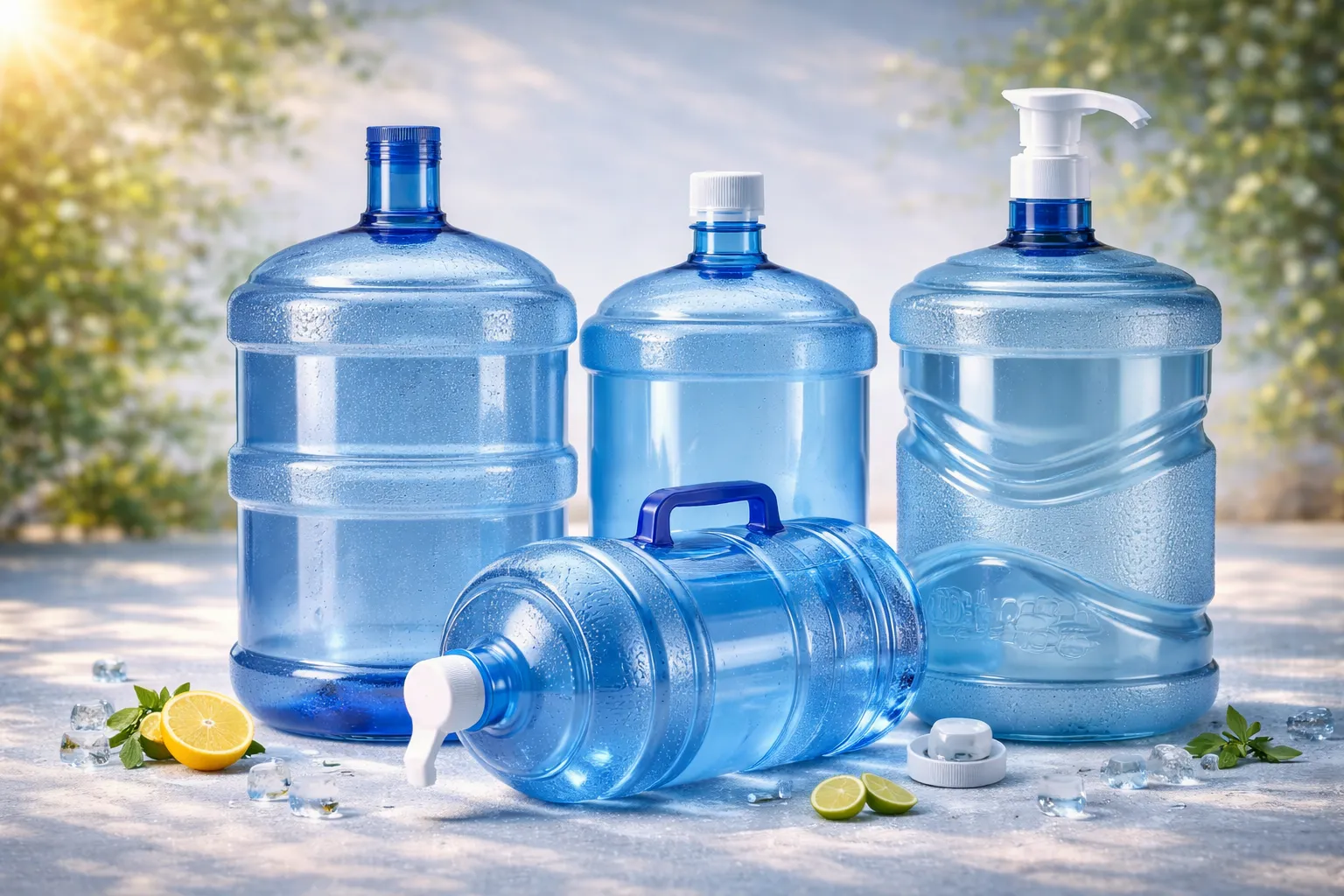
Korean home and office water delivery — dominated by Lotte Chilsung Beverage, Jeju Samdasoo, Pulmuone Esamuel, and Coway’s water filtration ecosystem — runs on standardized 12L and 19L water jugs with reusable cycle counts targeting 50–80 returns per jug. The structural and dimensional requirements (top-load resistance, neck-finish reusability, drop-test survival) are demanding, and Korean Ever-Power platforms supply this segment alongside imported alternatives.
Edible Oil and Cooking Liquid Packaging
Korean cooking oil, sesame oil, and condiment producers — CJ CheilJedang (Beksul), Sajo Industries, Ottogi, Sempio Foods, Daesang, Mulpure — produce extensive 1L, 1.8L, 5L, and bulk-format containers for retail and HoReCa channels. These containers face chemical-compatibility requirements (cooking oils permeate poorly through low-grade PET), oxygen-barrier specifications for shelf-life, and increasingly K-EPR rPET inclusion targets. The detailed engineering for cooking oil specialty production lives in our cooking oil & condiment bottle production guide.
Large-Format Food Containers
Korean kimchi producers, soy sauce manufacturers, and bulk food packers serving HoReCa channels increasingly use 4L–10L wide-mouth food jars in PET and PETG. CJ Bibigo, Sempio, Daesang Chung Jung Won, and Hetbahn parent companies all operate this large-format channel alongside their consumer-size SKUs.
2. Why Heavy Bottles Are Engineering’s Hard Mode
A 12L water jug shares almost nothing engineering-wise with a 500 ml soft-drink bottle except the resin label. Every parameter scales nonlinearly: preform mass scales with the cube of dimension, surface area scales with the square, but mould thermal mass and clamping force requirements scale even faster.
A 500 ml PET bottle uses a ~22 g preform that the injection screw can plasticize in ~0.8 seconds. A 12L water jug needs a ~280 g preform — roughly 13× the polymer volume — that requires 4–6 seconds of plasticizing time and substantially more screw torque to homogenize the melt. This is not a “scale up the small machine” problem. The injection screw geometry, barrel heater capacity, and screw drive must all be specifically engineered for large preform mass.
Beyond plasticizing, the entire downstream cycle must accommodate the larger thermal load: longer conditioning to homogenize the thicker preform wall, longer blow time for proper cavity fill, longer cooling time to solidify the larger bottle wall mass before ejection. Total cycle time on a 12L water jug typically runs 22–32 seconds vs. 8–12 seconds for a 500 ml bottle. Producers attempting to run heavy bottles on a compact machine that wasn’t designed for them produce slow cycles, inconsistent wall thickness, and premature equipment wear.
3. Preform Plasticizing: The 200+ Gram Challenge
For a 5L edible oil container with ~140 g preform or a 12L water jug with ~280 g preform, the injection screw must plasticize, homogenize, and inject a substantial polymer mass each cycle without thermal degradation, color separation, or wall-shear damage to the polymer chains.
Korean Ever-Power’s HGY650-V4 deploys a heavy-duty injection screw specifically engineered for 200+ gram preforms: larger L/D ratio (typically 24:1 or 26:1 vs. 18:1 on compact platforms) for sufficient melting and mixing length, higher screw torque from a dedicated injection servo, and barrel heater capacity sized for sustained throughput at high mass-flow rates. Combined with nano far-infrared barrel heating for thermal precision, the system delivers homogeneous melt at ±2°C across full plasticization cycles.
For producers running rPET in heavy-bottle production (relevant under K-EPR’s 30% mandate by 2027 and 50% by 2030), screw geometry matters even more — rPET’s variable IV (intrinsic viscosity) and broader thermal-history distribution demand additional mixing capacity to homogenize the melt. Korean Ever-Power’s heavy-duty screw geometry is rPET-validated up to 100% recycled content on suitable resin grades.
4. Wide-Neck Geometry: Mould Pressure-Drop Engineering
Standard 28 mm or 38 mm neck finishes for beverages and small food jars present negligible mould flow restriction. Large-format wide-neck containers — typically 55 mm, 63 mm, 96 mm, or even 140 mm openings for bulk food jars — present substantial mould pressure-drop challenges that compact ISBM platforms cannot overcome.
During the blow phase, compressed air at 2.0–3.5 MPa must enter the preform through the open neck and inflate the polymer outward against the mould cavity. With a wide neck and large cavity volume, the rate at which air can enter is constrained by neck geometry. Inadequate air-entry rate produces incomplete cavity fill — the bottle’s corners and bottom are underformed, wall thickness is uneven, and the bottle visibly fails QC.
Korean Ever-Power’s HGY650-V4 uses a high-flow pneumatic system with Parker high-pressure valves rated for sustained 3.5 MPa flow at the elevated mass-flow rates large-format bottles require. The same pneumatic architecture supports the dual-servo clamping and high-pressure compensation that prevents flash on these large parting-line projections. The full clamping engineering reasoning lives in our dual-servo clamping & high-pressure compensation analysis.
5. Clamping Force Math: Why 400 kN Is the Right Floor
For large-format ISBM, clamping force adequacy is the single most decisive equipment specification. Concrete calculations for typical Korean large-format SKUs:
5L edible oil container, 4-cavity layout: 90 mm × 200 mm projected area per cavity at 3.0 MPa blow pressure = 54 kN per cavity × 4 = 216 kN minimum separation force. Required clamping with 1.5× safety margin: 324 kN.
12L water jug, 2-cavity layout: 220 mm × 280 mm projected area per cavity at 3.0 MPa = 185 kN per cavity × 2 = 370 kN minimum. Required clamping: 555 kN — though 2-cavity heavy-jug production typically configures around 400 kN for moderate safety with optimized blow pressure profiles.
20L water/oil container, 1-cavity layout: Approximately 280 mm × 380 mm projected area at 3.0 MPa = 320 kN. Single-cavity layout simplifies the clamping requirement.
The HGY650-V4’s rated 400 kN clamping force, combined with high-pressure compensation circuit, comfortably handles all the above scenarios with appropriate cavity layouts. Lower-rated platforms (200–300 kN) cannot service this market segment safely. The systematic clamping-force selection methodology aligns with the cavity-count framework in our ISBM cavity count calculator.
6. HGY650-V4 Engineering Specifications & Capabilities
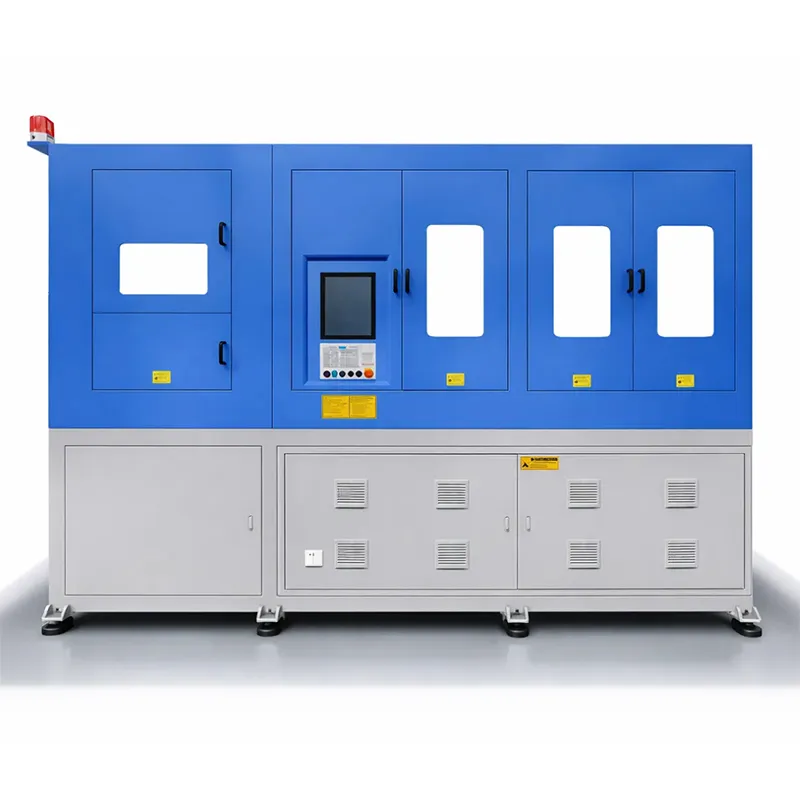
The Korean Ever-Power HGY650-V4 carries the following headline specifications:
Clamping force: 400 kN (40 tonnes-force) via dual-servo electric clamping with active high-pressure compensation. Suitable for 1–4 cavity layouts depending on bottle size.
Maximum bottle volume: 20L. Maximum bottle weight: 900 g. Maximum neck-finish diameter: 140 mm — accommodating the widest standard Korean food jar formats.
Total servo power: approximately 43 kW across all axes — clamping (×2), injection, stretch (heavy-duty), ejection, gate cutting, indexing.
Machine mass: 28 tonnes. The mass is functional, not incidental — it absorbs dynamic loads during heavy preform injection and large-cavity blow events without inducing vibration that would compromise dimensional precision on smaller compact platforms.
Material capability: PET (virgin and rPET up to 100%), HDPE (for some applications), PETG, PCTG, PP. The platform is engineered specifically for the materials Korean large-format producers actually use.
Footprint: approximately 7.2 m × 2.8 m main machine envelope. Larger than mid-range platforms, but still compact compared to Two-Step heavy-bottle alternatives requiring 200+ m². Component-level details are documented per our world-class BOM specification.
7. Edible Oil Container Production: CJ, Sajo, Ottogi, Sempio
Korean edible oil and condiment producers face specific technical requirements when producing 1.8L, 3L, and 5L primary packaging:
Oxygen Barrier & Chemical Compatibility
Cooking oils, especially refined sesame oil and specialty oils marketed by CJ CheilJedang, Ottogi, and Sempio, are sensitive to oxygen-induced oxidation across shelf life. Wall-thickness optimization on PET containers preserves barrier properties; in some applications multilayer EVOH or active-barrier resins are specified. The HGY650-V4 supports multilayer mould configurations where required.
Top-Load Strength for Stacking
Retail logistics typically stack 5L oil containers 3–4 high in shipping cartons. Top-load strength specifications run 220–340 N depending on retailer requirements. This translates directly into wall thickness distribution and biaxial orientation precision — the integrated 4-station thermal architecture is what delivers consistent top-load strength bottle-after-bottle.
Handle Integration for Larger Formats
3L and 5L oil containers typically incorporate integrated PET handles formed during blow molding. This requires precise mould geometry and conditioning thermal profile to produce a structurally sound handle that doesn’t separate during retail handling. Korean Ever-Power’s mould engineering team has extensive experience with handle-integrated geometries for the Korean food-grade market — the systematic methodology lives in our 9-factor mould selection framework.
8. 5L–20L Water Jug Production for Korean Bottlers
Korean bulk water bottling — Lotte Chilsung Beverage, Jeju Samdasoo, Pulmuone Esamuel, Coway, and the home-delivery channel served by these brands — typically uses 12L and 19L PET jugs designed for 50–80 reuse cycles. The economics depend critically on durability per jug.
Reusability Engineering
Reusable PET jugs face washing and sanitization cycles that subject the bottle to thermal stress, mechanical handling, and chemical exposure. Each cycle progressively damages the polymer; reusability life is limited by accumulated damage. Quality wall thickness uniformity at production time directly extends reusable life — a 5% weight tolerance vs. a 2% tolerance produces substantially different cycle survival statistics.
Top-Load and Drop-Test Survival
12L water jug top-load specifications typically require 380–450 N capability empty; full-jug drop test from 0.6 m onto concrete must survive without rupture. These specifications translate into wall-thickness distribution requirements that only properly tuned 4-station ISBM thermal architecture can deliver consistently.
Neck Finish Durability
The neck finish on a reusable water jug experiences cap-on / cap-off cycles equal to total reuse count. Threading must be dimensionally stable across this lifecycle. Korean Ever-Power’s mould engineering and the HGY650-V4’s clamping precision deliver neck-finish tolerances under 0.05 mm — sufficient for reusable specification.
9. Wall Thickness Distribution: The Top-Load Problem
The single most demanding quality parameter on large-format containers is wall thickness distribution. Unlike small bottles where uneven walls produce aesthetic defects, on 5L–20L containers uneven walls produce structural failures: insufficient top-load capability causing collapse during stacking, weak zones rupturing during drop tests, or premature failure during reusable cycle.
Wall thickness distribution is governed primarily by preform thermal profile during stretching. For a 12L water jug, the preform’s wall is roughly 8–12 mm thick — through-thickness temperature uniformity across this dimension is the engineering challenge. The 4-station thermal architecture with dedicated conditioning station delivers this uniformity; 3-station platforms attempting heavy-bottle work produce visible wall-thickness drift that proves structural weakness in subsequent testing.
For producers facing chronic wall-thickness variation problems on large-format work, the diagnostic approach mirrors our defect troubleshooting guide for uneven wall thickness, with the additional consideration that platform clamping adequacy plays a more decisive role on large-format than on small-format work.
10. Korean Heavy-Duty Implementation Path
From decision to commercial heavy-format production typically runs 7–11 months on a structured Korean Ever-Power implementation:
Stage 1 — Customer SKU and volume analysis (weeks 1–3). Korean Ever-Power engineers analyze your target SKU portfolio (5L oil bottle, 12L water jug, 19L bulk container, etc.), required cavity layouts, projected volumes, and resin material plan. Output: machine specification, mould plan, ROI math.
Stage 2 — Turnkey machine + mould manufacture (weeks 4–18). HGY650-V4 manufacture at Ansan-si runs roughly 100–120 days; large-format mould tooling parallel manufacture (typically heavier and more complex than small-bottle moulds, 14–22 weeks).
Stage 3 — Pre-Acceptance Test (week 19–20). Customer-attended PAT at Ansan-si with full bottle production and dimensional/structural validation against contract specifications.
Stage 4 — Installation (weeks 21–23). Heavy machine installation requires substantial floor preparation (28-tonne machine mass demands appropriate concrete loading capacity). Korean Ever-Power engineers provide site survey and floor specification 8 weeks before delivery.
Stage 5 — Production stabilization (weeks 24–32). Heavy-format cycles typically take longer to optimize than small-bottle work because the larger thermal mass means each parameter change has longer cycle-to-cycle response time. Full rated throughput typically achieved by week 30. Korean Ever-Power’s ROI calculator framework quantifies the ramp economics.
Frequently Asked Questions
Q1. Can the HGY650-V4 also produce smaller bottles below 5L?
Technically yes, but it’s typically over-specified for that work. The HGY650-V4 is purpose-engineered for 5L–20L production; running 1L bottles on it is wasteful of the platform’s capacity and energy. Producers with mixed portfolios usually run heavy SKUs on HGY650-V4 and small SKUs on HGY150-V4 / HGY200-V4 in parallel — the most economical configuration.
Q2. What’s typical cycle time for a 12L water jug?
22–28 seconds for a 2-cavity layout on the HGY650-V4 with optimized process recipes. For 5L edible oil 4-cavity layouts, 18–24 seconds is typical. These figures assume virgin PET; rPET inclusion adds 2–4 seconds depending on resin grade and percentage.
Q3. Can the HGY650-V4 handle integrated handles on 5L bottles?
Yes — the platform’s clamping force and conditioning architecture support handle-integrated mould geometries common in 3L–5L Korean cooking oil packaging. Mould design must be specifically engineered for handle integration; Korean Ever-Power’s mould engineering team has extensive experience with these geometries for Korean F&B major customers.
Q4. How does the HGY650-V4 perform on K-EPR rPET requirements?
Excellently. The heavy-duty plasticizing screw and integrated thermal control are specifically suited to rPET’s higher processing variability. Korean producers running 30%+ rPET (mandated from 2027) and approaching 50% (mandated 2030) report stable production with appropriate resin grade selection. The platform supports K-EPR compliance throughout the 2030 timeline.
Q5. What floor preparation is required for the 28-tonne machine?
Korean Ever-Power supplies floor loading specifications 8 weeks before delivery. Typical Gyeonggi-do industrial floors built to KS F 4002 standard support the HGY650-V4 with no additional reinforcement. Older facilities may require local concrete reinforcement of 2–4 m² under each machine foot. Korean Ever-Power’s commissioning team includes a site survey at no charge during the order placement phase.
Ready for Serious Large-Format Production?
Korean Ever-Power’s Ansan-si engineering team will analyze your large-format SKU portfolio, recommend the correct HGY650-V4 cavity configuration, design heavy-duty mould tooling for your specific bottle geometries, and structure the implementation plan that gets you to first commercial shipment in 7–11 months.