TECHNICAL DEEP DIVE · ENERGY EFFICIENCY GUIDE
The All-Servo Revolution: How Korean EV Series ISBM Machines Slash Energy Costs by 40%
Korean Ever-Power EV (Electric/Servo) Series ISBM machines reduce energy consumption by up to 40% through 10 independent servo motor control systems and Nano far-infrared heating technology. Combined with Yaskawa servo motors, Parker pneumatics, and Korean engineering precision, the EV architecture delivers ESG-compliant production at substantially lower OPEX than traditional hydraulic platforms.
TL;DR — Quick Answer
Korean Ever-Power’s EV (All-Servo) Series ISBM machines deliver up to 40% energy savings versus traditional hydraulic platforms through three converging technologies: (1) Up to 10 independent servo motor control systems (Yaskawa, Mitsubishi, or Inovance) operating on power-on-demand basis — eliminating idle energy waste of constant-running hydraulic pumps. (2) Nano far-infrared energy-saving heating rings (10-15KW configurations) directing thermal radiation inward for rapid uniform plasticizing while preventing ambient heat loss. (3) Dual-servo clamping with high-pressure compensation eliminating “flash” defects through micron-level positional accuracy. Korean Ever-Power EV platforms (HGY150-V4-EV premium, HGY50-V3-EV compact) additionally deliver 22-28 year service life (4-8 years longer than equivalent hydraulic), cleanroom-ready operation for pharmaceutical and premium K-beauty applications, and full Korean engineering support throughout equipment lifecycle. Annual OPEX savings of USD 25-50K per platform at current Korean industrial electricity pricing translate to typical 24-36 month EV upgrade payback for high-utilization operations.
In This Guide
- The Energy Crisis in Plastic Manufacturing
- The “Energy Drain” of Traditional Hydraulic ISBM
- Korean EV Series Architecture Overview
- 10 Independent Servo Systems Explained
- Nano Far-Infrared Heating Technology
- Secondary Benefits: Precision & Cleanroom Ready
- Service Life Extension via EV Architecture
- Calculating Your OPEX Reduction
- Frequently Asked Questions
- Conclusion
1. The Energy Crisis in Plastic Manufacturing
In today’s highly competitive plastic packaging industry, raw material and energy costs are the two largest ongoing operational expenses (OPEX) for any manufacturing plant. As global electricity prices surge — driven by post-pandemic supply chain disruptions, geopolitical energy market volatility, and Korean government industrial pricing reforms — operating energy-hungry legacy hydraulic blow molding machines is rapidly destroying profit margins.
Korean industrial electricity pricing has increased approximately 30-45% since 2022, with similar or larger increases across major export markets including EU (45-65% increase), United States (20-35% increase), and Middle East (15-25% increase). For Korean K-beauty contract fillers, beverage producers, and pharmaceutical manufacturers operating multiple ISBM platforms 16-24 hours daily, energy cost has shifted from a manageable line item to a strategic threat to commercial viability.
Simultaneously, corporate ESG (Environmental, Social, and Governance) mandates have become substantially stricter. Major Korean K-beauty brands like Amorepacific and LG H&H, food brands like CJ CheilJedang, and global retail customers like Costco, Walmart, and EU pharmacy chains increasingly require packaging suppliers to document carbon footprint reduction initiatives, energy efficiency certifications, and renewable energy integration. Korean producers operating legacy hydraulic ISBM platforms cannot meet these ESG documentation requirements without major capital investment in energy-efficient replacement equipment.
At Korea Ever-Power, we recognized that the future of Injection Stretch Blow Molding must be electric. We engineered our EV (Electric/Servo) Series to tackle the energy crisis head-on while simultaneously addressing precision, cleanroom compliance, and equipment lifespan dimensions critical for Korean producer competitive success.
2. The “Energy Drain” of Traditional Hydraulic ISBM
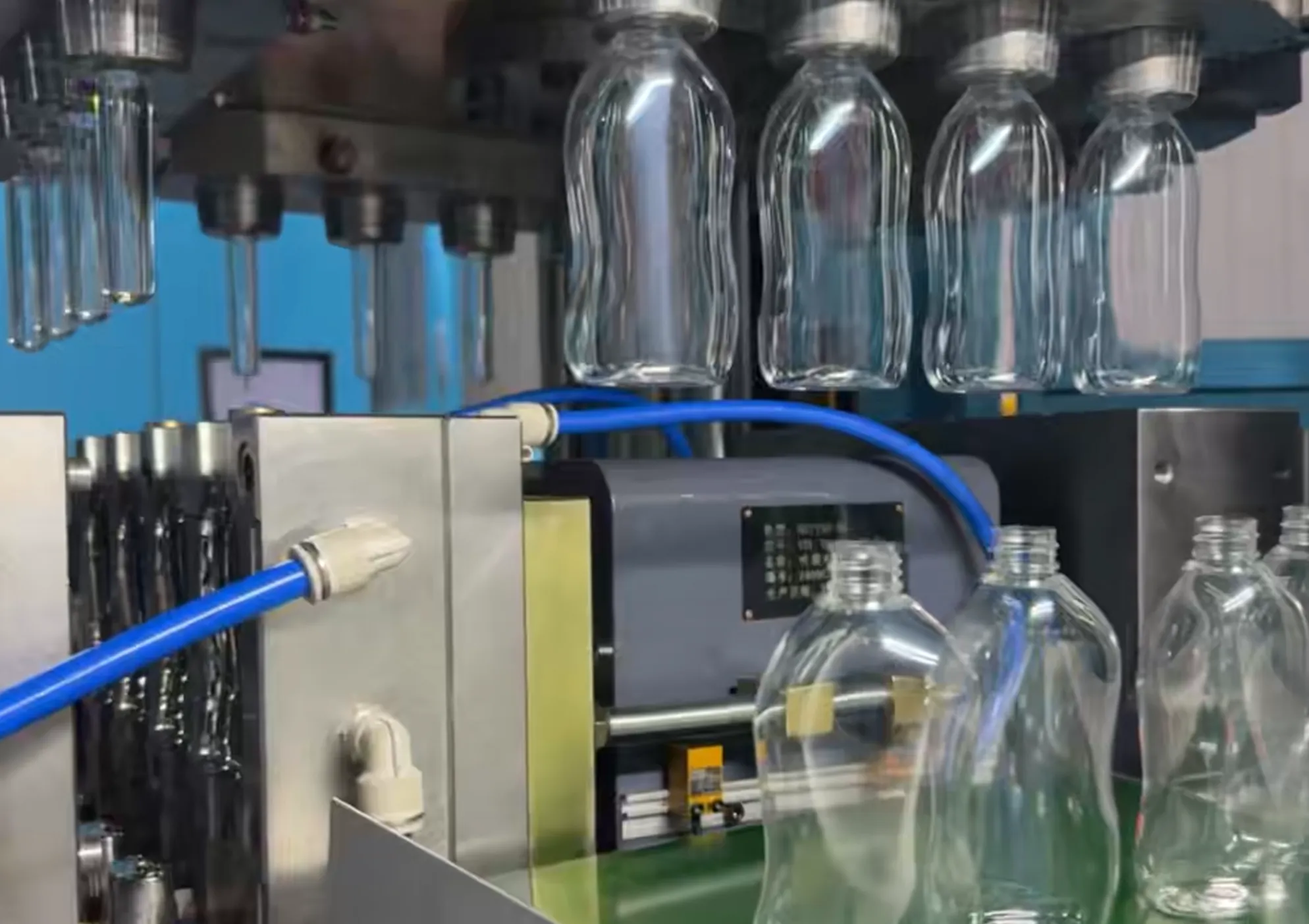
Traditional ISBM machines rely heavily on hydraulic systems powered by fixed-displacement induction motors. These motors run continuously at full speed, pumping hydraulic oil constantly — even when the machine is idle, cooling, or waiting for a cycle to finish. The fundamental energy waste pattern is built into the hydraulic architecture itself rather than being a maintenance issue or operational inefficiency.
| Energy Loss Source | Hydraulic Architecture | EV Architecture |
|---|---|---|
| Pump idle losses | Continuous full-speed operation | Eliminated (power-on-demand) |
| Heat generation in oil | Significant unwanted heat | No oil → no heat |
| Chiller energy compensation | Heavy chillers for oil cooling | Light chiller (mould only) |
| Heating element loss | Standard ceramic heaters | Nano far-infrared (focused) |
| Total energy per bottle | Baseline (100%) | ~60% (40% saved) |
This continuous hydraulic operation creates a vicious cycle of energy inefficiency: hydraulic pumps consume electricity continuously regardless of production cycle phase, the constant operation generates substantial unwanted heat in hydraulic oil, the heated oil requires heavy-duty chillers running additional electricity to cool the system, and the chillers themselves dump waste heat into the factory environment requiring HVAC compensation in summer months. By the time energy converts to actual bottle production work, only 40-50% of input electricity remains productive.
For Korean producers operating 4-8 ISBM platforms 16-24 hours daily, the cumulative hydraulic energy waste reaches USD 100K-400K annually per facility at current Korean industrial electricity pricing. Multiply across multi-decade equipment lifecycle and the financial impact becomes substantial — fundamentally restructuring competitive positioning relative to producers operating modern energy-efficient equipment.
3. Korean EV Series Architecture Overview
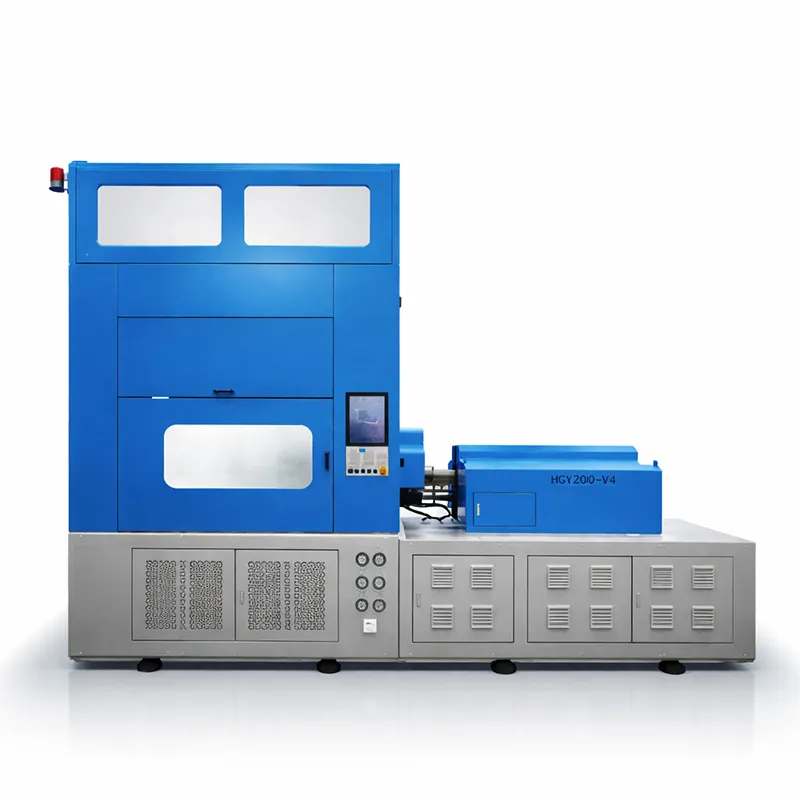
Korean Ever-Power EV machines completely redesign the power distribution system. We don’t use one central hydraulic pump powering all functions through pressure-based force transmission — instead, we deploy a localized, highly intelligent network of independent servo drives. Each servo controls a specific machine function with precision power matching to actual operational requirements.
The EV (All-Servo) Series spans the Korean Ever-Power catalog from compact precision platforms through high-volume production configurations. The compact HGY50-V3-EV precision platform serves smaller K-beauty serum, pharmaceutical, and specialty applications with 3-station efficiency. The mainstream HGY150-V4-EV premium 4-station platform serves diverse mid-volume premium production including K-beauty, pharmaceutical, and food applications requiring specialty material handling.
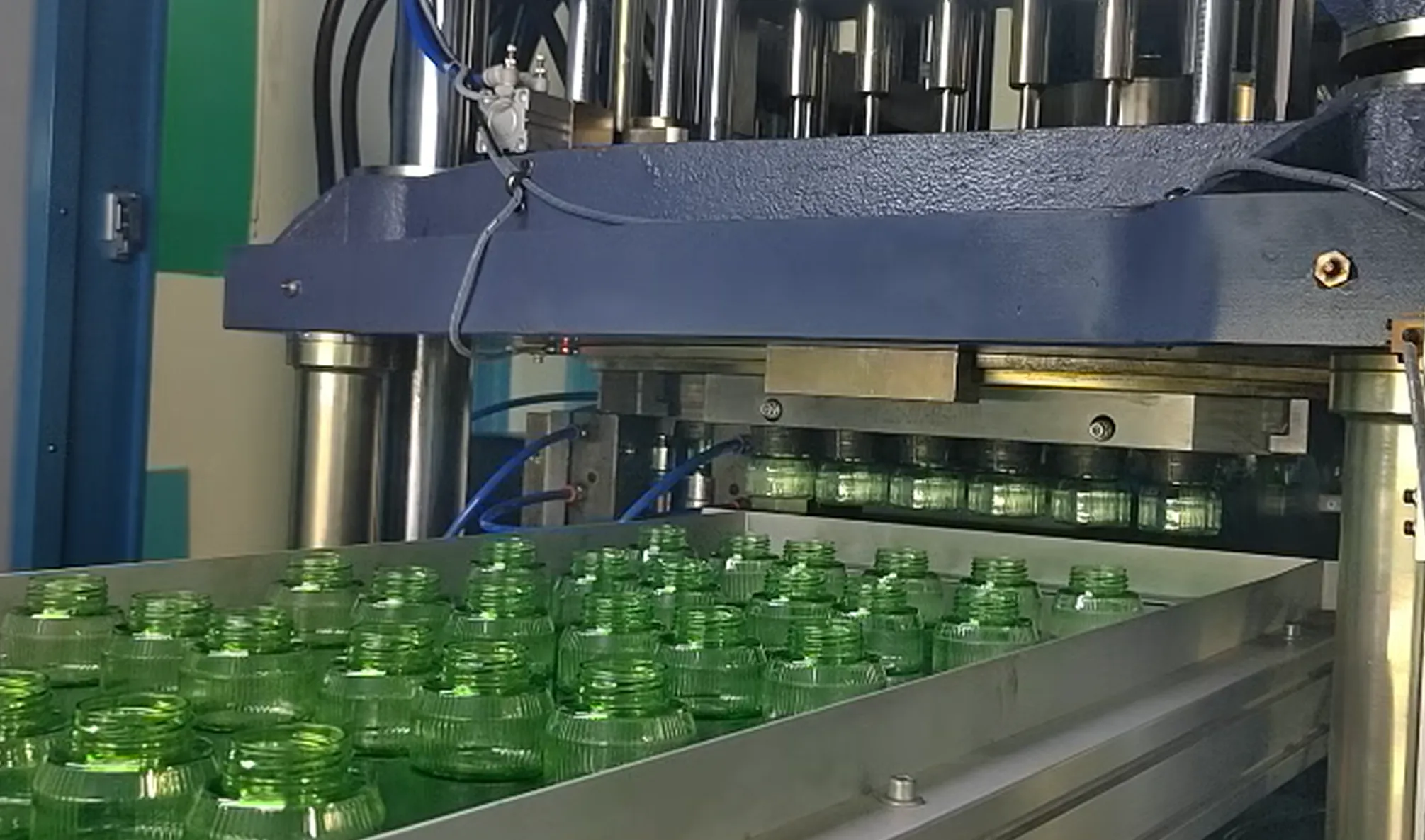
Both EV platforms share the core architectural advantages: independent servo motor control across each major movement axis, Nano far-infrared heating technology, dual-servo clamping with high-pressure compensation, and Korean engineering precision delivering Japanese-equivalent operational performance at 25-35% capital cost savings. The EV architecture extends platform service life by 4-8 additional years versus equivalent hydraulic configurations through elimination of hydraulic component wear cycles entirely.
4. 10 Independent Servo Systems Explained
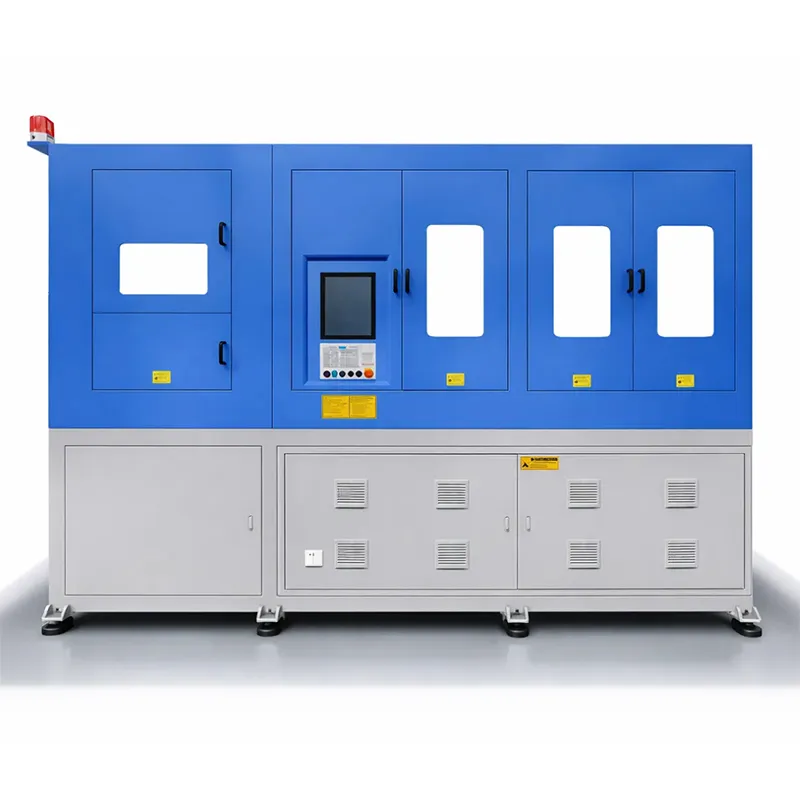
Take Korean Ever-Power’s HGY150-V4-EV as an example. It is equipped with up to 10 independent servo motor control systems utilizing top-tier servo motor brands including Japan Yaskawa, Mitsubishi, and Inovance. Each servo motor is dedicated to a specific machine movement function, operating on a strict “power-on-demand” basis.
| Servo Motor Function | Operation Pattern | Energy State |
|---|---|---|
| Turntable rotation | Active during station change | ~85% time near-zero power |
| Injection screw drive | Active during injection phase | ~70% time near-zero power |
| Mould clamping (left) | Active during clamp phases | ~80% time near-zero power |
| Mould clamping (right) | Active during clamp phases | ~80% time near-zero power |
| Stretch rod drive | Active during stretch phase | ~90% time near-zero power |
| Take-out conveyor | Active during ejection | ~85% time near-zero power |
| Tail-cutting servo (4-station) | Active during gate cutting | ~95% time near-zero power |
| Auxiliary movements (3 systems) | Various operational events | ~85% time near-zero power |
Instead of a central pump running constantly, each servo motor consumes electricity only when actively moving its dedicated function. The servos instantly drop to near-zero power consumption during the holding and cooling phases that comprise approximately 70-90% of the production cycle. This intelligent power mapping eliminates idle energy waste completely while delivering Japanese-equivalent or superior operational precision.
The Yaskawa, Mitsubishi, and Inovance servo motor selection reflects Korean Ever-Power’s commitment to global premium component sourcing. These servo brands deliver millisecond-precision positioning, 12-18 year typical service life, and industry-leading reliability matching Japanese ISBM equipment quality benchmarks. Combined with Korean precision manufacturing of the platform itself, the EV Series produces equipment quality that competes directly with Japanese OEM alternatives at substantially lower capital cost.
5. Nano Far-Infrared Heating Technology
Energy loss doesn’t just happen in the motors and hydraulic systems — it happens in the injection barrel and conditioning station heating systems. Standard resistive ceramic heater bands lose a massive percentage of their heat to the ambient factory air through radiation, conduction through the barrel exterior, and convection from the heater band surfaces.
Korean Ever-Power EV machines are equipped with Nano Far-Infrared Energy-Saving Heating Rings delivering 10KW to 15KW of power depending on the model and platform size. This advanced heating technology directs thermal radiation inward toward the polymer melt rather than radiating heat in all directions like standard ceramic heaters.
The directional heating delivers three converging benefits. First, rapid uniform plasticizing of the resin through targeted thermal energy transfer, reducing heating time and improving cycle consistency. Second, prevention of heat loss to the ambient factory environment — the barrel exterior runs significantly cooler than equivalent ceramic-heated platforms because thermal energy stays inside the barrel rather than escaping outward. Third, reduced HVAC compensation requirement in factory environments since the heating system doesn’t dump waste heat into the production floor air.
The result is a system where the barrel stays hot, the ambient factory temperature stays cool, and the electric meter slows down significantly. Combined with the servo motor power-on-demand approach, the Nano far-infrared heating contributes meaningfully to the cumulative 40% energy savings Korean Ever-Power EV Series delivers versus traditional hydraulic alternatives. For comprehensive maintenance framework supporting EV platform energy efficiency throughout service life, see our 5-tier preventive maintenance framework.
6. Secondary Benefits: Precision & Cleanroom Ready
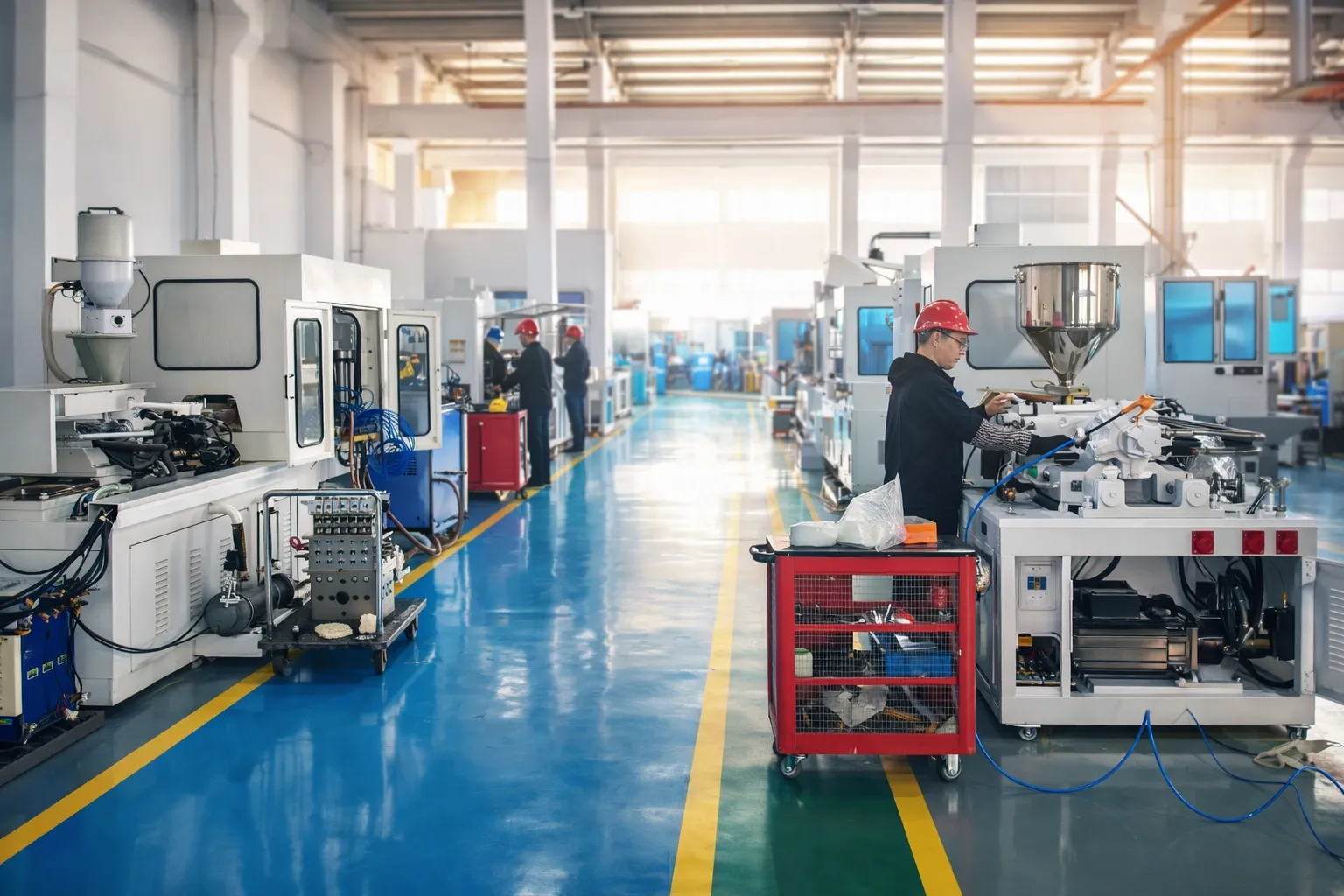
The shift to all-servo architecture doesn’t just save money — it upgrades the entire quality class of your production while opening previously inaccessible market segments. Three secondary benefits compound the EV Series value proposition beyond pure energy savings.
| Secondary Benefit | Hydraulic Baseline | EV All-Servo Advantage |
|---|---|---|
| Positional accuracy | ±0.10mm hydraulic | ±0.05mm servo precision |
| Flash defect rate | 1-3% (hydraulic clamp drift) | <0.5% (dual-servo + compensation) |
| Hydraulic oil contamination | Inevitable oil mist | Eliminated (no oil) |
| Cleanroom suitability | ISO 8 challenge | ISO 7 compatible |
| Maintenance frequency | High (oil + seals) | Lower (no hydraulic upkeep) |
Micron-level precision: Servo motors provide absolute positional accuracy through encoder feedback and direct drive coupling. Combined with Korean Ever-Power’s Dual Servo Motor Mould Clamping System with High-Pressure Compensation, the machine locks the mould with unyielding force throughout the high-pressure blow phase. This eliminates “flash” (parting line defects) and guarantees uniform wall thickness, even for complex PC, Tritan, and PETG containers used in premium K-beauty and pharmaceutical applications.
Medical and food-grade cleanroom ready: Hydraulic machines inevitably suffer from oil mist, micro-leaks, and seal degradation creating contamination risks unsuitable for cleanroom production. By drastically reducing or eliminating hydraulic oil dependency, Korean Ever-Power EV machines support cleanroom production standards including pharmaceutical eye drop bottles, infant formula containers, and premium K-beauty applications. For comprehensive pharmaceutical GMP production guidance, see our pharmaceutical GMP production guide.
World-class durability: With American Parker high-pressure valves, Taiwan AirTAC pneumatic cylinders, NSK Japan precision lead screws, and Yaskawa/Mitsubishi servo motors, the EV Series ensures 24/7 stable production with minimal maintenance downtime. The premium component selection delivers Japanese-equivalent reliability throughout 22-28 year platform service life.
7. Service Life Extension via EV Architecture
Korean Ever-Power EV Series platforms deliver substantially longer operational service life than equivalent hydraulic configurations. The lifespan extension stems from elimination of hydraulic component wear mechanisms that progressively degrade traditional ISBM platforms throughout their operational lifecycle.
| Drive Architecture | Korean Ever-Power Service Life | Extension vs Hydraulic |
|---|---|---|
| Hydraulic (traditional) | 15-20 years | Baseline |
| Hybrid (electro-hydraulic) | 18-22 years | +2-3 years |
| EV (full-servo) | 22-28 years | +4-8 years |
The 4-8 year service life extension transforms total cost of ownership economics. For Korean producers planning multi-decade equipment investment, the extended lifespan delays capital reinvestment cycles, supports longer customer relationship continuity, and amortizes equipment cost across more production volume. Combined with the 40% energy savings throughout the extended lifecycle, EV Series platforms deliver superior 15-year and 20-year TCO economics that mainstream hydraulic alternatives cannot match.
The lifespan advantage stems from three converging factors. First, elimination of hydraulic seal wear — typical hydraulic platforms require seal replacement every 3-5 years; EV platforms eliminate this maintenance entirely. Second, elimination of hydraulic pump degradation — typical 8-12 year hydraulic pump lifespan no longer applies. Third, elimination of proportional valve drift — control precision remains stable throughout EV platform service life rather than degrading over time as hydraulic valves do.
8. Calculating Your OPEX Reduction
Upgrading to a Korean Ever-Power EV Series ISBM machine is not just an equipment purchase — it is a financial strategy. The 40% reduction in monthly energy bill compounds across 22-28 year platform service life producing substantial cumulative savings. Understanding the calculation helps Korean producers structure compelling capital justification for boards, CFOs, and ESG committees.
| OPEX Calculation Component | Hydraulic Baseline | Korean EV Series |
|---|---|---|
| Monthly electricity (typical) | USD 5,500-9,000 | USD 3,300-5,400 |
| Annual electricity savings | Baseline | USD 25K-45K saved |
| Hydraulic maintenance savings | USD 8K-15K annually | USD 5K-8K saved |
| Chiller energy compensation | USD 4K-8K annually | USD 3K-6K saved |
| Service life extension | 15-20 years | +4-8 years |
| Total annual OPEX reduction | — | USD 33K-59K |
| EV upgrade payback period | — | 24-36 months |
For Korean K-beauty contract fillers and beverage producers operating multiple platforms, the cumulative OPEX reduction reaches USD 100K-300K annually per facility with corresponding 24-36 month payback on the EV upgrade premium versus equivalent hydraulic configurations. The financial math becomes increasingly compelling as Korean industrial electricity pricing continues its long-term upward trajectory and as ESG corporate sustainability requirements escalate from voluntary commitments to mandatory documentation.
Beyond direct financial returns, EV Series platforms deliver strategic positioning benefits: ESG compliance documentation supporting Korean and global retail customer requirements, carbon footprint reduction enabling Korean K-EPR (Extended Producer Responsibility) compliance positioning, premium quality consistency supporting K-beauty and pharmaceutical brand positioning, and Korean engineering ecosystem support throughout 22-28 year platform service life. For comprehensive ROI calculator framework supporting EV upgrade business case development, see our ISBM ROI calculator framework.
9. Frequently Asked Questions
Q: Is the 40% energy savings claim independently verified?
The 40% energy savings figure represents typical comparison between Korean Ever-Power EV Series platforms and equivalent traditional hydraulic ISBM machines under similar operational parameters (production volume, bottle format, material). Actual savings vary 30-45% depending on specific operational conditions including utilization rate, bottle complexity, ambient factory temperature, and material processing requirements. Korean Ever-Power can provide detailed energy consumption documentation matched to specific customer operational parameters during pre-purchase engineering consultation, supporting customer ESG documentation and capital justification analysis. Independent third-party energy audits are also available through Korean engineering consultancy partnerships for major customer projects.
Q: Does EV Series cost significantly more than hydraulic alternatives?
EV Series platforms typically command 15-30% capital premium versus equivalent hydraulic configurations. For typical 4-station 8-cavity platforms, EV pricing runs USD 600-800K versus hydraulic USD 500-700K — representing USD 100-150K additional capital. However, the 40% energy savings combined with 4-8 year service life extension produces 24-36 month payback on the EV premium. Over 22-28 year EV platform lifecycle, total cost of ownership favors EV substantially through cumulative energy savings, reduced maintenance, extended service life, and avoided mid-cycle hydraulic platform replacement. For Korean producers planning multi-decade operations, EV Series delivers superior total economics despite higher upfront price.
Q: Can EV Series platforms support specialty materials like Tritan and PPSU?
Absolutely. EV Series platforms in 4-station configuration (HGY150-V4-EV) include the dedicated Station 2 temperature conditioning capability essential for specialty material processing. The combination of full-servo precision plus differential temperature control delivers superior specialty material handling versus equivalent hydraulic platforms. For Korean producers requiring Tritan baby bottle production, PPSU medical applications, or PETG K-beauty premium serums, the EV 4-station configuration is the optimal choice combining specialty capability with energy efficiency. The 3-station EV configuration (HGY50-V3-EV) handles standard PET applications with energy efficiency but lacks the conditioning station for full specialty material support.
Q: How do EV Series platforms support cleanroom production?
EV Series cleanroom suitability stems from elimination of hydraulic oil dependency. Traditional hydraulic ISBM machines inevitably produce oil mist, micro-leaks, and seal degradation creating particulate contamination unsuitable for ISO 7-8 cleanroom standards. EV Series platforms use no hydraulic oil for primary motion control, eliminating these contamination sources entirely. Combined with appropriate facility-level cleanroom infrastructure (HEPA filtration, gowning protocols, environmental monitoring), EV Series supports pharmaceutical eye drop bottles, infant formula containers, premium K-beauty applications, and similar cleanroom-required production. Korean Ever-Power can provide detailed cleanroom integration documentation supporting customer GMP compliance and validation requirements.
Q: Can existing hydraulic ISBM platforms be retrofitted to EV?
Generally not economically viable. Converting hydraulic ISBM platforms to all-servo architecture requires fundamental redesign of motion control systems, replacement of hydraulic pump/valve/actuator infrastructure, control system replacement, and validation testing. The retrofit cost typically reaches 70-90% of new EV platform pricing without delivering equivalent service life or performance benefits. For Korean producers operating aging hydraulic platforms, the optimal economic path is platform replacement with new Korean Ever-Power EV Series configurations rather than retrofit attempts. Korean Ever-Power supports the transition through engineering consultation, pilot SKU testing, and customer migration project planning matched to specific operational requirements.
10. Conclusion
Korean Ever-Power EV (All-Servo) Series ISBM machines deliver up to 40% energy savings versus traditional hydraulic platforms through three converging technologies: 10 independent servo motor systems operating on power-on-demand basis, Nano far-infrared heating directing thermal energy inward toward the polymer melt, and dual-servo clamping with high-pressure compensation eliminating flash defects. The energy savings combine with 4-8 year service life extension, micron-level precision, and cleanroom-ready operation to produce comprehensive value proposition exceeding pure energy economics.
For Korean producers facing rising electricity costs, escalating ESG documentation requirements, and intensifying customer expectations on sustainability credentials, EV Series platforms represent the strategic equipment investment supporting multi-decade competitive positioning. Annual OPEX reduction of USD 25-50K per platform combined with 22-28 year service life delivers cumulative financial benefits exceeding USD 500K-1.5M per platform across operational lifecycle. The 24-36 month payback on EV upgrade premium produces positive ROI well within typical commercial planning horizons.
Korean Ever-Power EV Series catalog includes the compact HGY50-V3-EV 3-station precision platform serving smaller K-beauty and pharmaceutical applications, plus the mainstream HGY150-V4-EV 4-station premium platform serving diverse mid-volume specialty production. Both platforms feature Yaskawa/Mitsubishi servo motors, Parker pneumatics, Nano far-infrared heating, and Korean engineering precision matching Japanese OEM benchmarks at 25-35% capital savings. Combined with documented ASB mould compatibility, K-EPR rPET native capability, and Korean engineering support throughout equipment lifecycle, EV Series platforms produce the optimal economic outcome for Korean K-beauty contract fillers, pharmaceutical manufacturers, food brands, and global producers prioritizing ESG-compliant production at competitive cost structure.
Ready to Calculate Your Energy Savings?
Share your current platform energy consumption, production volume, shift pattern, and electricity pricing. Our Korean engineering team returns comprehensive energy savings ROI calculation comparing your current operation against Korean Ever-Power EV Series alternatives, with payback timeline and ESG compliance documentation support, within 5 business days.